Pest Control · 30 min read · Updated 1 November 2026
Tiny Black Bugs in the House: What Are They? UK ID Guide
Tiny black bugs in the house are often thrips, drain flies, fungus gnats or springtails, and these need cleaning, drying or patience, not pest control. Rule out fleas and young bed bugs first if anyone has bites, and check your dried food if they are in the kitchen.
By the Bestone pest control team · Contact us
Key takeaways
- Thrips, springtails, drain flies and fungus gnats are common causes of tiny black bugs in UK homes. These need drying, cleaning or patience, not a pest controller.
- Rule out bed bugs and fleas first if anyone is getting bites. Young bed bugs start at about 1 mm and are pale, so dark spots in mattress seams are often the first thing you see.
- Bugs in food are a clear-out job. Bin infested packets outside, vacuum the cupboard and store dried food in airtight containers. Do not spray inside food cupboards.
- A tape test tells you whether a drain is the source. Scrub the slime out of the pipe; bleach and insecticide do not fix it.
- If you cannot name it, keep one on clear tape and send a photo. A pest inspection starts from £60, and the price is confirmed in writing before booking.
On this page
- Key takeaways
- What are the tiny black bugs in my house?
- Tiny black bugs in UK homes at a glance
- How to identify small black bugs in the house in two minutes
- Tiny black bugs room by room: what to suspect first
- Where you found it, and what to do next
- Tiny black bugs in bathroom: drain flies and springtails
- Tiny black bugs in kitchen: ants, food beetles and weevils
- Tiny black bugs in bed: rule out bed bug nymphs first
- Tiny black bugs on the carpet and sofa: fleas and carpet beetles
- Tiny black bugs on windowsills, walls and picture frames: thrips
- Tiny black bugs around houseplants: fungus gnats
- Round, spidery bugs near fireplaces and lofts: spider beetles
- How big are tiny black bugs in the UK? Sizes compared
- Which tiny black bugs need no treatment?
- Leave it, fix it yourself, or get help?
- Do tiny black bugs bite or carry disease?
- Should you spray? Where insecticide does more harm than good
- Tiny black bugs in a rented home: who deals with them?
- What we do, and what it costs
- Our starting prices for the bugs in this guide
- Common questions
What are the tiny black bugs in my house?
Tiny black bugs in the house are often one of four low-risk visitors: thrips (thunder bugs), drain flies, fungus gnats or springtails. The sources below do not list any of them as biters or as a risk to your home, and each has a simple cause, such as the weather, a slimy pipe, wet compost or damp.
Seven others are worth a closer look. Black ants, carpet beetles, biscuit beetles, spider beetles and weevils each point to a food or fabric source. Fleas and bed bug nymphs bite, so if anyone in the home has new itchy marks, start with those two and work backwards.
One honest warning before you start: many "black" bugs are really dark brown. At 2 mm almost anything looks black against a white wall. If yours looks more tan or reddish under a good light, read our guide to small brown bugs in the house as well. The table below gives you the short version of all eleven, and the rest of this guide goes room by room.
Tiny black bugs in UK homes at a glance
| Bug | Adult size | Usually found | Does it matter? | First step |
|---|---|---|---|---|
| Thrips (thunder bugs) | 1.5 to 2 mm | Windowsills, walls, picture frames, in summer | No, a nuisance only | Vacuum and wait |
| Springtails | About 1.5 mm | Baths, sinks, damp corners, plant pots | No, but they point to damp | Dry the area |
| Drain flies | 2 to 5 mm | Bathroom walls, sinks, floor drains | Not much, but find the slime | Tape test, then scrub |
| Fungus gnats | 1.5 to 4 mm | Around houseplants and windows | Rarely, unless you raise seedlings | Let compost dry |
| Black ants | 3.4 to 5 mm | Kitchens, in trails to food | Yes, if they keep coming | Follow the trail |
| Carpet beetles | 1.5 to 6 mm | Windowsills; larvae in wool and dark corners | Yes, the larvae damage fabric | Look for larvae and husks |
| Biscuit beetles | 2 to 4 mm | Flour, spices, pet biscuits | Yes, for your food | Find the source packet |
| Spider beetles | 3 to 7 mm | Lofts, fireplaces, old food, pet food | A little, it signals old debris | Clear the debris |
| Weevils | 2 to 4 mm | Rice, pasta, beans, birdseed | Yes, for your food | Bin the packet |
| Fleas | About 2 mm | Carpets, rugs, pet beds | Yes, they bite | Treat pets, check floors |
| Bed bug nymphs | From about 1 mm | Mattress seams, bed frames | Yes, they bite and spread | Inspect, move nothing |
Sizes from the RHS, the Natural History Museum, English Heritage, Bromley, Waltham Forest and Adur & Worthing councils, BPCA, NatureSpot, UC Integrated Pest Management and Texas A&M.
How to identify small black bugs in the house in two minutes
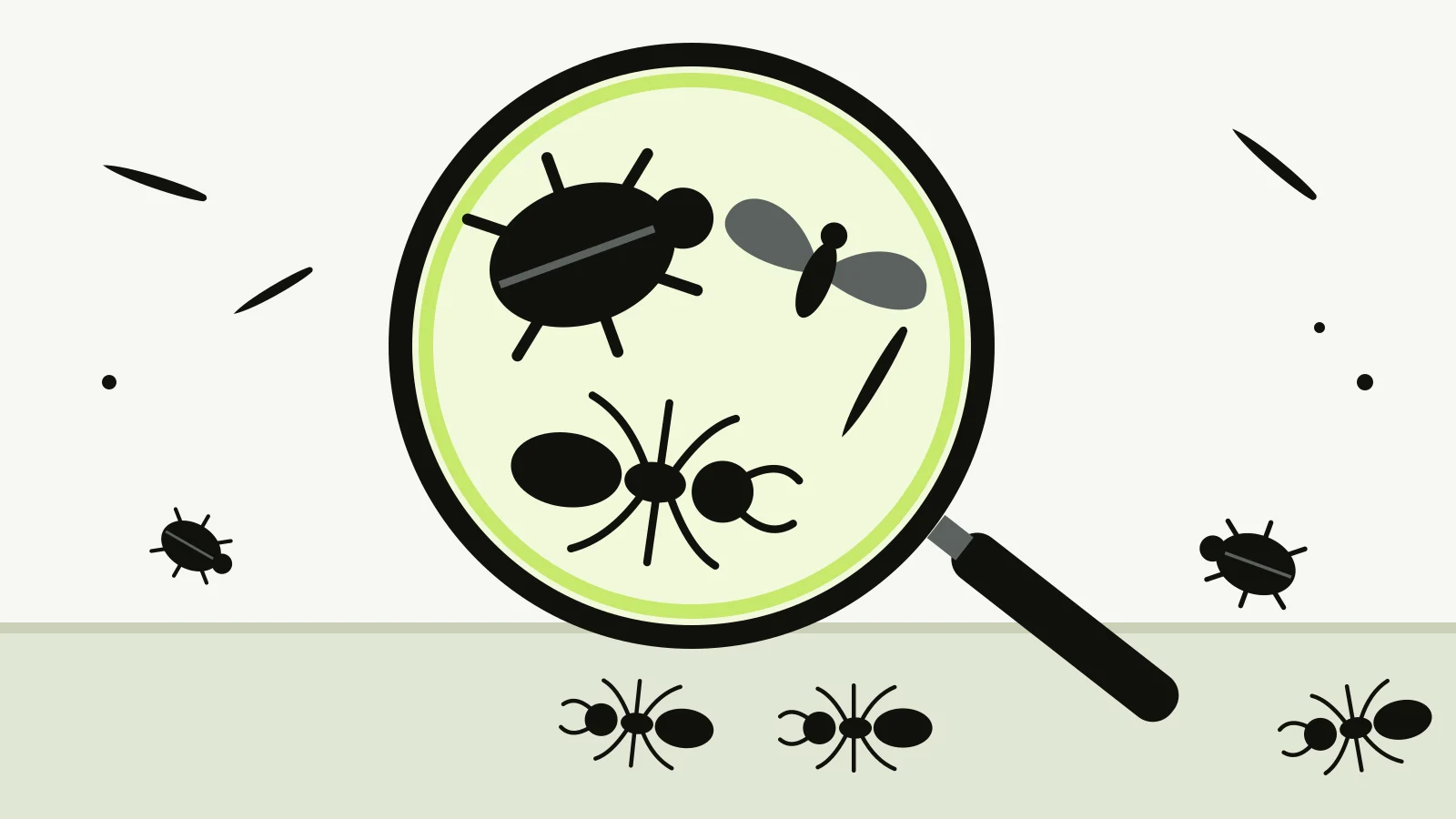
Do not start with colour or size, because at this scale both mislead you. Start with how the bug moves and where you found it. The drawing below follows that order, and it settles most cases before you need a magnifier. Then capture one so you have proof.
- Bring a finger close and watch. A jump means a flea or springtail. A short flutter means a fly. A steady walk means an ant or beetle.
- Note the exact spot: plughole, plant pot, window, food cupboard, mattress seam or pet bed.
- Press clear tape over one bug and stick the tape to white paper. A tiny bug that has been squashed flat is much harder to name.
- Take a photo in daylight with a ruler in the shot. Use your phone's zoom, not the digital crop after.
- Write down the date, the weather and how many you saw. A sudden crowd on a hot, still day tells a different story from three a day for a month.
- Check for bites, droppings, holes in fabric and damaged packets. These signs often matter more than the bug itself.
- 1. Jumped: a flea if near pets or bites, a springtail if near damp
- 2. Flew: check the nearest drain, plant pot and the weather
- 3. Crawled: follow it to food, fabric or the window
- 4. Any sign in a mattress seam: treat as bed bugs until ruled out
Tiny black bugs room by room: what to suspect first
The room is your best clue, because each of these insects is tied to something it needs: water, compost, flour, wool, or a warm-blooded host. Find that thing and you have found the source. The map below shows the usual pairings.
The loft deserves a special mention. The Natural History Museum says biscuit beetle adults may appear around fireplaces and air vents, often coming from wasp or bird nests in the attic. English Heritage says the natural home of spider beetles is bird or animal nests. So a beetle in a bedroom or kitchen may have started two floors up. Old nests can be cleared, but it is an offence under the Wildlife and Countryside Act 1981 to intentionally take, damage or destroy a wild bird's nest while it is in use or being built, so leave any active nest alone.
Where you found it, and what to do next
| Where | Suspect first | Then consider | Do this today |
|---|---|---|---|
| Bathroom walls, sink, bath | Drain flies, springtails | Silverfish | Tape the drain overnight and dry the room |
| Kitchen floor or worktop | Black ants | Biscuit beetles | Follow the trail to where it enters |
| Food cupboard | Biscuit beetles, weevils | Spider beetles | Open every dried packet over a white plate |
| Bed or mattress | Bed bug nymphs | Fleas, carpet beetles, thrips | Check seams with a torch and move nothing |
| Carpet, rug or sofa | Fleas | Carpet beetle larvae | Do the white sock test, then check pet bedding |
| Window, wall or picture frame | Thrips | Carpet beetles | Note the weather and vacuum the sill |
| Houseplant or windowsill near one | Fungus gnats | Springtails | Let the top of the compost dry |
| Fireplace, loft or airing cupboard | Spider beetles | Biscuit beetles | Look for old nests and old food debris |
If you have new bites, check the bed row and the carpet row whichever room you found the bug in.
- 1. Loft: old nests can feed beetles that work down through the house
- 2. Bedroom: check seams, then pet beds and wool
- 3. Bathroom: tiny fliers and jumpers follow water
- 4. Living room: look at rugs, plants and frames
- 5. Kitchen: check the food, not just the shelf
Tiny black bugs in bathroom: drain flies and springtails
Drain flies, also called moth flies, are a likely answer here. Texas A&M AgriLife gives 2 to 5 mm and describes them as grey to black, covered in fine hairs, with a fuzzy, moth-like look. Penn State Extension says they are often found on windows, sinks and walls. They sit still on tiles and make a short, weak flutter when disturbed, and that lazy flight is a good clue.
They breed in the slimy film inside pipes, not in dirty rooms. Penn State says the gelatinous build-up in drains is an ideal site, and that larvae can mature in about two weeks in good conditions. Texas A&M lists sink and floor drains, the bottoms of bins, cracked tiles and condensate pans. A rarely used bathroom is a likely spot, because the slime sits undisturbed.
To prove it, run the tape test. Stretch clear packing tape across the drain, leaving a gap for air, as Texas A&M advises, and check it the next morning. Flies stuck to the tape mean that drain is active. Do this for every plughole and overflow, not just the obvious one. Penn State suggests a jar over the outlet or a bag taped over the overflow does the same job.
Then remove the slime. Take out the plug or trap if you can, and scrub the pipe with a stiff brush, then flush with hot water. Penn State calls scrubbing the most economical and sanitary fix, and Texas A&M says bleach and drain cleaners are largely ineffective against the film. Enzyme drain products can help but may need weeks of repeat use. Because larvae can take about two weeks to mature, expect a few more adults for a while afterwards. If the flies keep coming with clean drains, suspect a leak under the floor or behind a bath panel and call a plumber, not a pest controller.
Springtails are the other bathroom regular. UC Integrated Pest Management gives roughly 1/16 inch, or about 1.5 mm, and says they can be whitish, bluish or dark grey to black. They have a forked organ folded under the body that flicks them into the air, which is why they get mistaken for fleas. They often collect in sinks and baths, they do not bite or spread disease, and they die quickly indoors without moisture.
A springtail needs damp, so treat the bugs as a free damp alarm. Zoologist Steve Hopkin, in an article hosted by the Natural History Museum, says an average square metre of temperate grassland or woodland soil holds at least 40,000 of them, so you will never keep them all out. Wash the ones you see down the drain, fix any drip, run the extractor fan and wipe the window sill dry. If you find them behind tiles or along a wall, look for a hidden leak. Should you see long, silvery, carrot-shaped insects too, the cause is often the same, and our silverfish guide has the humidity targets.
Tiny black bugs in kitchen: ants, food beetles and weevils
On the floor or worktop, in a line, it is almost certainly ants. The black garden ant, Lasius niger, is one of more than 30 ant species in Britain, says the RHS. NatureSpot gives workers as 3.4 to 5 mm and blackish-brown. They nest outdoors, often under paving, and walk in for sugar and crumbs. The RHS advice is to tolerate ants in the garden where you can, but indoors you will want them gone. Wipe the trail, find the gap and use bait where they enter, not spray. Our guide on how to get rid of ants covers this properly. If your ants are tiny and yellowish, they may be pharaoh ants, which need a different approach altogether.
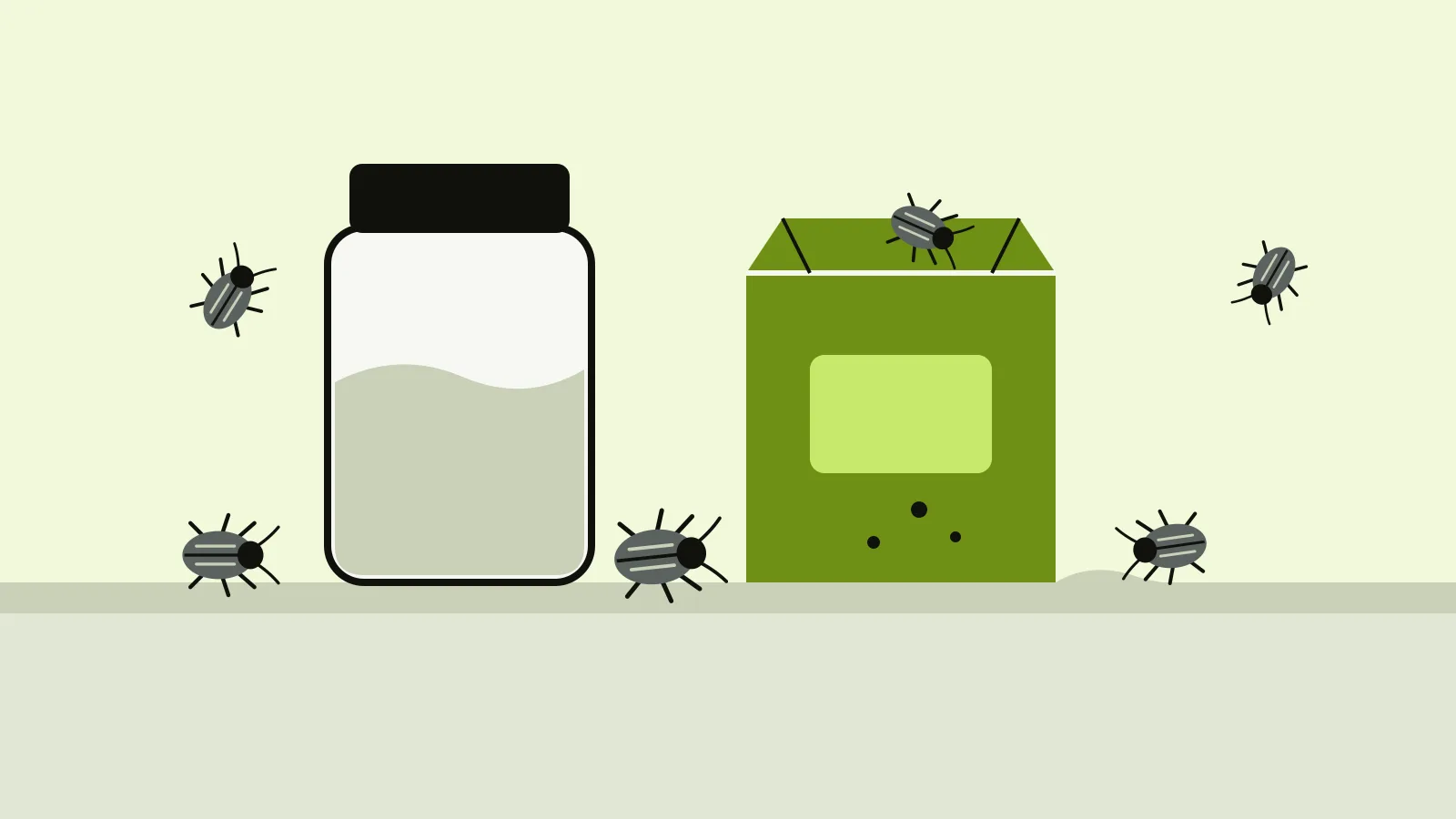
Inside a cupboard is a different problem. Biscuit beetles are 2 to 4 mm long and reddish-brown, says the Natural History Museum, though they look nearly black at a glance. Their food list is long: bread, flour, spices and more. Adur & Worthing Councils say the adults do not feed, and the larvae do the damage, chewing through most packaging. That is why one forgotten bag of paprika can spread to the whole shelf. They also fly, so finding one on a window does not mean the source is near the window. BPCA notes that they look very like woodworm beetles, so do not book woodworm treatment until you have checked the food.
Weevils are easy to name once you get close, because they have a long, pointed snout. Waltham Forest Council gives rice weevils as 2 to 3 mm and dull reddish-brown to black, while the Pacific Pests guide says 3 to 4 mm. Waltham Forest says they are not often found in the home, but can turn up in beans, birdseed, sunflower seeds and to a lesser degree pasta. They do not bite or harm furniture. A single generation can take around 28 days, so a packet left for a month can be crowded. The larvae grow unseen inside the grain, and BPCA says hard processed cereals such as pasta can be bored into too.
The clear-out is the same for all of them, and it is what solves the problem. York Council's food complaints guide and Charnwood Borough Council give almost the same steps, and we recommend following them in this order:
- Take everything out and open every dried packet over a white plate, including spices, stock cubes, tea, pulses and pet food.
- Put anything with live insects, webbing or holes in a sealed bag and straight into an outside bin.
- Vacuum the shelves and corners, paying attention to crevices, then empty the vacuum into the outside bin.
- Wipe with a damp cloth and let the shelves dry fully before restocking.
- Keep new dried food in airtight containers, and keep the cupboard dry and aired.
- If you want to keep a costly item, Waltham Forest Council says the freezer for several weeks kills adults and larvae.
- Recheck after a fortnight. If beetles keep appearing with no source, look up: old bird or wasp nests are the next suspect, as Oldham Council and BPCA both note.
Tiny black bugs in bed: rule out bed bug nymphs first
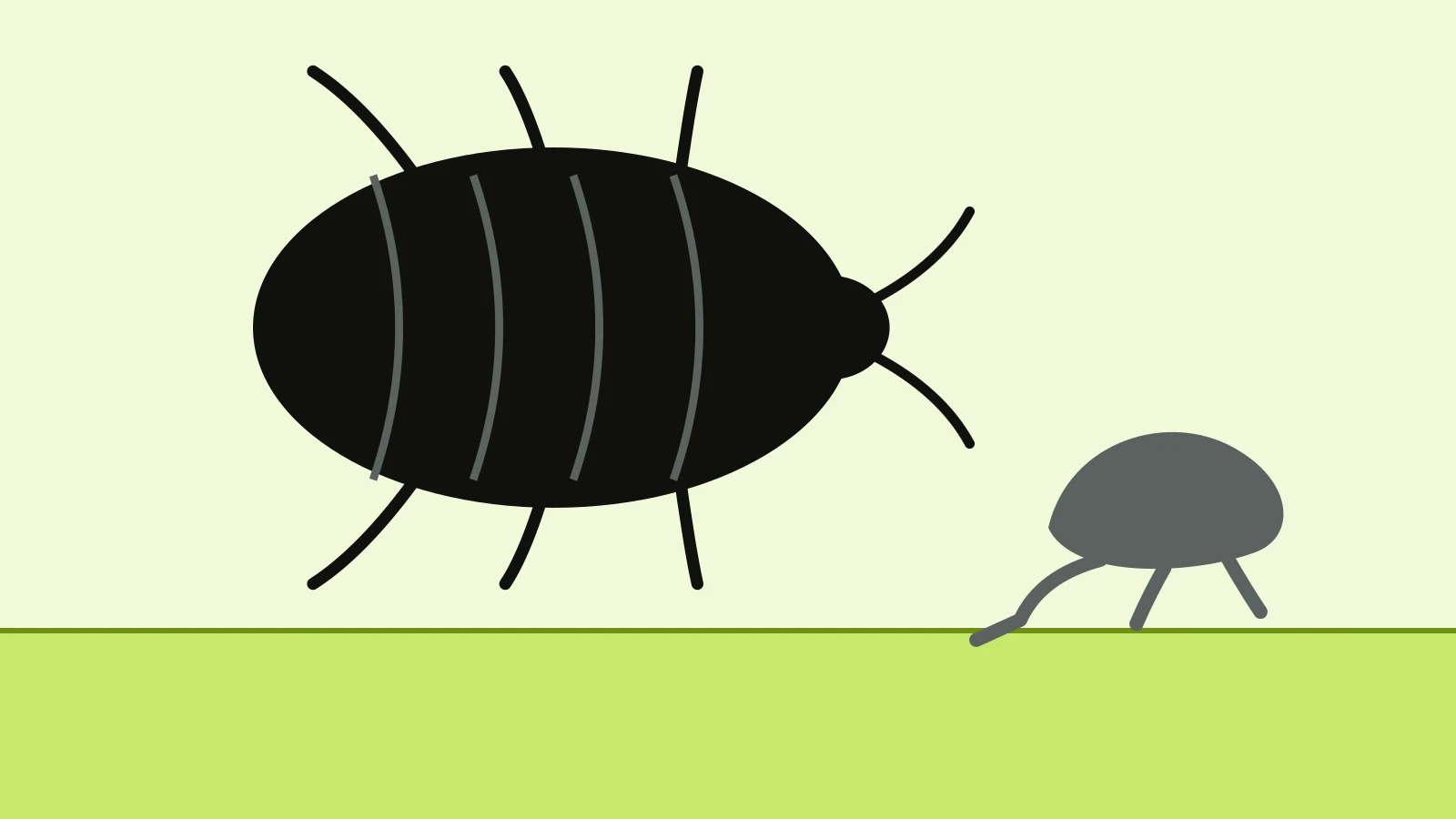
This is the search people worry about most, and rightly so, because bed bugs are the one bug here you are unlikely to clear alone. But the answer may surprise you: bed bug nymphs do not look black. Bromley Council says young bed bugs are about 1 mm long, rounded, with red eyes. The Natural History Museum says they start almost colourless and darken towards brown as they grow. After a meal, the museum says, adults turn deep purple or red.
So the tiny black things you see in a bed are more often their droppings. The NHS lists small brown spots on bedding or furniture as bed bug droppings, and spots of blood on bedding as another sign. They can look like dots from a fine pen. Adults are about 5 mm, says the NHS, and flat enough to fit into a seam.
Go through the bed with a torch: the mattress seams and piping, the slats and frame joints, the back of the headboard and the skirting behind it. Check it in the morning, because the museum says bed bugs are mainly nocturnal with peak activity before dawn. Our guide to bed bugs vs fleas has the full bed check, so we will not repeat it here.
If you find anything, do not move your bed, do not sleep elsewhere and do not spray. The NHS says DIY methods are unlikely to clear bed bugs completely and suggests contacting your council or a pest control service. Keep one specimen on tape, then read how to get rid of bed bugs before you do anything else.
If the seams are clean, you can relax. Thrips land on pale bedding in summer, a carpet beetle may have walked from a wool blanket or feather pillow, and a flea may have jumped up from the floor. Wash the bedding at 60°C, vacuum around the bed and watch for a week. A single tiny bug on a clean sheet, with no bites and no spots, is not an infestation.
Tiny black bugs on the carpet and sofa: fleas and carpet beetles
Fleas are about 2 mm long and dark brown, say Adur & Worthing Councils, and the cat flea causes most UK home infestations. The test is simple: if it vanishes when you go to touch it, it jumped. Put on long white socks, walk slowly across the carpet near a pet's bed and look for dark specks that move. The NHS says flea bites are usually in groups below the knees.
Treating the cat or dog is not enough, because Oxford City Council explains that the eggs fall into carpets and floorboards, where the larvae grow. That is also why an empty flat can have fleas waiting for the next tenant. Book your vet first, and never use a dog product on a cat. Our how to get rid of fleas guide has the full order of work.
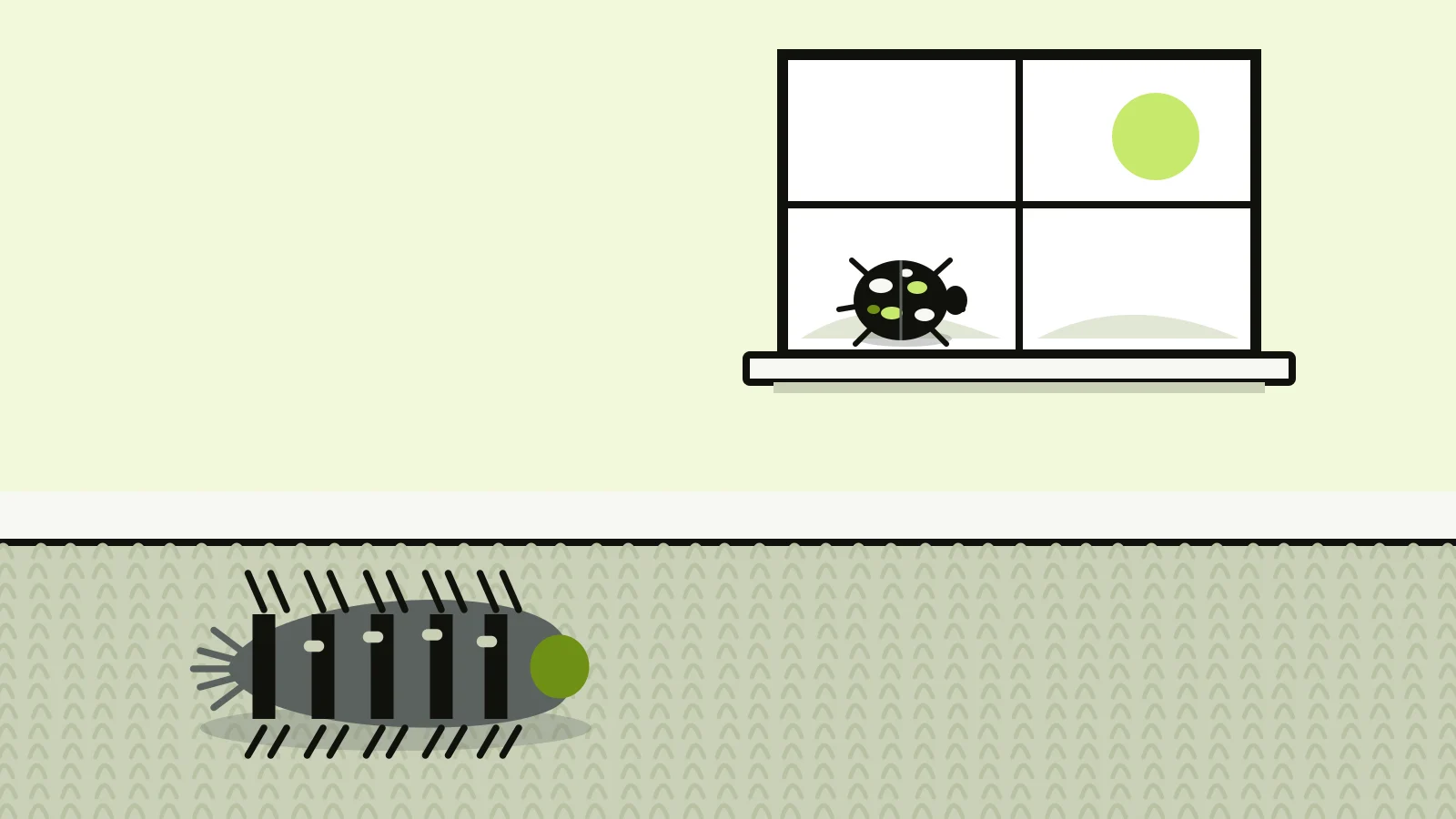
Carpet beetles cause more confusion, because they come in several types. The varied carpet beetle is 1.5 to 3.5 mm and round, says the Natural History Museum, patterned with white, orange and black scales that look black from a distance. The two-spot carpet beetle is the truly dark one: 4.5 to 6 mm, very dark brown to black, with two white spots. The brown carpet beetle is 2 to 5 mm. The museum says the varied beetle is most common in London and the southern counties, and that the brown carpet beetle was first found around London after it arrived in the 1970s. So Londoners have good reason to look carefully.
Adults are not the problem. English Heritage says they fly well in warm weather, are often on window sills, and mate on flowers outdoors in late spring and early summer. The damage comes from the larvae, known as woolly bears, which eat wool, fur and feathers in dark corners. Look along carpet edges, under heavy furniture and inside wardrobes for small hairy larvae, empty husks and neat holes. One or two adults on a sill in May need no action. Larvae or husks do. Our carpet beetle guide explains how to clear them, and how to clean carpet covers the vacuuming that comes first.
Tiny black bugs on windowsills, walls and picture frames: thrips
If you have tiny black slivers on a pale wall, on the windowsill or under the glass of a picture, on a hot, still day, you have thrips. These are the classic tiny black bugs in the UK summer. The RHS says adults grow up to 2 mm, while BPCA says about 1.5 mm, and they are narrow, with fringed strap-like wings that fold along the back. Oxford University Museum of Natural History counts 159 species in the UK.
The name thunder bugs comes from the weather. NatureSpot says they take to the air in still, thundery weather, and BPCA says they are most noticeable on humid summer days, when they can appear in big numbers. They feed on plant sap and usually live in crops and gardens, so a sudden crowd indoors means they have blown in, not bred behind your wallpaper.
They do squeeze into odd places. NatureSpot notes that they get trapped under the glass of framed pictures, and BPCA says they can collect in smoke detectors and sometimes set off alarms. Our recommendation is simple: do nothing drastic. Vacuum the sills with a brush attachment, keep windows shut or screened with fine mesh on the worst days, and wait. The swarms are tied to the weather, so they should pass when it changes. BPCA does say insecticide can be used for small numbers, but we would not spray for an insect it calls a minor nuisance.
For a smoke alarm, never spray insecticide into it and never take the battery out to stop it going off. Follow the maker's cleaning instructions, which usually means gently vacuuming the vents, then press the test button. For a framed picture, open the back, tip the insects out and reseal the back with framing tape. Anything valuable is better left to a framer.
Tiny black bugs around houseplants: fungus gnats
Small dark flies that drift around a plant pot, or that end up on the nearest window, are fungus gnats, also called sciarid flies. The RHS says adults are dark greyish-brown and mostly 3 to 4 mm long, while Texas A&M AgriLife says 1.5 to 3 mm, so they may look smaller than you expect. They are slim and mosquito-like, and they do not bite. If you tip the top of the compost, you may see their larvae: slender whitish maggots up to 6 mm long with black heads.
They are a nuisance rather than a danger. The RHS says adult flies do not harm plants, and that the larvae mainly eat dead roots, decaying matter and fungus, although they can harm seedlings and soft cuttings. Established plants are unlikely to suffer. They breed all year round in warm homes, and a generation can take about a month in summer, which is why a gift plant can seem to multiply into a cloud by Christmas.
Start with the watering can, because wet compost is what they need. Follow these steps in order, and you are unlikely to need anything from a pest controller.
- Check each pot and let constantly wet compost dry out, as far as the plant will tolerate.
- Empty saucers so that pots are not standing in water.
- Repot badly affected plants into fresh houseplant compost and do not reuse the old compost indoors; the RHS says it can go on a compost heap.
- Hang yellow sticky traps close to the plants to catch adults, and take them down once numbers drop. The RHS warns they also catch harmless insects, so use them only close to the plants.
- For a stubborn problem, add the nematode Steinernema feltiae to the compost. The RHS says this targets the young stages.
- If you also see tiny jumpers on wet compost, they are probably springtails, and drying the compost deals with them as well.
Round, spidery bugs near fireplaces and lofts: spider beetles
Spider beetles look like tiny round spiders with long legs, and the first time you see one you may doubt it is a beetle at all. Sources give different sizes. English Heritage says adults of the group are 5 to 7 mm, while the Natural History Museum gives 3 to 4.5 mm for the golden spider beetle. The Australian spider beetle is brown with hairs, and the female white-marked spider beetle is dark brown with patches of white hairs, which is the one most likely to look black to you.
They are scavengers. English Heritage says their natural home is bird or animal nests, and that they thrive in dirty, undisturbed spots with dead insects or old food. The museum adds that they prefer dark, moist places such as attics, cellars and store rooms, and hide in cracks by day. Peak activity is from August to November, so autumn is when most people find one crossing the floor at night. English Heritage says adults are often caught on insect traps in the fireplaces of historic houses, and that larvae can fall down the chimney from debris above.
They eat starchy food such as flour, biscuits, cereals and pet food, so treat the kitchen the same way as for biscuit beetles. A slow life cycle helps you here: English Heritage says it normally takes 12 months. One or two beetles in autumn do not call for treatment. Sweep out the fireplace, clear old pet food and bird seed from the cupboard under the stairs, and look for an old nest in the loft or a blocked flue. If you see more than a handful a week, ask a chimney sweep to check the flue, and contact us if they persist after that.
How big are tiny black bugs in the UK? Sizes compared
Sizes help you rule things out, though they will not name a bug on their own. The drawing below puts all of them on one millimetre ruler. The main point is how much they overlap: food beetles, drain flies and fungus gnats all share the 2 to 4 mm band, so a measurement alone settles little.
Two useful limits stand out. Anything clearly over 3 mm is very unlikely to be a flea, thrips or household springtail. Anything you can barely see, at about 1 mm, could be a young bed bug, a springtail or a first-stage insect of another kind. English Heritage says newly hatched carpet beetle larvae can be less than 0.5 mm, small enough to slip through very small cracks into cupboards. If you need detail, use a phone camera or a cheap hand lens, since a 10 times lens is plenty for all of these.
- 1. About 2 mm or under: springtails, thrips and fleas. You will need a lens
- 2. Bed bugs start at about 1 mm and reach about 5 mm
- 3. Food beetles and weevils overlap, so check the food, not the ruler
- 4. Spider beetles and ants are the biggest here, and the easiest to see
Which tiny black bugs need no treatment?
Five of the eleven usually need no pest control at all. Thrips leave by themselves. Springtails, drain flies and fungus gnats go when you fix the water or the slime. Spider beetles usually stop when you clear the debris. Biscuit beetles and weevils can often be cleared by you too, if you find every affected packet.
Use the table as your rule of thumb. The dividing line is whether the bug bites, damages your belongings, or keeps coming after you have done the obvious fix for two to four weeks.
Leave it, fix it yourself, or get help?
| Bug | Leave it | Fix it yourself | Get help if |
|---|---|---|---|
| Thrips | Yes, they pass with the weather | Vacuum sills | A detector keeps alarming: ask the maker or a landlord |
| Springtails | A few are fine | Dry the room, fix drips | Numbers stay high: look for a leak with a plumber |
| Drain flies | No | Tape test, scrub the pipe | All drains are clean: check for leaks or a damaged waste pipe |
| Fungus gnats | A few are fine | Dry compost, repot, sticky traps | Rarely needed |
| Spider beetles | One or two in autumn | Clear debris, check nests | Over a handful a week: check flues and lofts |
| Biscuit beetles | No | Bin food, vacuum, airtight jars | Still appearing after a fortnight: Oldham Council says they are often hard to clear alone |
| Weevils | No | Bin food, vacuum, freeze keepers | Still appearing after a fortnight |
| Black ants | Outdoors, yes | Clean, seal, bait | They return after baiting, or they are pale pharaoh ants |
| Carpet beetles | One adult on a sill | Vacuum edges, wash or freeze items | You find larvae in several rooms |
| Fleas | No | Vet, wash and vacuum | Bites continue after treating pets and bedding |
| Bed bug nymphs | No | Wash at 60°C, move nothing | Any confirmed sign. The NHS says DIY is unlikely to clear them |
Our advice, based on the sources in this guide. Two to four weeks is a practical checking period, not a rule from any source.
Do tiny black bugs bite or carry disease?
Of the eleven, only fleas and bed bugs feed on people. Some red garden ants can give a mild sting, according to the RHS. UC Integrated Pest Management says springtails do not bite or spread disease, and Texas A&M says fungus gnats do not bite.
Food beetles are a hygiene problem and not a medical one. York Council and Charnwood Borough Council say beetles and weevils in dried foods do not carry disease and are not a public health risk. Oxford City Council agrees that beetles do not transmit diseases to people, but says they can contaminate food. So bin what is affected rather than sieving it.
For bites, keep the skin clean and try not to scratch. The NHS suggests a cool, damp cloth, and a pharmacist can advise on creams or an antihistamine. Most bites get better within a few days, and bed bug bites usually clear up on their own in about a week. Children under 10 and pregnant women should check with a doctor before using hydrocortisone.
See a pharmacist if a bite is hot, red, painful, swollen or leaking pus or fluid, and speak to a GP if bed bug bites stay very painful, swollen or itchy after pharmacy treatment, or if the swelling spreads. Call 999 immediately if someone's lips, mouth, throat or tongue suddenly swell, or if they struggle to breathe. If you have an unexplained rash and no sign of any bug, see a pharmacist or GP before you pay for pest control.
Should you spray? Where insecticide does more harm than good
Almost always, leave the spray in the shop until you know what you have. Most of the insects here are controlled by removing water, slime or food, and a spray does none of that. It can also hide the evidence and make any later inspection harder.
Councils differ on food cupboards, so here is where they stand. York and Charnwood say not to use insecticide because of the danger of contaminating your food. Oxford City Council and BPCA do mention insect sprays for empty, food-free shelves, and Oldham Council offers a treatment for biscuit beetles. We side with York and Charnwood for a home cupboard: empty it, vacuum it, and if the beetles persist, bring in a professional who can treat safely, instead of using an aerosol near food.
A few firm rules apply whichever bug you have.
- Do not pour insecticide down a drain. UC Integrated Pest Management warns against this, and it does not reach the slime that feeds the larvae anyway.
- Never mix drain cleaner with bleach or other cleaning products, and follow the label on any drain product.
- Do not spray bedding, mattresses or clothing, and do not use shop sprays or foggers on suspected bed bugs.
- Do not spray ant trails if you are using bait, because you want ants to carry the bait back.
- Do not use dog flea products on cats. Ask your vet what is safe for each pet.
- Do not spray into smoke alarms, electrical sockets or plant compost.
- If you do use any insecticide, read the whole label first, keep children and pets away, and store it safely.
Tiny black bugs in a rented home: who deals with them?
It depends on the cause. Citizens Advice says tenants may be responsible if they caused the problem, and landlords are usually responsible if the tenancy agreement covers pests or requires the home to be kept in a good and habitable state, if an unrepaired fault led to the problem, or if the infestation makes the home unsafe. Landlords are generally only responsible once they know, so tell them early and in writing, with your photos and dates.
Applied to these bugs, a sensible split looks like this. Drain flies and springtails caused by a leak or failed seal are a repair issue, so report the leak, not the insect. Food beetles from your own cupboard are normally yours to clear. Fleas that appear just after you move in point to a past pet, and bed bugs can spread through shared walls, so report them straight away.
If you are a landlord or agent, ask the tenant for a photo before you book anyone, because a tenant reporting tiny black bugs in July may simply have thrips. Some councils can help too. Waltham Forest Council has an online identification service: upload a photo and details through its booking form, and it says you will get an assessment by email within three working days. If your property is changing hands, our end of tenancy cleaning checklist covers the drains and cupboards where many of these insects start.
What we do, and what it costs
If you cannot name the bug, or you have tried the steps above and it keeps coming back, you do not need to guess. Send us a sharp photo with a ruler in it, the room, and how many you have seen. You do not need to know the name first. And if your bug is on the no-treatment list above, you do not need to book anything.
A pest inspection starts from £60 and reviews the signs and likely entry routes. Your exact price depends on property size, access to lofts or voids, and whether treatment follows, and it is confirmed in writing before booking. Where a treatment is needed, these are our starting rates. For ongoing problems, ask about our 2-visit packages, which come with a 1-month written guarantee, and our 3-visit packages, with a 3-month written guarantee. Each includes follow-up and proofing advice, and you get a safety report.
We are based on Clements Road in Ilford, cover London and carry public liability insurance. Our phone lines are open Monday to Saturday, 8am to 8pm. See all our pest control services, our Ilford pest control page, or our prices. For a wider picture of what pest work costs, read our pest control cost guide.
Our starting prices for the bugs in this guide
| Service | Starts from | What the price covers |
|---|---|---|
| Pest inspection | £60 | Starting rate. Signs and entry routes reviewed; quote confirmed before booking |
| Ant treatment | £69 | Starting rate. Initial inspection and targeted treatment |
| Flea treatment | £89 | Starting rate. Initial inspection and targeted treatment |
| Fly control | £99 | Starting rate for standard fly control. Initial inspection and targeted treatment |
| Bed bug treatment | £149 | One room. +£45 per additional room, +£79 per follow-up visit |
| Carpet beetle treatment | £149 | Initial standard visit. Rooms and further visits quoted |
Prices from our current price list. Your price, visits and what is included are confirmed in writing before booking. Food beetles and weevils have no listed price, so ask us for a quote.
Common questions
What are the tiny black bugs in my house?
The most likely culprits are thrips on walls and windowsills, drain flies in bathrooms, fungus gnats near houseplants, and springtails in damp spots. Ants, fleas, food beetles and young bed bugs are less common but matter more. Use our at-a-glance table to narrow it down.
What are the tiny black bugs that look like specks of dust?
If they jump when you get close, think springtails or fleas. If they sit in a thin line and appear on a muggy summer day, they are probably thrips. Check a mattress seam as well if anyone has new bites, using our guide to bed bugs vs fleas.
What are the tiny black bugs in my bed that are not bed bugs?
Thrips can land on bedding in summer, carpet beetles can come from wool blankets and feather pillows, and fleas can jump up from the floor. Only bed bugs hide in the seams and leave small brown spots. Our carpet beetle guide covers the larvae and husks.
Are thunder bugs harmful?
The RHS and BPCA describe thrips as plant sap feeders, and BPCA calls them only a minor nuisance in homes. The practical risk is to smoke detectors, where BPCA says they can collect and sometimes trigger alarms. If yours keeps going off, contact us for advice after checking the detector maker's cleaning instructions.
What are the tiny black bugs in my bathroom?
Fuzzy ones that sit on tiles and flutter a short way are drain flies. Ones that spring when touched are probably springtails, which follow damp. If they are long and carrot-shaped with no wings, read our silverfish guide.
Why do I have tiny black bugs in my kitchen cupboard?
They are usually coming from one old packet of flour, spice, pasta or pet food. Check every open packet, bin anything affected in an outside bin, and vacuum the shelves. If ants are the problem and not beetles, read how to get rid of ants.
Do tiny black bugs mean my house is dirty?
Usually not. Thrips fly in with the weather, springtails follow damp, and food beetles can arrive in sealed shopping or from an old nest in the loft. The only one that depends on a dirty surface is the drain fly, and that means slime in a pipe. Ask about a pest inspection if you cannot find the source.
How do I get rid of tiny black bugs?
Name the bug first, because each one has a different fix: dry compost for gnats, scrub drains for drain flies, bin food for beetles and call for help with bed bugs. Spraying before you know what it is often does nothing. Our price list shows what treatment costs if you do need it.
Can someone identify a bug from a photo?
Often, if the photo is sharp and has a ruler in it. Waltham Forest Council runs an online identification service, and you can send a photo to us too. Use our contact page with the room and how many you have seen.
Sources
Figures differ a little between sources, so ranges are given where they do. Sources reviewed on 1 November 2026.
- RHS: thripsrhs.org.uk(opens in a new tab)
- RHS: fungus gnats (sciarid flies)rhs.org.uk(opens in a new tab)
- RHS: ants in the gardenrhs.org.uk(opens in a new tab)
- Natural History Museum: carpet beetles identification guidenhm.ac.uk(opens in a new tab)
- Natural History Museum: bread or biscuit beetlenhm.ac.uk(opens in a new tab)
- Natural History Museum: golden spider beetlenhm.ac.uk(opens in a new tab)
- Natural History Museum: bed bugnhm.ac.uk(opens in a new tab)
- Steve Hopkin: the biology of the Collembola (springtails), hosted by the Natural History Museumnhm.ac.uk(opens in a new tab)
- English Heritage: spider beetles fact sheetenglish-heritage.org.uk(opens in a new tab)
- English Heritage: varied carpet beetle fact sheetenglish-heritage.org.uk(opens in a new tab)
- English Heritage: insect pests in historic houses and museumsenglish-heritage.org.uk(opens in a new tab)
- NHS: bedbugsnhs.uk(opens in a new tab)
- NHS: insect bites and stingsnhs.uk(opens in a new tab)
- Citizens Advice: pests and vermin in your rented homecitizensadvice.org.uk(opens in a new tab)
- legislation.gov.uk: Wildlife and Countryside Act 1981, section 1legislation.gov.uk(opens in a new tab)
- GOV.UK: wild birds, protection, surveys and licencesgov.uk(opens in a new tab)
- York Council: food complaints guideyork.gov.uk(opens in a new tab)
- Charnwood Borough Council: common food complaintscharnwood.gov.uk(opens in a new tab)
- Oldham Council: biscuit beetlesoldham.gov.uk(opens in a new tab)
- Adur & Worthing Councils: biscuit beetlesadur-worthing.gov.uk(opens in a new tab)
- Adur & Worthing Councils: fleasadur-worthing.gov.uk(opens in a new tab)
- Oxford City Council: beetlesoxford.gov.uk(opens in a new tab)
- Oxford City Council: fleasoxford.gov.uk(opens in a new tab)
- Waltham Forest Council: rice weevil fact sheetwalthamforest.gov.uk(opens in a new tab)
- Waltham Forest Council: pest control serviceswalthamforest.gov.uk(opens in a new tab)
- Bromley Council: bed bugbromley.gov.uk(opens in a new tab)
- BPCA A-Z of pests: thrips, in PPC magazineppconline.org(opens in a new tab)
- BPCA A-Z of pests: biscuit beetles, in PPC magazineppconline.org(opens in a new tab)
- BPCA A-Z of pests: weevils, in PPC magazineppconline.org(opens in a new tab)
- NatureSpot: thripsnaturespot.org(opens in a new tab)
- NatureSpot: small black antnaturespot.org(opens in a new tab)
- Oxford University Museum of Natural History: Thysanopteralearningzone.oumnh.ox.ac.uk(opens in a new tab)
- UC Integrated Pest Management: springtailsipm.ucanr.edu(opens in a new tab)
- Texas A&M AgriLife Extension: indoor flies and their controlagrilifeextension.tamu.edu(opens in a new tab)
- Penn State Extension: moth flies in the homeextension.psu.edu(opens in a new tab)
- Pacific Pests, Pathogens and Weeds: rice weevilapps.lucidcentral.org(opens in a new tab)
Want it dealt with?
Tell us what you have seen, the rooms and your postcode. You do not need to know which pest it is. We confirm the price in writing before any work is booked.