Pest Control · 15 min read · Updated 1 November 2026
Bed bugs vs fleas: how to tell what is biting you
Start with where you were bitten. Flea bites usually sit in groups below the knee; bed bug bites land on skin left out of the covers, often in a line. Then find the insect, because bites alone do not prove either one.
By the Bestone pest control team · Contact us
Key takeaways
- Flea bites usually sit in groups below the knee. Bed bug bites land on skin left out of the covers, such as the face, neck and arms, often in a line.
- Bites alone do not prove either pest. Look for bed bugs and dark spots in mattress seams, and for fleas and flea dirt around pets, rugs and carpets.
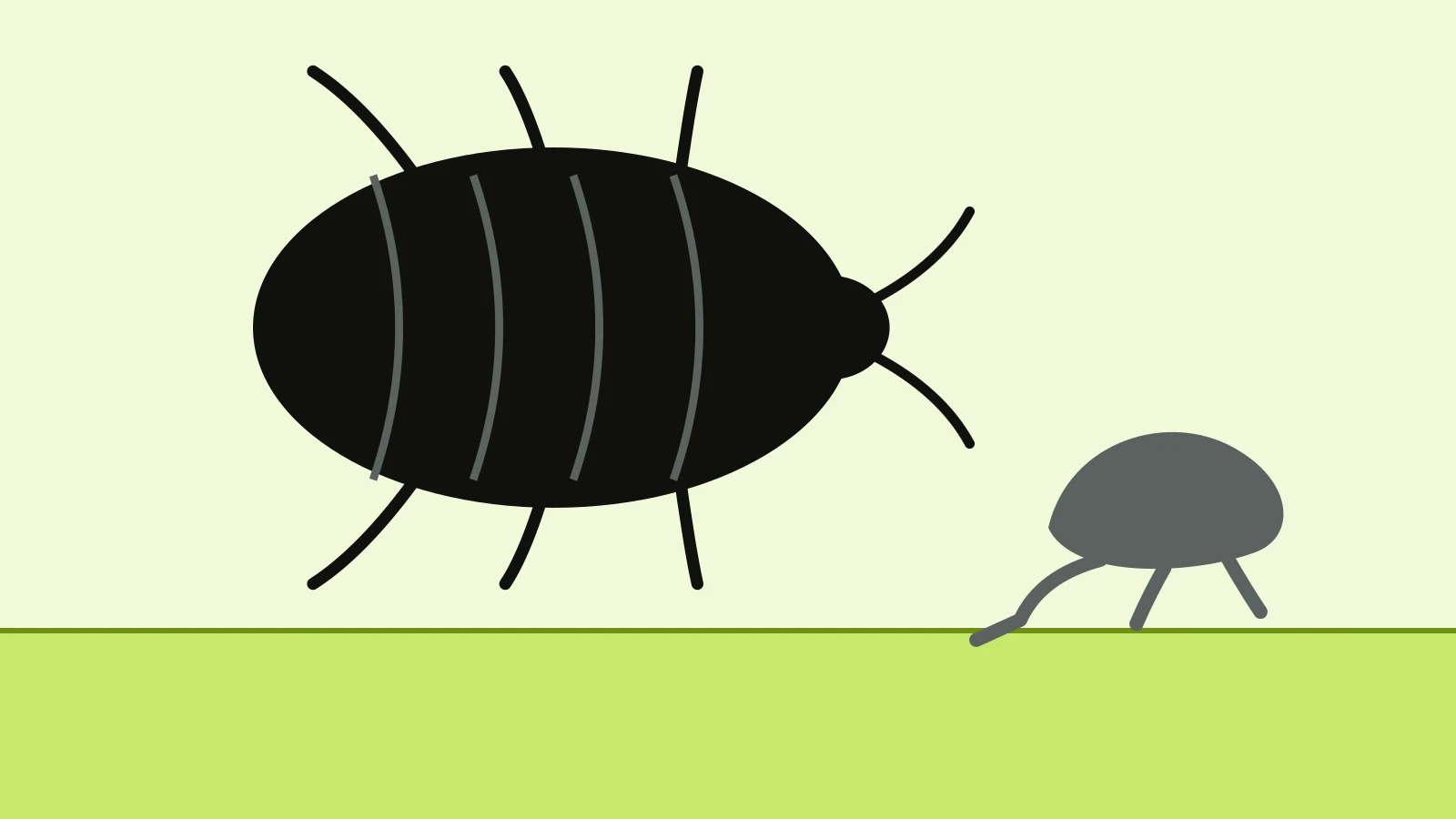
- A bed bug is about 5 mm, flat and crawls. A flea is about 2 mm, narrow and jumps.
- Do not move furniture or bedding between rooms if you suspect bed bugs, because that can spread them.
- Our flea treatment starts from £89 and bed bug treatment from £149 for one room, and the price is confirmed in writing before work is booked.
On this page
- Key takeaways
- The quick answer: bed bugs or fleas?
- Bed bugs vs fleas, side by side
- Bed bug bites vs flea bites: what to look for
- Find the insect: size, shape and how it moves
- How to check a bed for bed bugs
- How to check for fleas
- Fleas in the house with no pets
- What to do first, and what not to do
- Treating the bites
- Why treatment is different for each pest
- Why you can still see them after treatment
- Renting in London: who pays?
- What we do, and what it costs
- Common questions
The quick answer: bed bugs or fleas?
If you wake up with itchy marks on your arms, neck or face and your pets are not scratching, suspect bed bugs. If the bites are around your ankles and lower legs, or a cat or dog in the house is scratching more than usual, suspect fleas.
That first guess is useful, but it is only a guess. Everyone reacts differently. The BPCA notes that some people show no reaction to a bed bug bite at all, so two people in one bed can have very different mornings. Mosquitoes, mites and skin conditions can look similar too.
So treat the bites as a clue and the insect as the proof. The two pests live in different places and need different treatment, which is why it is worth ten minutes with a torch before you spend money on sprays. The table below shows the differences side by side.
Bed bugs vs fleas, side by side
| Sign | Bed bugs | Fleas |
|---|---|---|
| Usual bite area | Face, neck, arms and other skin exposed in bed | Ankles and lower legs, in groups below the knee |
| Bite pattern | Raised and itchy, often in a line or group | Small and itchy, in clusters |
| Adult size | About 5 mm long, 3 mm wide | About 2 mm long |
| Shape and movement | Flat, oval, crawls | Narrow, dark brown, jumps |
| Where they stay | Mattress seams, bed frames, furniture, skirting | On animals; eggs and larvae in carpets and floorboards |
| What you may find | Blood spots, brown or black droppings, shed skins | Flea dirt on pets, insects on pale socks |
| How they arrive | Luggage, clothing, second-hand furniture | Pets, animals, or left behind in an empty home |
| Do they spread disease? | No known disease risk, says the BPCA | Little evidence for people, say Adur & Worthing Councils |
Figures from the NHS, the BPCA, and Oxford, Lambeth and Adur & Worthing councils.
Bed bug bites vs flea bites: what to look for
The NHS describes bedbug bites as raised and itchy, often in a line or grouped together, and usually on skin left exposed in bed. It notes that they tend to look red or pink on white skin, and brown, red or purple on black or brown skin, where they can be harder to see.
Flea bites are lower down. The NHS says they are usually found in groups below the knees, and Lambeth Council draws the same line: bed bug bites spread across the body, flea bites stay below the knee. Adur & Worthing Councils add one useful exception. Children who sit and play on the floor are often bitten in other places as well.
Timing helps too. Bed bugs feed at night, so a new line of bites usually means new marks in the morning. Flea bites can appear at any time of day, often after you have walked across a carpet or sat near a pet's bed.
- 1. Bed bugs: bites often run in a line along exposed skin
- 2. Bed bugs: face and neck are out of the covers at night
- 3. Fleas: groups of bites below the knee, around the ankles
- 4. Fleas: children on the floor can be bitten higher up
Find the insect: size, shape and how it moves
An adult bed bug is flat, oval and reddish-brown. Oxford City Council gives about 5 mm long and 3 mm wide, and Lambeth Council says up to about 6 mm. It looks like a small seed, and it crawls. Oxford notes that bed bugs do not fly; they get around on foot or by travelling in clothing, luggage, books and furniture.
A cat flea, the type most homes get, is about 2 mm long and dark brown. It is narrow, as though squeezed from side to side, and you rarely see it walk, because it jumps. If something tiny vanishes when you go to touch it, it was probably a flea.
Here is a simple test for fleas: put on long white socks and walk slowly across the carpet, particularly near where a pet sleeps. Dark specks on the socks that move are fleas. For a suspected bed bug, stick the insect to clear tape, then photograph it next to a ruler. A clear photo is often enough for a pest controller to identify it.
- 1. Bed bug: about 5 mm long and 3 mm wide
- 2. Flat body, so it fits in seams and thin cracks
- 3. Flea: about 2 mm long and narrow
- 4. Fleas jump; bed bugs can only crawl
How to check a bed for bed bugs
Pick a bright moment, take a torch, and work around the bed slowly. You are looking for live insects and for the marks they leave: the NHS lists spots of blood on bedding and small brown spots on bedding or furniture, and Lambeth Council describes the droppings as black dots.
- Lift the sheet and check all four sides of the mattress, especially the seams and piping.
- Look along the bed frame joints, slats and the back of the headboard.
- Run the torch along the skirting board and any loose wallpaper near the bed.
- Check behind pictures, around plug sockets and inside the bedside drawers.
- Look at sofa and armchair joints if someone naps there.
- Leave everything where it is. Take photos, and do not carry items to another room.
How to check for fleas
Fleas are easier to confirm if you have an animal at home. Comb your cat or dog with a fine-tooth flea comb over a sheet of white paper, paying attention to the neck and the base of the tail. Cats Protection says you may find a lot of dark flea droppings, known as flea dirt. Dab the specks with damp tissue: if they turn reddish-brown, they are flea dirt rather than soil, because they contain digested blood.
Then check the places the animal rests. Oxford City Council explains that eggs laid on animals fall into carpets and floorboards, and the larvae feed on debris there. Cats Protection says most flea problems come from the home, which is why treating the pet alone often fails. Rugs, sofas, pet beds, car seats and gaps between floorboards are the places to check first.
Fleas in the house with no pets
This one confuses people, particularly just after moving house. Adur & Worthing Councils explain that flea pupae can survive in their cocoons for many months without a host, then emerge when one arrives. Hastings Borough Council puts dormant pupae at up to nine months, while Cats Protection says up to six.
The result is that a flat can look clean, sit empty for weeks, then produce biting fleas within days of someone walking on the carpet. It is not a sign of dirt, or that you brought anything in. A previous tenant's pet, or a visiting cat, is the usual explanation.
Adur & Worthing add that people without pets can also carry fleas home after visiting an infested place. If you have ankle bites and no animal, and no sign of bed bugs around the bed, ask your landlord or agent whether a pet lived there before you.
What to do first, and what not to do
A few good steps now will help whichever pest it turns out to be, and a few well-meant ones can make things worse. The biggest mistake with bed bugs is moving things. Sleeping on the sofa or in a spare room can take them to a second room, and they will follow you to feed.
- Both: photograph what you find, with a ruler in shot, and note the rooms and dates.
- Both: wash bedding and clothes at 60°C, then tumble dry on hot for at least 30 minutes, as the NHS advises for bed bugs.
- Bed bugs: keep sleeping in your own bed, and do not move furniture or bedding to another room.
- Bed bugs: bag items before you carry them to the wash, and seal anything that cannot be washed. The NHS says these can be frozen for 2 to 3 weeks.
- Bed bugs: do not spray shop-bought insecticide first. The BPCA warns that amateur products can prolong an infestation.
- Fleas: get all pets treated at the same time, with a product from your vet.
- Fleas: never use a dog flea treatment on a cat. Cats Protection warns that some contain a chemical that is toxic to cats.
- Fleas: wash pet bedding at 60°C and vacuum thoroughly before any treatment, then empty the vacuum outside.
Treating the bites
For both types, keep the skin clean and try not to scratch, because broken skin can get infected. The NHS suggests a clean, damp cloth to ease itching and swelling, and says bedbug bites usually clear up on their own in a week or so. A pharmacist can advise on a mild steroid cream or an antihistamine. Children under 10 and pregnant women should see a doctor before using hydrocortisone.
See a GP if bites stay very painful, swollen or itchy after a pharmacist's advice, or if the pain or swelling is spreading, as you may need treatment for an infection. Severe allergic reactions to bites are rare, but call 999 if someone has swelling of the lips, mouth or throat, or is struggling to breathe.
Why treatment is different for each pest
Bed bugs are a search-and-treat job. They hide in cracks close to where people sleep and can last a long time between meals: Oxford City Council says they can survive over a year without feeding. Treatment has to reach those hiding places, and usually needs more than one visit. Lambeth Council treats twice, three weeks apart, and Redbridge Council allows two to three visits, 21 to 28 days apart.
Fleas are a floor-and-furnishings job, timed around their life cycle. Hastings Borough Council says the cycle from egg to adult takes 18 to 26 days depending on temperature, and that a single flea can lay up to 25 eggs a day. Pets are treated by the vet at the same time, and the home is treated once, with an insecticide that carries on working if surfaces are left alone.
Preparation matters for both, and a good provider will tell you exactly what to do. For bed bugs, that can mean emptying drawers, pulling furniture away from walls and stripping beds. Bedford Borough Council warns that divan beds may need to be destroyed because they cannot be effectively treated, so ask before you assume yours can be saved.
Why you can still see them after treatment
This is the moment most people panic, and usually it means the treatment is working. Eggs survive. Hastings Borough Council says flea eggs and pupae are not affected by insecticide, so new fleas keep emerging and die when they touch treated surfaces. It calls seeing fleas 10 to 14 days after treatment quite normal, and says to get back in touch if they persist after four weeks.
Bed bugs follow a similar pattern. Oxford says eggs hatch in 10 to 20 days, and Bedford says you may see bugs for several days after treatment as this happens. Both Bedford and Lambeth ask you to keep sleeping in the bed as normal, because bed bugs are drawn to you and cross the treated areas to reach you.
The other rule is to leave the floors alone. Hastings says not to vacuum, sweep or wash floors for at least two weeks after flea treatment, Lambeth says the same for bed bug rooms, and Bedford asks for three weeks. Follow the sheet you are given, because vacuuming early can remove the insecticide.
- 1. Bed bugs: second visit at about three weeks
- 2. Bed bug eggs hatch at 10 to 20 days
- 3. New fleas at 10 to 14 days are normal
- 4. Fleas still there at four weeks: call back
Renting in London: who pays?
The rules are the same as for other pests. Citizens Advice says tenants are usually responsible if they caused the problem, and landlords are usually responsible if the tenancy agreement says so, if a failure to repair caused it, or if the infestation makes the home unsafe. Landlords are generally only responsible once they know, so report it straight away, in writing, with your photos.
Bed bugs often arrive in luggage or furniture, which can make the cause hard to prove, and they can move between flats through shared walls. Fleas found soon after you move in point towards the previous occupier. Either way, tell your landlord or agent early and ask your council's environmental health team for advice if you are not getting a response.
Moving out? Keep the treatment record, and read our end of tenancy cleaning checklist. Any carpet left unvacuumed after treatment will need cleaning before the final inspection.
What we do, and what it costs
You do not need to work out which pest it is before you contact us. Tell us where the bites are, what you have found and which rooms are affected, and send a photo if you can. We confirm the price, the preparation and the number of visits in writing before any work is booked.
Flea treatment starts from £89. Bed bug treatment starts from £149, which covers one room, plus £45 for each extra room and £79 for each follow-up visit. For comparison, Redbridge Council charges £200 for fleas and £325 for bed bugs in up to three rooms; our Ilford pest control page sets those figures out line by line, and our prices page has the full list.
We are based on Clements Road in Ilford, cover London, and carry public liability insurance. Our phone lines are open Monday to Saturday, 8am to 8pm. If it turns out your problem is scratching in the walls and not bites, see our guide to mice vs rats.
Common questions
How can I tell if I have bed bugs or fleas?
Check where the bites are, then look for the insect. Bites below the knee and a pet that scratches point to fleas; bites on the arms and neck with dark spots in the mattress seams point to bed bugs. The side-by-side table lists the rest.
Can you have fleas with no pets?
Yes. Flea pupae can wait in their cocoons for months, so an empty home can seem to fill with fleas soon after someone moves in, and people can carry fleas in from elsewhere. Our flea treatment page explains what to tell us.
Do bed bugs live on people or pets?
They feed on people and then go back to hiding in cracks near where you sleep, so you are unlikely to find them on your skin. That is the main difference from fleas, which stay on an animal. Bed bug treatment targets those hiding places.
Should I throw away my mattress if I have bed bugs?
Not straight away. Moving it through the home can spread them, and Lambeth Council advises against buying a new bed until the infestation has cleared. Ask first what can stay; some councils say divan beds may not be treatable. Contact us before you move anything.
Why do I still see fleas after treatment?
Insecticide does not kill eggs and pupae, so new fleas keep hatching. Hastings Borough Council says seeing them 10 to 14 days later is normal, and that you should call back if they persist after four weeks. See what happens after treatment.
Can I get rid of bed bugs myself?
It is unlikely. The NHS says DIY methods are unlikely to clear bedbugs completely, and that you should contact your council or a pest control service. Start with a pest inspection if you are unsure.
How much does bed bug or flea treatment cost in London?
Our flea treatment starts from £89. Bed bug treatment starts from £149 for one room, plus £45 per extra room and £79 per follow-up visit. See all our prices.
Sources
Figures differ a little between sources, so ranges are given where they do. Sources reviewed on 1 November 2026.
- NHS: bedbugsnhs.uk(opens in a new tab)
- NHS: insect bites and stingsnhs.uk(opens in a new tab)
- BPCA: pest advice for controlling bed bugsbpca.org.uk(opens in a new tab)
- Oxford City Council: bed bugsoxford.gov.uk(opens in a new tab)
- Oxford City Council: fleasoxford.gov.uk(opens in a new tab)
- Lambeth Council: bed bugslambeth.gov.uk(opens in a new tab)
- Bedford Borough Council: before bed bug treatmentbedford.gov.uk(opens in a new tab)
- Hastings Borough Council: fleashastings.gov.uk(opens in a new tab)
- Adur & Worthing Councils: fleasadur-worthing.gov.uk(opens in a new tab)
- Cats Protection: fleascats.org.uk(opens in a new tab)
- Citizens Advice: if there are pests or vermin in your rented homecitizensadvice.org.uk(opens in a new tab)
- Redbridge Council: pest controlredbridge.gov.uk(opens in a new tab)
Want it dealt with?
Tell us what you have seen, the rooms and your postcode. You do not need to know which pest it is. We confirm the price in writing before any work is booked.