Pest Control · 32 min read · Updated 1 November 2026
Mouse Droppings: How to Identify and Clean Them Safely
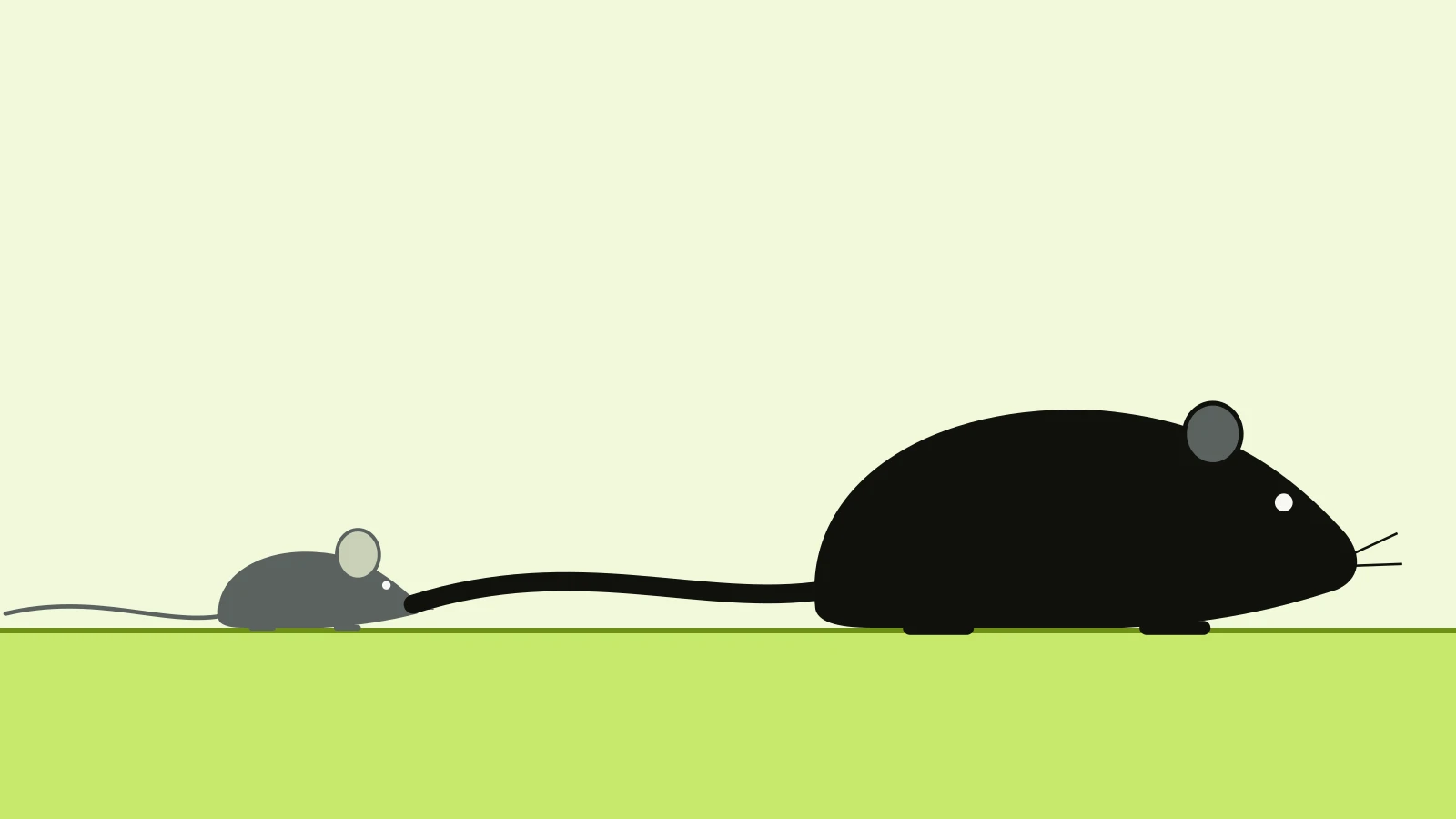
Mouse droppings are dark, rod-shaped and 3–6 mm long, about the size of a grain of rice, and they lie scattered along walls and shelves. If that matches what you found, do not sweep or vacuum. Wet them, wipe them up and throw away any food mice may have touched.
By the Bestone pest control team · Contact us
Key takeaways
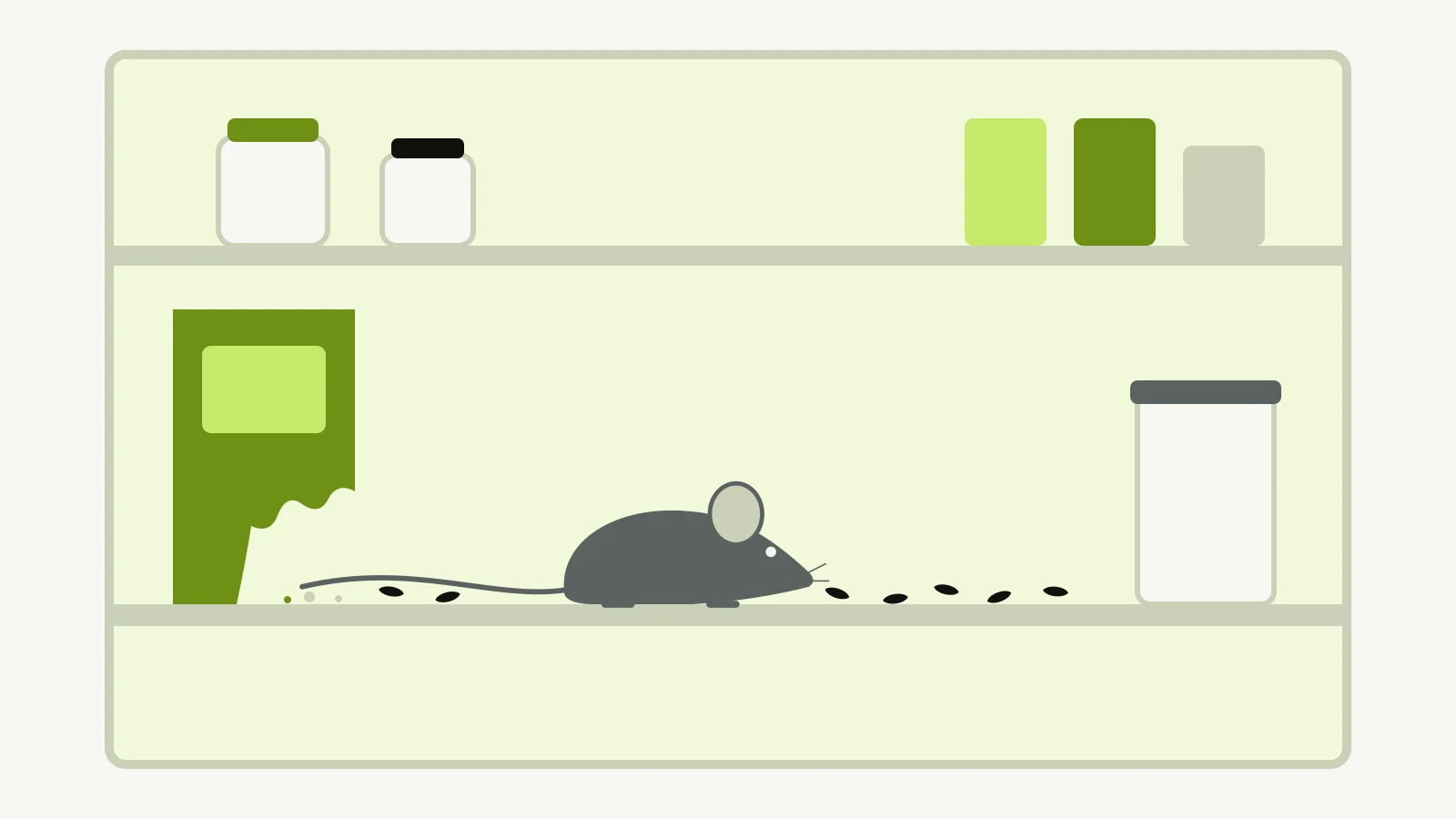
- Mouse droppings are dark, 3–6 mm long and about the size of a grain of rice. They lie scattered along walls, shelves and the backs of cupboards.
- One mouse can leave up to about 80 droppings a day, so a handful does not mean a big infestation. Count the rooms affected, not the droppings.
- Clean up wet. UKHSA says not to sweep or vacuum rodent droppings, because that can lift infectious material into the air.
- Throw away food that mice may have touched. The Food Standards Agency rule for childminders and food businesses is a sound one for any kitchen.
- To find out if mice are still active, clean one area fully and check it two days later. Our mice control starts from £99 for standard cases, confirmed in writing before booking.
On this page
- Key takeaways
- What do mouse droppings look like?
- Mouse droppings at a glance
- What do mouse droppings look like in the UK? Size, shape and colour
- How many droppings does a mouse leave?
- What the pattern tells you about routes and nests
- Mouse droppings in the kitchen: cupboards, drawers and behind the cooker
- Mouse droppings in the airing cupboard, loft and car
- Is it mouse droppings or something else?
- Mouse droppings and look-alikes compared
- Droppings in the loft? Rule out bats before you clean
- Fresh or old: are the mice still there?
- Fresh or old droppings: how to read them
- Are mouse droppings dangerous?
- What food should you throw away?
- Keep it or throw it away?
- How to clean mouse droppings safely
- What not to do when you find mouse droppings
- Children, pets and pregnancy
- What to do next after finding mouse droppings
- What to do next, by what you found
- What we do, and what it costs
- Common questions
What do mouse droppings look like?
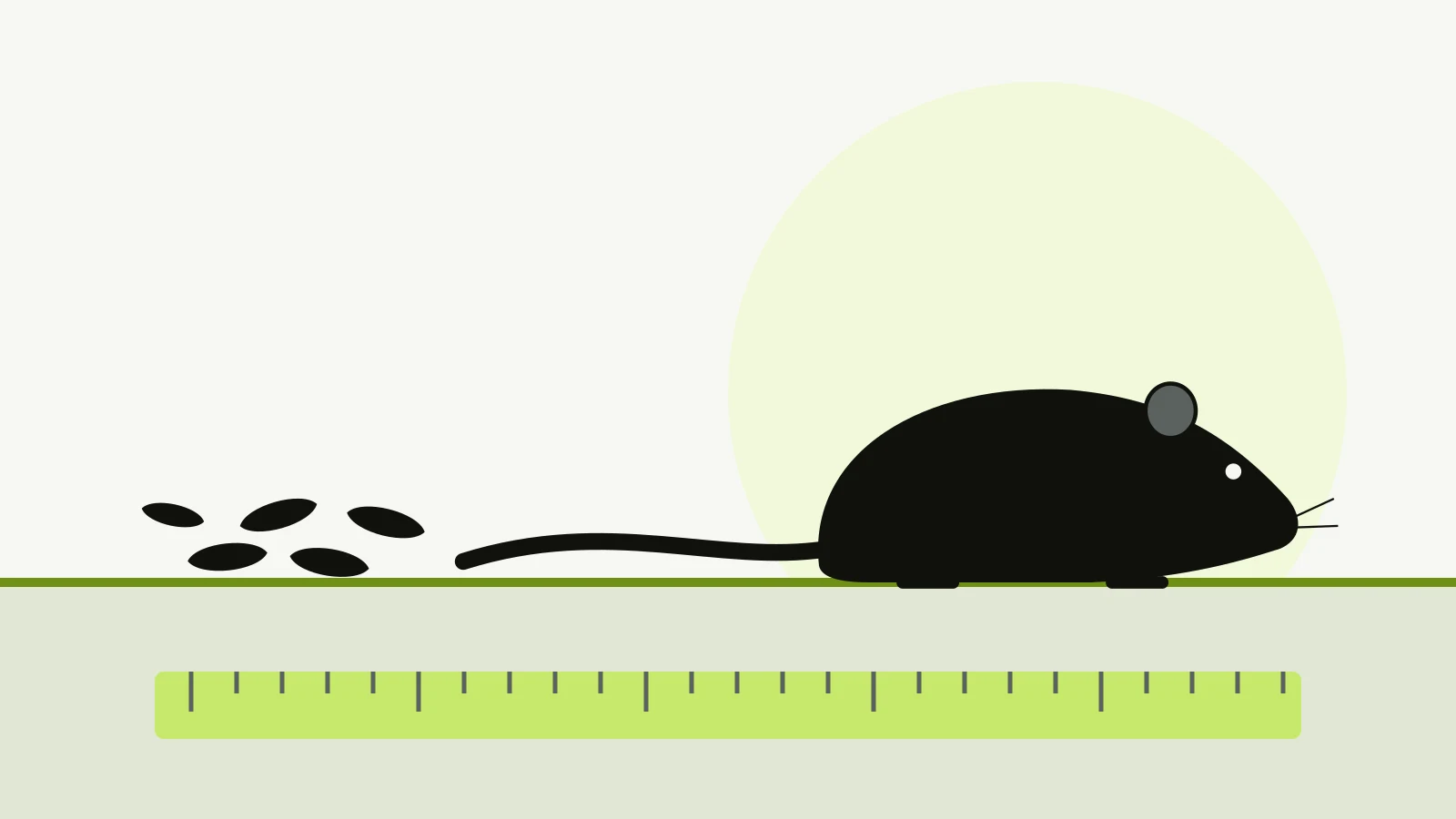
Mouse droppings are small, dark and narrow, about the size of a grain of rice. Lambeth Council uses that comparison, and Oxford City Council gives 3–6 mm long and rod-shaped. You will usually find them loose and spread out, not in a heap, along the back of a shelf, under the sink or behind the cooker.
If you have just found mouse droppings in the house, you do not need to panic and you do not need to clean yet. Take a photo with a ruler or a coin beside them, without touching them. Then read the next few sections to confirm what they are, and use the clean-up method further down when you are ready.
The table below gives the quick answer for what you are most likely looking at. If your find does not fit the first column, jump to the look-alikes section before you buy traps. Treating the wrong pest is the most expensive mistake at this stage.
Mouse droppings at a glance
| Feature | Mouse droppings | What it means if yours differ |
|---|---|---|
| Length | 3–6 mm, like a grain of rice | Over about 10 mm points to rats |
| Width | Thin, about like a grain of rice | Far thinner, like pepper, points to cockroaches |
| Shape | Rod or spindle, often pointed at an end | Round or crumbly may be another pest or old droppings |
| Colour | Black or very dark brown, can vary with diet | Grey or pale often means older |
| Layout | Scattered along a route | Heaped under one spot, in a loft, may be bats |
| Texture | Soft and moist when fresh, hard when older | Turns to sparkly dust when rolled: probably bats |
Figures from Lambeth, Oxford, Mid and East Antrim and Bromley councils, Nebraska Extension and the Bat Conservation Trust.
What do mouse droppings look like in the UK? Size, shape and colour
The house mouse is the same animal here as anywhere else, so the description does not change much, but UK sources do not use identical words. Oxford City Council calls the droppings rod-shaped. Redbridge Council and Midlothian Council call them spindle-shaped. Nebraska Extension says one or both ends narrow to a point. These all fit a small pellet that is fatter in the middle than at the tips, so do not rule out mice because yours are not perfect rods.
Length varies more than people expect. Rochdale Borough Council and Mid and East Antrim Borough Council both give 3–6 mm, and Midlothian says about 6 mm. A young mouse will leave smaller droppings than an adult. A dropping at the top of that range next to a tiny one is normal, and does not mean you have two species.
Colour is the weakest clue. Rochdale says they are often black, Mid and East Antrim says usually dark, Redbridge says almost black, and Nebraska adds that colour varies with what the mouse has eaten. Droppings also grow paler as they dry. Our recommendation is to judge size and layout first, and use colour only to help estimate age.
For a side-by-side view with rat droppings, see our guide to mice vs rats. If anything you find is clearly over 10 mm, stop reading this guide and go to our rat droppings guide, because the risks and the fix are different.
How many droppings does a mouse leave?
More than most people imagine, and mice droppings build up fast. Rochdale Borough Council says each mouse can leave up to 80 droppings a day, and Mid and East Antrim gives the same figure. Midlothian Council says 80 to 120, depending on diet. Nebraska Extension gives a lower figure of 50 to 75. Taken together, one mouse can leave somewhere between 350 and 840 droppings in a week.
The reason is the way mice eat. The University of California's pest notes say a mouse eats about 200 small meals a night. It is not sitting down to one meal, so it is constantly moving, feeding and leaving droppings as it goes. That is also why Nebraska says the droppings usually do not collect in piles.
So do not use the number of droppings to work out the number of mice. Forty droppings at the back of a shelf can be a single mouse on a single night. A better guide is spread. Droppings in one cupboard suggest an early problem or a passing visitor. Droppings in the kitchen, the airing cupboard and the loft suggest an established one, and that is when we would stop relying on a few shop-bought traps.
What the pattern tells you about routes and nests
Droppings are a map if you read them before you clean them. The International Center for Wildlife Damage Management says droppings collect along runways, near shelters and near entry holes. In a house, that usually means a line along a wall or the back of a unit, with thicker patches where the mouse stops.
A thin trail tells you the direction of travel. A dense patch tells you what the mouse wants at that point: food, warmth, or a gap to squeeze through. Plot both on a rough sketch of the room. The ends of the line are often the most useful part, because one end is where the mouse gets in and the other is close to where it nests.
Mice do not usually go far. The University of California says they rarely travel more than about 30 feet (9 m) from their nest and food. Nebraska says they seldom go more than about 50 feet (15 m), and may leave the nest up to 40 times a day. In a London flat that covers the whole home, plus the void under the floor and quite possibly the flat next door. Our recommendation: look for the nest within a few metres of the heaviest droppings, but expect it to be out of reach.
Look for the supporting signs along the same line. Rochdale describes dark grey or black smear marks left by the oils in a mouse's fur, and nests of paper, plastic bags and cloth. A shredded carrier bag under the sink is worth a photo. Do not pull a nest apart dry: UKHSA includes nests in its warning about sweeping and vacuuming.
- 1. A patch by a pipe gap: a likely way in, so seal it
- 2. A thin line under the units: the mouse is passing through
- 3. A thick patch by the cooker: a regular feeding stop
- 4. Heavy droppings at one end: the nest is probably close
Mouse droppings in the kitchen: cupboards, drawers and behind the cooker
Most people find droppings here first, and it makes sense. Rochdale and Mid and East Antrim both name kitchen sinks and units as common places, and Oxford City Council says to check behind appliances. Food, crumbs and the warmth of a fridge motor or cooker make a kitchen the obvious stop on any route.
Work through the room with a torch in this order, because each place tells you something different. Do not clean yet. Photograph first, then decide.
- Under the sink: look around the waste and water pipes. Droppings here often sit beside a gap that leads into the wall.
- Along the plinth: the kickboards under your units usually unclip. Take one off and shine a torch along the floor behind it, because that hidden strip is often the main route.
- Behind the cooker and fridge: look along the wall and floor. If you have a gas cooker, do not pull it out or strain the hose. Ask a Gas Safe engineer to move it.
- Food cupboards: check the back corners and the tops of packets. Look for gnawed corners and a sprinkle of crumbs, which the Food Standards Agency (FSA) lists as a sign alongside droppings.
- Cutlery and utensil drawers: droppings here mean a mouse is climbing through the carcass of the units. Wash everything in the drawer before use.
- Inside the oven drawer or grill pan store: crumbs and grease attract mice, so check it even if the oven is used daily.
- On the worktop: droppings out in the open are a stronger sign, because mice usually keep to cover. Plymouth City Council warns that mice continually urinate and contaminate work surfaces.
Mouse droppings in the airing cupboard, loft and car
Airing cupboards are warm, dark and full of pipes, which is why Oxford City Council singles them out. Mid and East Antrim lists hot presses, the Northern Irish name for an airing cupboard, and central heating boilers. Droppings here usually tell you about a route more than a food source. Check where pipes pass through the floor and walls, and check the boxing around them. Bag up any stored towels and bedding that have droppings on them, and put them on the hottest wash the fabric allows, as UKHSA advises for contaminated laundry.
Lofts are the place to slow down. Rochdale lists roof spaces among the common places to find droppings, and Plymouth says mice nest in lofts. Before you do anything, rule out bats, using the section below. Then think about safety. The HSE says loose asbestos insulation can be found in loft spaces and looks fluffy, like candyfloss, and may be blue-grey or whitish. Do not touch anything like that; the HSE says only a licensed contractor should work on it. Ordinary mineral wool is more likely, but if droppings are spread through insulation, wet wiping will not reach them, and our loft insulation removal service can quote for clearing it.
Cars get mice too, especially ones parked for weeks. We could not find a UK motoring body's guide to this, so the best detail comes from AAA, the American motoring group. It lists small dark droppings, gnawed wires or hoses, shredded insulation and a musty smell as signs, and says mice nest in the boot, the glovebox, under seats and around the air filter. Clean the cabin with damp paper towels and not a garage vacuum. If any wiring looks chewed, take the car to a garage before driving it, and ask them to check the cabin filter if droppings are near the vents.
Droppings in a garage or shed need the same care as a loft. UKHSA says to leave sheds and similar spaces open for at least 30 minutes before cleaning. See our guide on how to get rid of mice for dealing with mice in the walls and loft themselves.
Is it mouse droppings or something else?
Plenty of things look like mouse droppings in a dark cupboard, and a few of them lead somewhere quite different. Run through these before you spend money. Our recommendation is to compare the find against the table, and use the crumble test only if a bat is a real possibility.
Cockroach droppings are the closest match in a kitchen. Oxford City Council compares them to black pepper, Haringey Council says they are under 1 mm wide, and Midlothian Council describes pellets of about 2 mm that resemble mouse droppings but are smaller. If yours are too small to pick up individually, and they sit near warmth and water, read our guides to cockroaches in the UK and the German cockroach.
Carpenter ant frass comes up often in American guides. University of California IPM describes it as sawdust left at gallery openings, which can include wood fragments, soil and insect parts. It is not a pellet at all. We could not confirm from a UK government or council source that carpenter ants are a house pest here, so if you find fine wood dust in a UK home, think of woodworm first. Babergh District Council describes furniture beetle holes of 1–2 mm with lemon-shaped frass. For ordinary ants, see how to get rid of ants.
Seeds and rice are the harmless ones. Check whether the items are all one size and shape, and whether a packet nearby has split. Droppings vary in size and sit along a line; seeds and grains match each other and sit below the packet. Caraway and cumin seeds cause the most confusion, because they are thin, brown and tapered, but look at one under a phone camera zoom and you will see fine ridges along its length. Rice is pale, and a pale grain is not a fresh dropping. Be careful, though: a split packet of rice with droppings among the grains is still contaminated, because mice may be the reason it split.
Other small insects can leave dark specks too. If the marks are tiny stains on fabric or a mattress, see our guide to tiny black bugs in the house.
Mouse droppings and look-alikes compared
| What you found | Size and look | Where it sits | What to do |
|---|---|---|---|
| Mouse droppings | 3–6 mm, dark, firm, tapered | Scattered along walls, shelves and pipes | Clean up wet, then find the route |
| Rat droppings | Over 10 mm, thicker | Grouped in favoured spots | See our rat droppings guide |
| Cockroach droppings | About 2 mm, under 1 mm wide, like pepper | Near warmth and water, in cracks | Look for egg cases and insects |
| Bat droppings | Rice-shaped, dry, crumble to sparkly dust | Heaped below a roost or entry point | Call the National Bat Helpline |
| Carpenter ant frass | Sawdust with insect parts | At gallery openings | Rarely the answer in the UK sources we read; check for woodworm |
| Woodworm frass | Fine, gritty dust from 1–2 mm holes | Below holes in timber | Get the timber checked |
| Seeds or rice | All one size; ridged or pale | Below a split packet | Throw away the packet if gnawed |
From Oxford, Haringey, Midlothian, Bromley and Babergh councils, University of California IPM and the Bat Conservation Trust.
- 1. Mouse: firm and tapered, spread along a route
- 2. Cockroach: much smaller, more like pepper
- 3. Bat: dry, and crumbles when rolled in tissue
- 4. Wood dust: loose and gritty, below a hole
- 5. Seed: ridged and matching, near a packet
- 6. Rice: pale and blunt at both ends
Droppings in the loft? Rule out bats before you clean
This is the one look-alike with legal consequences. The Bat Conservation Trust says bat droppings are dark and shaped like grains of rice, so they are easy to mistake for mouse droppings, and that they build up below roosts and the points bats use to get in. In a building that usually means the loft or near the eaves.
The Trust's test is simple. Roll a dropping in a tissue between your finger and thumb. A bat dropping is made of dried insect remains, so it crumbles under light pressure and can look sparkly. Mouse droppings are moist when fresh. There is one catch the crumble test does not mention: the International Center for Wildlife Damage Management says old rodent droppings crumble easily too. So look for the sparkle of insect fragments as well as the crumbling, and consider where they are. A pile on one spot under the ridge points to bats; a scatter along a joist points to mice.
If you still think it may be bats, stop. GOV.UK says it is against the law to damage or destroy a resting place, or to obstruct access to one, and to intentionally or recklessly disturb a bat in a place of shelter. The Bat Conservation Trust says bats do not need to be present at the time. That rules out sealing gaps, moving insulation or laying out treatments until you know. The National Bat Helpline on 0345 1300 228 gives free advice and, according to GOV.UK, can arrange for a volunteer roost visitor to inspect your home.
Health should not be your main concern with bats. The Trust says the risk from UK droppings is extremely low, and suggests a dust mask and washing your hands. If the crumble test does not confirm bats, go back to treating the droppings as mice.
Fresh or old: are the mice still there?
Old droppings do not prove you have mice today. They may have been behind your units since before you moved in. The International Center for Wildlife Damage Management says fresh droppings are shiny and often soft, and old ones crumble easily. Mid and East Antrim also describes fresh droppings as soft and moist. Warmth dries them quickly, so a dull dropping in an airing cupboard may be younger than it looks.
We would not rely on appearance alone, because no source we read gives a reliable timescale. The practical test is much better: remove the evidence and see whether it comes back. Clean one area thoroughly, using the method below, then look again after two days. Given how many droppings a single mouse leaves, an active mouse using that spot will usually show itself quickly.
You can sharpen the test with a little dust. The same centre suggests a thin layer of chalk powder or unscented baby powder on a surface, then checking for tracks. Dust a strip along the back of a shelf or beside a suspect hole, keeping it away from food and out of reach of children. Small prints in the powder the next morning mean something is still using that route.
Fresh or old droppings: how to read them
| Sign | Fresh | Old | Our recommendation |
|---|---|---|---|
| Look | Dark and shiny | Dull, paler or greyish | Use as a clue only |
| Feel, through gloves | Soft or moist | Hard and dry, can crumble | Do not handle without gloves |
| New ones after cleaning | Yes, within two days | None after a week | This is the best test |
| Smell | Musky or ammonia-like in enclosed spaces | Little or none | A strong smell suggests a long-term problem |
| Tracks in powder | Prints overnight | Powder undisturbed | Repeat for three nights |
Based on the International Center for Wildlife Damage Management, Nebraska Extension, Bromley Council and Mid and East Antrim Borough Council. Check times are our suggestion.
Are mouse droppings dangerous?
They can be, so take them seriously, but the precautions are simple. The main risks come from germs in droppings and urine reaching your food, your hands or your lungs.
Food comes first. Mid and East Antrim says mice can spread salmonella and listeria, which can cause food poisoning and stomach upsets, and Redbridge Council names salmonella and toxoplasmosis. Oxford City Council adds that mice cannot control their bladder, so urine you cannot see often comes with the droppings you can. The NHS lists feeling or being sick, diarrhoea, tummy pain and a high temperature as symptoms of food poisoning, usually starting within a few hours or a few days.
Leptospirosis is rare in the UK, according to the NHS, but it is spread in the pee of infected animals, including mice. It can enter through the mouth, the eyes or a cut. Many people have no symptoms or a mild illness. The NHS says to see a GP if you may have been exposed and have symptoms such as a high temperature or feeling hot, cold or shivery. It says to ask for an urgent GP appointment or contact NHS 111 if you have yellow skin or eyes, a rash, cannot pass urine, or have swollen ankles, feet or hands, chest pain or shortness of breath. UKHSA says symptoms usually develop 7 to 21 days after infection, and asks you to tell your doctor if you have handled rodents.
You may also read about hantavirus, mostly in American articles. UKHSA says hantaviruses usually reach people through breathing in contaminated particles, but Nebraska Extension says house mice are not known to carry hantavirus. This is not a reason to panic. It is one more reason to clean up wet. Mouse urine can also trigger asthma in some people, Nebraska says, and University of California IPM calls it a major source of allergens, so anyone with asthma should let someone else do the cleaning.
What food should you throw away?
The short rule: if a mouse may have touched it, bin it. We could not find a Food Standards Agency page written for households on this, so the best UK wording is in its Safer Food, Better Business pack for childminders, which says that if you think food has been touched by pests in any way, you should throw it away. Bromley Council's food business guidance says the same in stricter terms: all food that may have been contaminated must go. Those rules are written for people feeding others, but a kitchen with children, older relatives or a pregnant person in it deserves the same care.
The difficulty is that you often cannot see contamination. Oxford's point about urine means a clean-looking packet is no guarantee, and the FSA lists gnawed food or packaging as a sign in its own right. Paper, card and thin plastic give little protection against something that can chew through them. Our recommendation is to go shelf by shelf and sort everything into the three groups in the table below. Do not taste or smell anything to decide. Cooking it is not the answer either, because you are also dealing with what the mouse left on the outside of the pack.
Tins and glass jars are where you need judgement. The FSA's wording has no exception for them. Our own view, and it is only that, is that a sealed, undented tin or jar with a tight lid can be kept if you clean and disinfect the outside before opening it, paying attention to the rim. If droppings or stains were on it and you would rather not take the risk, throw it away. For anyone pregnant, or with a weakened immune system, we would simply bin it: the NHS lists both groups as being at higher risk from listeriosis.
If you find droppings in food you have just bought, or in a shop, keep the receipt and the packaging and photograph it. Food safety complaints about a business go to your local council's food safety team, whose details GOV.UK can find from your postcode. Food businesses have their own duties, which our guide to commercial pest control covers.
Keep it or throw it away?
| Item | Decision | Why |
|---|---|---|
| Open packets of cereal, flour, rice, pasta | Throw away | Gnawing is easy to miss, and droppings hide inside |
| Anything gnawed or torn | Throw away | The FSA lists gnawed packaging as a sign of mice |
| Bread, cakes, biscuits, fruit left out | Throw away | Uncovered food may have been touched |
| Unopened card or thin plastic packs on the same shelf | Throw away if stained or droppings are on them | Paper and thin film protect very little |
| Pet food in the original bag | Throw away if gnawed or droppings are nearby | An easy food source for mice |
| Food in sealed hard plastic or glass tubs | Keep; clean and disinfect the outside | Check lids are tight and not chewed |
| Sealed, undented tins and jars | Your judgement; clean and disinfect, or bin | Our view, not FSA wording |
| Fridge and freezer contents, door shut | Keep unless you saw signs inside | Check that the door seal is not chewed |
| Plates, pans and cutlery | Keep; wash, then disinfect or use a dishwasher | The FSA says a dishwasher kills bacteria at high temperature |
Based on the FSA's Safer Food, Better Business pack for childminders and Bromley Council. If in doubt, throw it away.
How to clean mouse droppings safely
The method has one idea behind it: keep the droppings wet so that nothing rises into the air. UKHSA's guidance on pet rodents is the closest UK source. It is written for pet owners, but we think the same habits suit wild mice, and the CDC's guidance for wild rodents in the US matches it closely. In a kitchen cupboard the job is quick. In a loft or shed, allow for the full wait at the start.
Have the kit ready first: rubber gloves, kitchen paper, a cleaning product, a spray disinfectant suitable for surfaces that touch food, and tie-top bin bags. The FSA says disinfectants should meet BS EN 1276 or BS EN 13697, so check the label.
- Clear the area: move children and pets out, cover any cuts with a waterproof plaster, and put on rubber gloves.
- Air the space: open windows. For a shed, loft or heavy build-up, UKHSA says to leave it open for at least 30 minutes before cleaning. For a few droppings in a cupboard, opening a window while you gather your kit is reasonable.
- Empty the cupboard: take everything out and sort the food using the table above. Lift items straight up and do not sweep them along the shelf.
- Wet the droppings: spray them and the area around them with disinfectant until they are wet. Follow the label, or leave them for 5 minutes, the soak time given by both UKHSA and the CDC.
- Wipe them up: UKHSA says to use a wet wipe or damp kitchen towel while wearing gloves. Lift them away from you and fold the paper inward. Use more paper rather than rubbing.
- Bag it: put the paper, droppings and any nest material into a bag, tie it, put that in a second bag and put it in your outside bin.
- Clean, then disinfect: the FSA says this takes two stages. Remove visible dirt with a cleaning product and rinse, then disinfect as the label says. Disinfectants do not work properly on dirty surfaces.
- Finish food surfaces: on worktops and shelves, use a product suitable for surfaces touched by food, and rinse with clean water if the label asks you to.
- Deal with the laundry: wash soiled fabrics on the hottest wash they can take, as UKHSA advises. The FSA suggests 90°C for kitchen cloths; better still, use disposable kitchen towel.
- Wash up last: clean reusable gloves and let them dry, then wash your hands thoroughly with soap and water, including under your nails.
- 1. Prepare: gloves on, cuts covered, room cleared
- 2. Wet: droppings and surrounding area, never dry
- 3. Wipe: damp paper towel, then a tied bag
- 4. Finish: clean, disinfect, then wash your hands
What not to do when you find mouse droppings
Most mistakes here come from wanting the mess gone quickly. These are the ones to avoid, and the reasons behind them. The first two come directly from UKHSA, which warns that sweeping or vacuuming rodent droppings and nests can send infectious material into the air.
- Do not sweep. A dustpan and brush breaks up dry droppings and lifts dust into your breathing zone.
- Do not vacuum. UKHSA and the CDC both say not to, and Nebraska Extension calls keeping the dust out of the air critical. If you already have, stop, open the windows and carry on with the wet method. The CDC says the same steps apply. Bag the vacuum's contents outside, wearing gloves.
- Do not pick them up with bare hands, even one or two.
- Do not use a pressure washer or a dry blower in a garage or shed. The force can throw material into the air.
- Do not mix bleach with other products. If you use bleach, dilute it as the label says, never mix it with other cleaners, and keep the room ventilated.
- Do not spray disinfectant near open food, or use a kitchen cloth anywhere else in the house and then back in the kitchen. The FSA warns against moving cloths around in this way.
- Do not clean the whole route before you have photographed it. The pattern is your best evidence of where the mice come from.
- Do not block gaps in a loft before you have ruled out bats. Obstructing access to a roost can be an offence.
- Do not put poison down as a first response. It can reach pets and children, and our guide on how to get rid of mice explains why it often fails in London.
Children, pets and pregnancy
Some people should not do this job at all. UKHSA says pregnant people should avoid contact with wild rodents, and that LCMV infection in pregnancy has been linked to disease in newborns. It also says the very young, older people and those with a chronic condition or a weak immune system should be particularly careful. If that describes you, ask someone else to clean up, or call us. If you are pregnant and unwell after contact with mice or food they may have touched, the NHS says to call your midwife if you think you may have listeriosis, or get an urgent GP appointment or call NHS 111.
With children, think about floors, low cupboards and anything that goes in a mouth. Keep them out of the room during the clean-up. Wash hard toys in hot soapy water, and put soft toys on the hottest wash they can take. Clean high chairs, which the FSA names among the items to disinfect regularly. Store disinfectant, traps and bait well out of reach, as the FSA advises for all cleaning and pest control products. If a child has put a dropping in their mouth, wash their hands and face, rinse the mouth, and call NHS 111 for advice if you are worried or they become unwell.
Pets add two risks. The first is food: University of California IPM says to feed pets only what they will eat in one sitting, and we would move dry food into a sealed tub. Do not leave bowls down overnight. The second is infection. The PDSA says dogs usually catch leptospirosis from urine, through contaminated water, soil or contact with rats and other wildlife, and that an annual vaccine is the main protection. If your dog is not up to date, mention the mice to your vet. Contact a vet straight away if a pet seems unwell, and keep pets out until disinfected surfaces have dried.
If a pet catches and eats a mouse and you know poison has been used nearby, tell your vet what was used. Keep the packet or the pest controller's report handy. A written treatment record is another reason to use someone who supplies a safety report.
What to do next after finding mouse droppings
Once the area is clean, you have to deal with the cause. Clean-up alone will not last, because a mouse leaving 80 droppings a day will soon be back on the same route. Take the steps in this order: store food in sealed containers, clear crumbs at night, and find the gaps. The FSA's checklist is short: no food or dirty plates left out at night, and no food left on the floor. Then use our guide on how to get rid of mice for trap placement and proofing, and our rodent proofing service if the gaps are out of reach.
If you rent, report it now, in writing, with your photos and the date. Citizens Advice says your landlord usually only has to act once they know, and that they are likely to be responsible if the tenancy says so or if a repair they failed to make let the mice in. You may be responsible if you caused it, for example through poor rubbish disposal. If your landlord does not act, contact your council's pest control or environmental health team. Council and housing association tenants also have Awaab's Law: an emergency hazard must be made safe within 24 hours, or you must be offered somewhere else to stay.
There is also a little-known legal duty. Section 3 of the Prevention of Damage by Pests Act 1949 requires an occupier of land to tell the local authority in writing if rats or mice are living there in substantial numbers. It does not apply to a few droppings, and the section has an exception for agricultural land, but it is worth knowing if the problem is large. If you are moving out, our end of tenancy cleaning checklist covers the units and appliances where droppings get left behind.
What to do next, by what you found
| What you found | Our recommendation | When to call someone |
|---|---|---|
| A few old droppings, nothing new after a week | Clean up, store food in sealed tubs, keep checking | If fresh ones appear |
| Fresh droppings in one cupboard | Clean up, set traps, find the gap | If still appearing after a week of trapping |
| Droppings in several rooms | Clean up, then get the routes checked | Now; book an inspection or treatment |
| Droppings in a loft | Rule out bats and check the insulation | If you cannot get in safely, or they are spread through it |
| Flat or terrace with neighbours affected | Tell the landlord or managing agent in writing | Ask for treatment across the building |
| Pregnancy, a baby or a weak immune system at home | Let someone else clean up | Now |
What we do, and what it costs
You do not need to be certain what you have found before you contact us. Send a photo of the droppings with a ruler or coin beside them, tell us which rooms are affected and give us your postcode. We confirm the price, the number of visits and what is included in writing before any work is booked. You get a safety report, and our packages include follow-up and proofing advice.
Mice control starts from £99 for standard cases, and the final price depends on the property, the extent of activity, access and follow-up needs. For a 1-bed property, our packages are £160–£190 for 2 visits and £210–£230 for 3 visits. For a 2-bed, they are £180–£220 and £240–£270. The 2-visit packages carry a 1-month written guarantee and the 3-visit packages a 3-month written guarantee. A pest inspection starts from £60 if you only want the signs and entry routes reviewed.
For comparison, Redbridge Council's fee for 2026/27 is £200 for mice over three visits, and our Ilford pest control page sets the figures out line by line. Proofing is priced separately: entry-point mesh proofing is £45–£85, confirmed in writing for your property. If there is a smell under the floor, ask about dead pest removal. The full list is on our prices page, and our pest control cost guide explains what drives the price.
We are based on Clements Road in Ilford, cover London and carry public liability insurance. Our phone lines are open Monday to Saturday, 8am to 8pm, or you can contact us online.
Common questions
What do mouse droppings look like?
They are small, dark pellets about 3–6 mm long, roughly the size of a grain of rice, often with a point at one or both ends. They are usually scattered rather than heaped. Our look-alikes table helps if you are unsure.
How many droppings does one mouse leave a day?
UK councils usually say up to about 80. Midlothian Council says 80 to 120 depending on diet, while Nebraska Extension says 50 to 75. Either way, a few dozen droppings can come from one mouse, which is why our guide to getting rid of mice starts with the routes.
Are old mouse droppings dangerous?
Treat them with the same care as fresh ones. Dried droppings are more likely to crumble into dust if disturbed, so wet them before you pick them up and do not sweep or vacuum. If there are a lot in a loft, ask about loft insulation removal.
Can I vacuum mouse droppings?
No. UKHSA says not to sweep or vacuum rodent droppings, and the CDC gives the same advice. If you already have, open the windows and clean the area wet; the CDC says to follow the normal clean-up steps. The full method is above.
Do I have to throw away food if I find mouse droppings in the cupboard?
Throw away anything open, loose, gnawed or stained, and anything a mouse may have touched. Sealed tins and jars are a judgement call, covered in our food table. If in doubt, bin it.
Does one dropping mean I have mice?
It means a mouse has been there, not that one lives there now. Clean the spot, check it again after two days, and look under the sink and behind the cooker. If fresh ones appear, read how to get rid of mice.
Can mouse droppings make you ill?
They can. Councils link mice with salmonella and listeria, and the NHS says leptospirosis is spread in the pee of infected animals, including mice. Leptospirosis is rare in the UK, but see a GP if you feel unwell after a clean-up and mention the mice. A pest inspection deals with the source.
How do I tell mouse droppings from rat droppings?
Measure one. Mouse droppings are 3–6 mm; rat droppings are much longer, at 10 to 14 mm according to Bromley Council and about 20 mm according to Oxford City Council. Our rat droppings guide covers them in detail.
Who pays to deal with mouse droppings in a rented flat?
It depends on the cause. Citizens Advice says landlords are likely to be responsible if the tenancy says so or a repair they failed to make let the mice in, and that they usually only have to act once they know. Report it in writing, and ask us for a written quote to share with them.
Sources
Figures differ a little between sources, so ranges are given where they do. Sources reviewed on 1 November 2026.
- UKHSA: reducing the risk of human infection from pet rodentsgov.uk(opens in a new tab)
- Food Standards Agency: pest control and chemical contamination (Safer Food, Better Business for childminders)assets.publishing.service.gov.uk(opens in a new tab)
- Food Standards Agency: cleaning (Safer Food, Better Business for childminders)assets.publishing.service.gov.uk(opens in a new tab)
- GOV.UK: find your local food safety teamgov.uk(opens in a new tab)
- NHS: leptospirosis (Weil's disease)nhs.uk(opens in a new tab)
- NHS: food poisoningnhs.uk(opens in a new tab)
- NHS: listeriosisnhs.uk(opens in a new tab)
- HSE: locations of asbestos and taking the right actionhse.gov.uk(opens in a new tab)
- GOV.UK: bats, protection, surveys and licencesgov.uk(opens in a new tab)
- Prevention of Damage by Pests Act 1949, section 3legislation.gov.uk(opens in a new tab)
- Citizens Advice: if there are pests or vermin in your rented homecitizensadvice.org.uk(opens in a new tab)
- Bat Conservation Trust: identifying bat droppingsbats.org.uk(opens in a new tab)
- Bat Conservation Trust: bat droppings and urinebats.org.uk(opens in a new tab)
- Bat Conservation Trust: bats and the lawbats.org.uk(opens in a new tab)
- Oxford City Council: miceoxford.gov.uk(opens in a new tab)
- Oxford City Council: cockroachesoxford.gov.uk(opens in a new tab)
- Lambeth Council: micelambeth.gov.uk(opens in a new tab)
- Redbridge Council: pest control, miceredbridge.gov.uk(opens in a new tab)
- Bromley Council: pest control in a food business, rodentsbromley.gov.uk(opens in a new tab)
- Haringey Council: cockroaches pest controlharingey.gov.uk(opens in a new tab)
- Rochdale Borough Council: how to identify and control micerochdale.gov.uk(opens in a new tab)
- Mid and East Antrim Borough Council: micemidandeastantrim.gov.uk(opens in a new tab)
- Midlothian Council: micemidlothian.gov.uk(opens in a new tab)
- Midlothian Council: cockroachesmidlothian.gov.uk(opens in a new tab)
- Plymouth City Council: miceplymouth.gov.uk(opens in a new tab)
- Babergh District Council: wood boring insectsbabergh.gov.uk(opens in a new tab)
- PDSA: leptospirosis in dogspdsa.org.uk(opens in a new tab)
- University of California IPM: house mouse pest notesipm.ucanr.edu(opens in a new tab)
- University of California IPM: carpenter ant frassipm.ucanr.edu(opens in a new tab)
- Nebraska Extension: controlling house miceextensionpubs.unl.edu(opens in a new tab)
- International Center for Wildlife Damage Management: inspectionicwdm.org(opens in a new tab)
- CDC: how to clean up after rodentscdc.gov(opens in a new tab)
- AAA: how to keep mice out of your caraaa.com(opens in a new tab)
Want it dealt with?
Tell us what you have seen, the rooms and your postcode. You do not need to know which pest it is. We confirm the price in writing before any work is booked.