Pest Control · 31 min read · Updated 1 November 2026
How to Get Rid of Mice in Your House: UK Guide
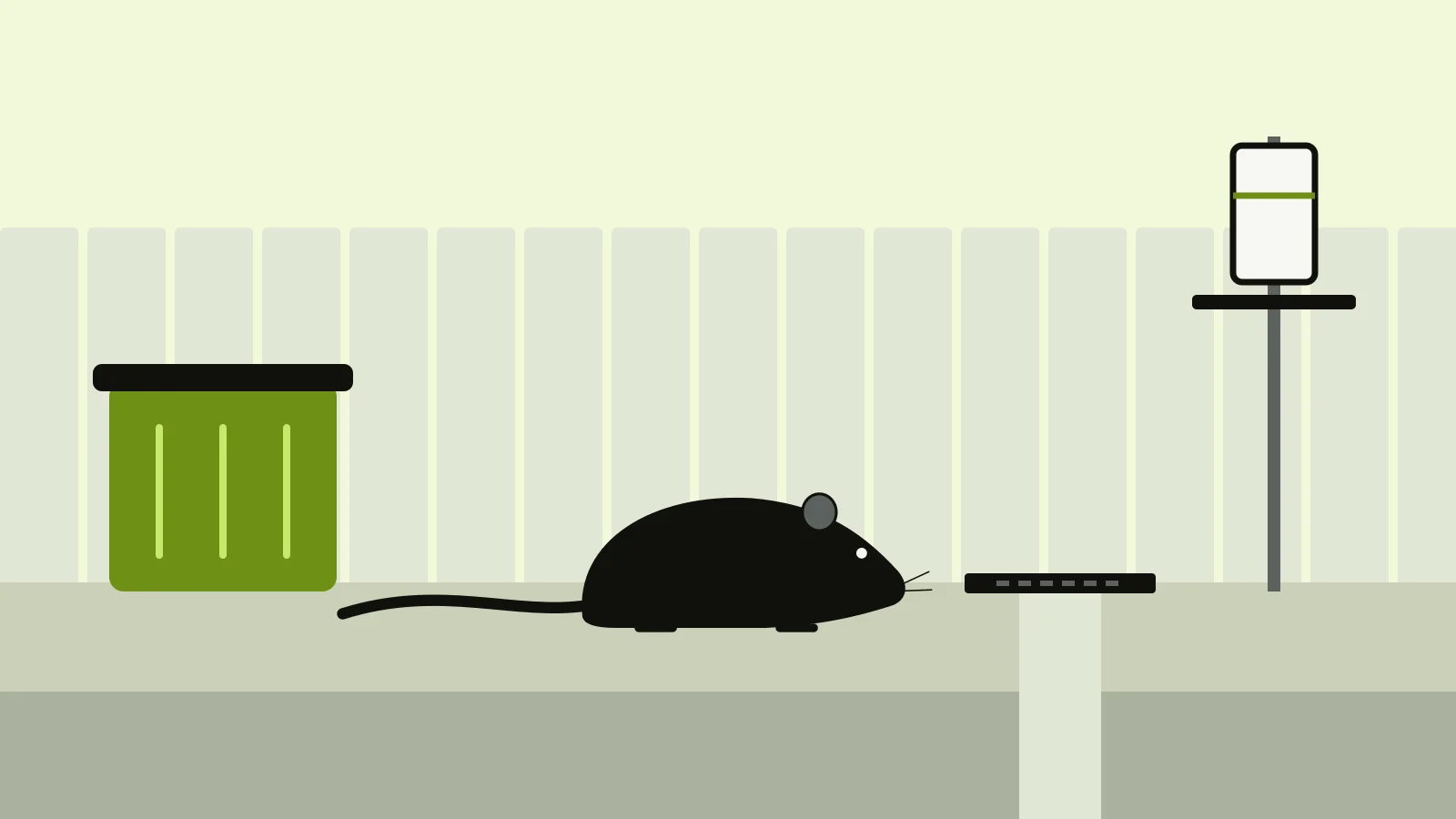
To get rid of mice, work in order: take away their food tonight, seal every gap of 5 mm or more, then set break-back traps at right angles to the walls where they run. Traps alone rarely last, because new mice keep arriving through the same gaps.
By the Bestone pest control team · Contact us
Key takeaways
- Work in this order: take away food tonight, seal gaps down to 5 mm over the next few days, and set break-back traps along the walls as soon as you can.
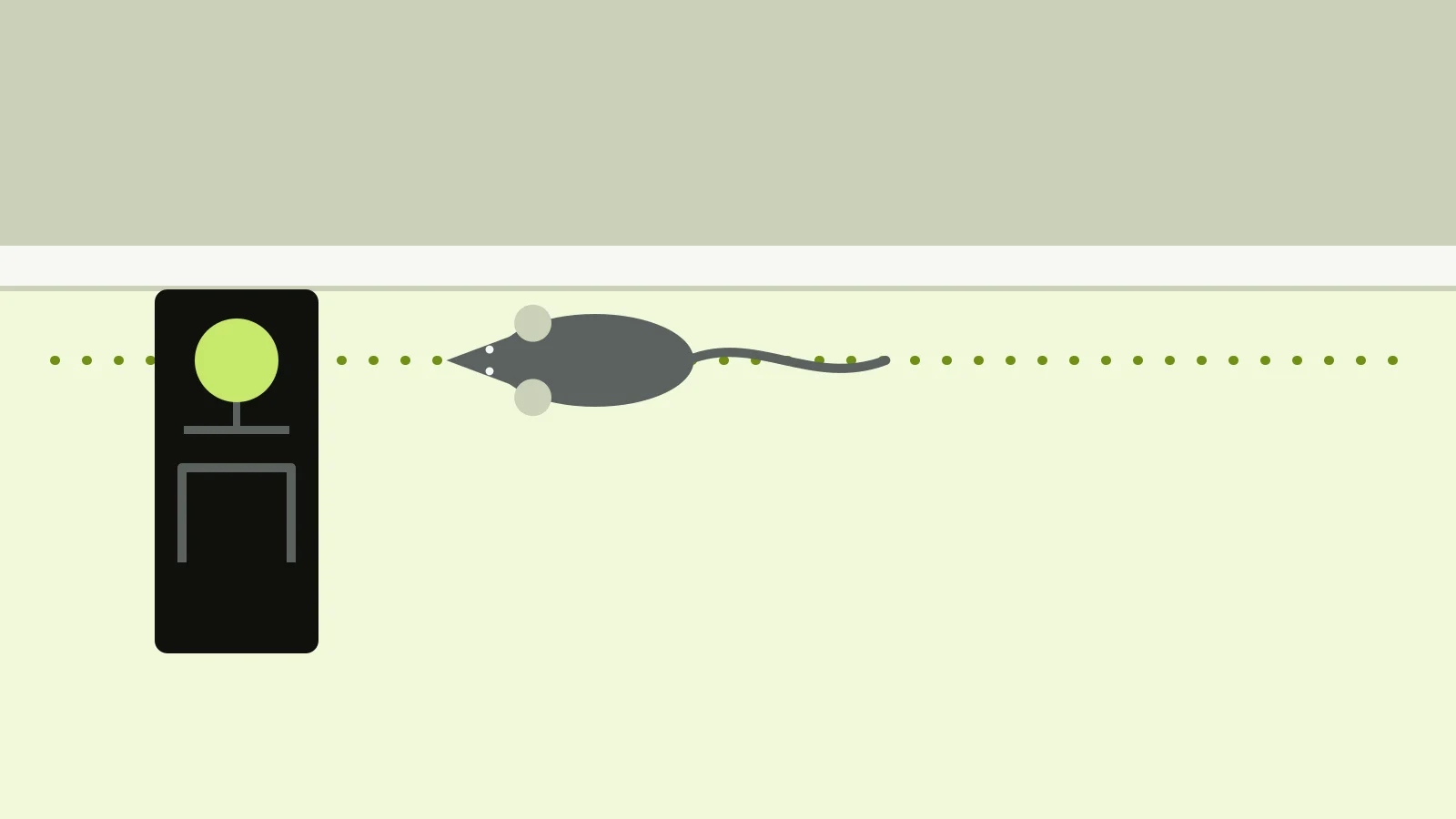
- Set traps close to the wall and at right angles to it, with the trigger end against the skirting. Use at least six, and check them every morning.
- Glue traps are illegal for rodents in England unless a licensed professional sets them, and a private house is unlikely to qualify for a licence.
- Shop-bought poison is a poor bet in London. The BPCA says almost all of the city's house mouse populations are resistant to traditional rodenticides.
- Our mice control starts from £99 for standard cases, with the price, visits and inclusions confirmed in writing before booking.
On this page
- Key takeaways
- How to get rid of mice: the short answer
- What to do first, by situation
- Why you should start this week
- Step 1: take away the food tonight
- Step 2: seal the gaps mice use to get in
- Mouse proofing materials: what to use where
- Which mouse traps work best?
- Mouse trap types compared
- Where to put mouse traps, and what to bait them with
- How to get rid of mice fast: a three-week plan
- Do ultrasonic devices or peppermint oil keep mice away?
- Are glue traps legal for mice in England?
- Why shop-bought poison often fails in London
- Mice in walls: what to do about the scratching
- Mice in the loft: how to clear them
- Mice in flats and terraced houses
- How to deal with dead mice and droppings safely
- When to call a professional
- DIY or professional pest control for mice?
- What we do, and what it costs
- Common questions
How to get rid of mice: the short answer
If you want to know how to get rid of mice in your house, the answer is three jobs in a fixed order. First remove food, so traps become the most interesting thing in the room. Then proof the gaps, so no new mice can get in. Then trap the ones already inside. All three can run in the same week, but skipping one is the usual reason a mouse problem drags on for months.
Most households with one or two mice in a single room can do this themselves for the cost of a few traps and some cement. Rats are a different job, so if you are not sure what you have, read our guide to mice vs rats before you start, and our guide on how to get rid of rats if that is your answer.
This table shows the right starting point for the most common situations. The rest of the guide explains each step.
What to do first, by situation
| What you have found | Do this first | DIY or professional? |
|---|---|---|
| A few droppings in one kitchen cupboard | Clear the cupboard, seal food, set traps either side of it | DIY is reasonable |
| Droppings in several rooms | Seal food, photograph the spots, look for entry gaps | Try DIY for one week, then call |
| Scratching in a wall at night, nothing seen | Trap along the wall in the room below, and find the entry | DIY first, professional if it continues |
| Droppings in the loft | Check for gaps at the eaves and party wall, then trap | DIY if you can move safely up there |
| Mice keep returning to a flat | Tell the landlord or managing agent in writing | Usually needs building-wide action |
| Live mice seen in daylight, or a food business | Call a professional the same week | Professional |
Our own recommendations, based on the sources listed at the end of this guide.
Why you should start this week
Mice breed quickly, and sources give different figures. The University of California's pest guide says a female may have 5 to 10 litters a year, with about 5 or 6 pups in each, and that young mature at 5 to 6 weeks. Hull City Council puts it more bluntly: two mice can produce 120 offspring in a year. The exact figure matters less than the direction. A problem you could handle with six traps in November may not be a six-trap problem by January.
The RSPCA says house mice breed throughout the year and can move into homes in any season. Redbridge Council says indoor problems are most common in winter, when food and warmth are harder to find outside. Both are right: autumn and winter are when most people notice mice, but warm weather is no reason to wait.
There are practical reasons to act as well. Hull City Council says each mouse leaves around 80 droppings a day, and that mice can cause fires by gnawing electrical cables. Plymouth City Council says the same about fires. Dover District Council adds wood, wires and pipes to the list of things they damage. Having mice is not a sign of a dirty home, as West Lothian Council points out. They come for warmth and shelter, and any building can get them.
Step 1: take away the food tonight
A mouse needs very little. Utah State University Extension says one leftover cookie can feed a mouse for more than a week, and the RSPCA says rodents can live on crumbs. Dover District Council adds that they get most of their water from food. So one bag of cereal at the back of a cupboard can support a family, and a trap with a dab of chocolate will struggle to compete with it.
Food removal does not kill a single mouse. What it does is make them hungrier, bolder and more willing to investigate a trap. Do this before anything else, and keep doing it for as long as the problem lasts.
- Move cereal, rice, pasta, flour, biscuits and pet food into glass, metal or hard plastic containers with tight lids.
- Pick up pet bowls at night and store pet food the same way, as the RSPCA advises.
- Pull out the cooker, fridge and washing machine if you safely can, and clean the crumbs and grease underneath.
- Empty the toaster crumb tray and clean the bottom of kitchen cupboards and drawers.
- Keep food at least 24 cm off the floor where you can. Hull City Council says this makes access harder and signs easier to spot.
- Bag and seal rubbish, and keep the bin lid closed, as Redbridge and Lambeth councils both advise.
- Outside, clear spilt bird seed, fallen fruit and anything piled against the house. Lambeth Council also lists standing water.
Step 2: seal the gaps mice use to get in
Proofing is the step that makes the result last. The University of California guide calls exclusion the most successful and permanent form of control, and it is the reason a home can stay clear after the traps are gone. Without it, you are only removing the current tenants. West Lothian Council is honest about the limit: you can never make a building completely mouse-proof, but you can cut the risk a long way.
The BPCA says a mouse needs a gap of only 5 mm. Other sources give slightly different figures. The University of California says to seal anything over a quarter of an inch, about 6 mm, and West Lothian Council says 10 mm, the width of a pencil. Work to the smallest number, 5 mm. If a pencil fits, the gap is well over the limit.
Start low down, where the BPCA says mice are most likely to get in, then work upward. Hull City Council reminds readers that mice are good climbers and can jump more than 24 cm, so holes well above the floor count too. Take a torch and check around every pipe, cable and duct that passes through a wall. Under the sink and behind the washing machine are the first places to look, because West Lothian Council says most mouse problems start in the kitchen.
The materials matter as much as the location. The BPCA's method is wire wool set in quick-setting cement. The wire stops the mouse from chewing through while the cement sets, and the cement holds the wire in place. Wire wool used alone is only temporary, because the University of California says it may rust. The table sets out what to use where.
Mouse proofing materials: what to use where
| Where | Use | Avoid |
|---|---|---|
| Pipe and cable gaps in walls | Wire wool packed in, then quick-setting cement over it | Filler, foam or wire wool on its own |
| Gaps in brickwork and along the skirting | Cement or mortar | Caulk, rubber or plastic fillers |
| Air bricks and vents | Fine metal mesh with holes no bigger than 5 to 6 mm | Blocking them completely, which stops ventilation |
| Gap under an external door | Brush strip if the gap is over 4 mm | Rubber seals alone, which can be gnawed |
| Door edges that have been chewed | Metal kick plate or metal strip | Wood or plastic repairs |
| Larger openings | Sheet metal or heavy metal mesh, fixed down | Plastic mesh, which mice can chew |
Sources disagree on foam. West Lothian Council accepts expanding foam over wire wool, while the University of California lists foam among materials that fail, and the RSPCA warns about plastic fillers. We recommend cement.
- 1. Air brick: fit fine metal mesh, never block it
- 2. Pipe gaps: wire wool set in quick-setting cement
- 3. External door: brush strip if the gap is over 4 mm
- 4. Loft: check where the party wall meets the roof
- 5. Under the floor: the gap may start next door
Which mouse traps work best?
For most homes, the answer is a good break-back trap, also called a snap trap. It is cheap, it does not involve chemicals, and you can see what you have caught, so a dead mouse does not end up under your floor. The RSPCA says well-built spring traps that kill quickly can be considered humane, but warns that not all traps do the job properly. Buy strong traps from a known brand, and avoid flimsy ones.
Whichever type you pick, the RSPCA says you become responsible for the welfare of any animal held in your trap, under the Animal Welfare Act 2006. That is the reason for checking traps every day, and Hull City Council gives the same daily rule. If you are thinking of a live-catch trap, the RSPCA warns that mice can die inside them. It adds that it knows of no study of what happens to released mice, and that other rodents show very high death rates when moved somewhere unfamiliar.
Mouse trap types compared
| Type | Good for | Problems | Our view |
|---|---|---|---|
| Break-back trap | Any home. A quick kill when set correctly | Can snap fingers and paws. Keep from children and pets | First choice |
| Break-back trap in a closed box | Homes with pets or young children | Fit it where it still sits tight to the wall | First choice around pets |
| Live-catch trap | People who do not want to kill | Mice can die inside. Release may not help them | Only if checked several times a day |
| Glue trap | Nothing. Illegal for you to set in England | Slow suffering, and can catch other animals | Do not use |
| Poison bait | Professional use, as part of a plan | Resistance in London, risk to pets, smell of dead mice | Not our recommendation for DIY |
Where to put mouse traps, and what to bait them with
Placement decides whether you catch anything. Mice run along edges, so the BPCA says traps belong close to walls and at right angles to them. The University of California guide adds the detail that matters: put the trigger next to the wall, so a mouse following the skirting has to cross it. A trap set along the wall, or out in the middle of the floor, may be walked around for weeks.
Use more traps than you think you need. Utah State University Extension says at least six indoors. The University of California guide says to space them no more than about 10 feet (3 m) apart where mice are active, because a mouse seldom goes more than about 30 feet (9 m) from its nest and food. In a small London kitchen, that means a real concentration of traps. Six in one room is normal.
For bait, the BPCA suggests nutty chocolate or raisins, and Hull City Council suggests chocolate, cereal or sugar. Skip the cheese: Utah State's guidance says it loses its appeal once it has been sitting out. Use a pea-sized amount and press it onto the trigger, because the University of California guide warns that too much bait lets a mouse feed without setting off the trap. Cotton wool or dental floss can also work as a lure for females looking for nest material. The same guide notes that peanut butter is popular but can be an allergy risk.
If mice are avoiding your traps, try two tricks. Set a pair of traps side by side, 1 to 2 inches (2.5 to 5 cm) apart, to catch a mouse that jumps over the first. Or leave traps baited but unset for a day until the bait has gone, then set them, as Utah State University Extension suggests. A mouse that has already had a free meal is less likely to be wary of the trap.
- Good spots: behind the cooker and fridge, under the sink, inside the base of kitchen units, along skirting near droppings, and in corners.
- Lift the kitchen plinth if it unclips. The space behind it is a common run and a good place for a trap.
- Wear gloves if you prefer, and wash your hands after handling traps.
- Keep traps where children and pets cannot reach them, or use a closed box.
- Check every morning. Remove any catch, reset, and move traps that stay untouched after three nights.
- 1. At right angles to the wall, trigger against it
- 2. A pair side by side catches mice that jump
- 3. Beside appliances, and in dark corners
- 4. Never out in the open or parallel to the wall
How to get rid of mice fast: a three-week plan
There is no honest overnight fix, but you can compress the job into days by doing everything at once. The plan below is what we would suggest for a typical kitchen problem. Tonight, deal with food and put out your first traps if you have them. Over the next few days, seal every gap you can reach. If you have run out of time, block a gap temporarily with wire wool and come back with the cement.
Check the traps every morning and keep a simple note of dates, catches and new droppings. Clean up all old droppings early, using the method further down this guide, so that anything you find afterwards is new. A diary like this also gives a professional, a landlord or a council officer far more to work with than a general complaint.
Day seven is your decision point. If you are catching mice and droppings are slowing down, keep going. If there are fresh droppings but nothing in the traps, move them once more and then stop guessing, because something about the setup is not working. When catches stop, leave the traps down for a few more weeks. University of Georgia Extension gives the same advice, because a late-arriving or trap-shy mouse is easy to miss.
- 1. Food control starts tonight and never stops
- 2. Do the main proofing in the first few days
- 3. Traps go down early and stay down
- 4. Day 7: look at the droppings and decide
Do ultrasonic devices or peppermint oil keep mice away?
Ultrasonic plug-ins are widely sold as an easy answer, so it is worth being precise about the evidence. The University of California guide says these devices have very limited use, because ultrasound is directional, does not pass behind objects, loses strength with distance, and mice quickly get used to repeated sounds. Utah State University Extension says mice may be frightened at first but usually return, and that advertising claims have not withstood scientific testing. University of Georgia Extension calls them almost completely useless against rodents.
One maker, Repello, reports a Swedish university field study in which rat sightings fell by more than 90% over three weeks. That was on brown rats, and it is reported by the company selling the device, with no sample size given in the article we read. The same article summarises older studies showing only a short-lived effect. We would not treat it as evidence for mice in a home. Our recommendation is not to rely on any ultrasonic device, and certainly not to delay trapping or proofing because one is plugged in.
Peppermint is a closer call, and here the sources do disagree. The RSPCA suggests cotton wool soaked in peppermint, eucalyptus or spearmint oil, placed at key points and replaced regularly, as part of humane deterrence. On the other side, University of Georgia Extension says commercial repellents are generally ineffective and homemade ones generally do not work, and Utah State's guidance says rodents can quickly get used to repellents. We could not find a published trial showing peppermint oil clears mice from a home.
So the fair summary is this: peppermint may put a mouse off a particular spot for a short time, and it will not remove mice that already have food and a nest. If you like the idea, use it as a small extra after the proofing is done, and keep it away from your traps, where the aim is to attract mice.
Are glue traps legal for mice in England?
No, not for householders. The Glue Traps (Offences) Act 2022 makes it an offence to set a glue trap in England to catch a rodent, or to set one in a way that creates a risk of catching a rodent. The offences came into force on 31 July 2024. The Act defines a glue trap as a trap designed or capable of catching a rodent that uses an adhesive as a means of capture, so a homemade sticky board counts too.
There is an exception, but it will not apply to you. Under GOV.UK's guidance, only professional pest controllers can hold a glue trap licence, and only in exceptional cases where other methods have failed or are not practical. Hospitals, food factories and laboratories are the examples given. The same guidance says private houses are unlikely to qualify, along with restaurants, pubs and takeaways.
The penalties are real. A person guilty of setting a trap, or of knowingly causing or permitting someone else to do so, can face imprisonment, a fine or both. The law also covers finding one: if you find a glue trap in England set so that it could catch a rodent, and without reasonable excuse do nothing to make it safe, that is a separate offence carrying a fine. So if you move into a flat and find an old glue board behind the cooker, make it safe. Ask your landlord or agent if you think it may have been set under a licence, because a reasonable belief that it was licensed counts as an excuse.
A glue trap being on sale does not make it legal to set one to catch a rodent. Beyond the law, the RSPCA says trapped animals can suffer for hours or longer and may be left to die slowly. Other animals can be caught as well. There is no case for using one at home.
Why shop-bought poison often fails in London
London has a specific problem. The BPCA says almost all house mouse populations in the city are resistant to traditional rodenticides, and that amateur products are restricted. Research supports this. A 2020 report for the Campaign for Responsible Rodenticide Use by the University of Reading's Vertebrate Pests Unit found resistance mutations in 87 of 93 house mice tested across the UK, or 93.5%, and described London as a hotspot. Those samples were submitted to the researchers and were not a random survey, but the pattern is clear.
A 2022 laboratory study in Pest Management Science says most mice in some areas, such as London, carry two copies of a resistance mutation. It found that older first-generation poisons such as warfarin were unlikely to work against resistant mice of the type it tested, and advised against bromadiolone as well. Stronger active substances such as brodifacoum, difethialone and flocoumafen were still expected to work, though the Reading report notes unconfirmed accounts of difethialone failing in central London. HSE says products sold to the public may be limited in strength, where they can be used and pack size. Put together, this means the box from the hardware shop may be the weakest option against the toughest mice.
Not every source agrees that shop bait is a poor option. An older Hull City Council leaflet says mouse poisons can give excellent results, though it dates from about 2008. Dover District Council, by contrast, says shop products are weaker than professional ones. We side with the BPCA and the Reading research for London homes, and we do not recommend poison as a DIY method here.
Resistance is not the only issue. HSE says rodenticides can pose a higher risk to children, pets and other animals, and that people should consider hygiene, physical barriers and traps first. The RSPCA says users are legally required to take reasonable precautions to keep poison away from animals and children, and describes these poisons as causing a slow death. Utah State University Extension warns that poisoned mice can die in walls or cabinets, leaving you with a smell you cannot reach. PDSA says a dog can be poisoned by eating a poisoned rodent, and that signs of anticoagulant poisoning may not appear for 3 to 5 days.
- If a child or adult may have swallowed bait, the NHS says to call 999 or go to A&E, and not to make them sick. Call NHS 111 if you are unsure whether it is harmful.
- If a pet may have eaten bait or a poisoned mouse, call a vet immediately, even if it seems well, and take the packaging with you. PDSA says not to wait for symptoms.
Mice in walls: what to do about the scratching
Mice in walls are usually using a void: the gap behind plasterboard, a boxed-in pipe run, a chimney breast or the space behind kitchen units. Dover District Council says house mice nest in partitions, under floors and behind wall boarding. You will usually hear them after dark as light, quick scratching. Utah State University Extension says gnawing or running sounds in walls and floors at night are a common sign.
Do not start by knocking holes in the wall, and do not put poison into the void. A mouse that dies inside a stud wall is hard to find and may smell. Instead, remember that mice in walls still come out to feed. Work out which room is nearest the noise, then look for the place the void meets that room: the pipe holes under a sink, the gap behind a kitchen plinth, a loose bit of skirting, or the hole where a radiator pipe comes through the floor.
Put your traps there first, then seal outward. Close every gap you can see in that room, except the one you think they are using most. Keep traps by that last gap until activity stops for a week or so, then seal it with wire wool and cement. This way you catch them, rather than trapping a live mouse in the wall to chew a new way out.
Also look at what surrounds the void. Utah State University Extension says mice are particularly destructive to rigid foam and other insulation in walls. If you hear gnawing rather than running, or lights flicker or a socket smells hot, stop and get an electrician to check it, because Hull City Council and Plymouth City Council both link mice to fires from gnawed cables. Noise that continues beyond a couple of weeks of good trapping is a reason to call us, as the entry point is often out of sight.
Mice in the loft: how to clear them
Mice in the loft are common, because they climb well. Plymouth City Council says mice nest in loft spaces and under floors, and Hull City Council's point about climbing means they do not need a ground-level route to reach the top of a house. They can go up a cavity or pipe run from a kitchen and then spread out under the insulation. Loft insulation is warm, quiet and rarely disturbed, so nests can go unnoticed for a long time.
First, check what you actually have. Light, fast pattering at night suggests mice. Heavy thuds and daytime movement suggest squirrels, which need squirrel control and a different approach. Large droppings suggest rats. The edible dormouse has its own strict rules on trapping and release, but the RSPCA says it is confined almost entirely to the Chiltern Hills, so it is unlikely in London.
Then treat the loft like any other room. Set traps at right angles along the joists, against the party wall, and at the eaves where you find droppings. Place them on a board if the insulation is deep. Check them every day. If you cannot get into the loft safely, or the only access is across bare joists, leave this job to someone else. A trap you cannot reach every morning is a welfare problem, and a foot through the ceiling is a much bigger one.
Seal the loft last, once you know the routes. Look at the eaves, where cables and pipes enter, and the top of the party wall in a terrace. Remember that lofts need air, so do not block ventilation gaps completely. Fit fine metal mesh instead, in line with Hull City Council's advice on air bricks. If droppings are spread through the insulation, clearing it is a bigger job, and our loft insulation removal service can quote for that. Do not sweep or vacuum dry droppings: use the cleaning method below, and wear a mask.
Mice in flats and terraced houses
Shared buildings are the hardest setting, and they describe much of London. Plymouth City Council says mice often move between individual flats and terraced properties, and West Lothian Council warns that the entry point into a terraced or semi-detached block may not be on your property. Floor voids, service risers, boxed-in pipes and shared loft spaces can all link homes. You can do everything right and still get mice from next door.
Talk to your neighbours. It can feel awkward, but West Lothian Council makes the point that there is no shame in it, and finding out that three flats in a block have mice changes the plan completely. If several homes are affected, one household trapping alone will not solve it. Ask the freeholder or managing agent to arrange treatment and proofing across the building, including bin stores and communal cupboards. Kensington and Chelsea Council says whether a landlord must also bait for rodents depends on the lease, so check yours if you are a leaseholder.
If you rent, report it to your landlord or agent straight away, in writing, with dates and photos. Citizens Advice says landlords are generally only responsible once they know. They are usually responsible if the tenancy agreement says so, if the agreement requires them to keep the home in a good and habitable state, or if the mice come from repairs they failed to make. You may be responsible if you caused the problem, for example by not disposing of rubbish properly. Kensington and Chelsea Council says landlords, including housing associations, must carry out any proofing needed.
Council and housing association tenants have an extra protection. Citizens Advice says that under Awaab's Law, an infestation that counts as an emergency hazard must be made safe within 24 hours, or you must be offered somewhere else to live. If a landlord ignores you, contact your council's environmental health team. Tower Hamlets Council, for example, says it can treat pests and charge the tenant or landlord, or order the landlord to act. In a few cases the law goes further: section 3 of the Prevention of Damage by Pests Act 1949 requires an occupier of land to notify the council in writing if mice are living there in substantial numbers.
When you move out, keep the record of what was treated. Our end of tenancy cleaning checklist covers the kitchen units and appliances where droppings tend to be left behind.
How to deal with dead mice and droppings safely
Clean up wet, not dry. UKHSA's guidance on pet rodents says rodent infections can spread through contact with urine, droppings and bedding, and through breathing in dust from them. It says not to sweep or vacuum droppings, because that can send infectious material into the air. Serious infection is uncommon, but the precautions are simple. The guidance is written for pet owners, and we think the same habits make sense for wild mice.
UKHSA says pregnant people should take extra care, avoid wild rodents and ask someone else to do the cleaning, and that LCMV infection in pregnancy has been linked to disease in newborns. It says young children, older adults and people with weakened immune systems should also be especially careful. If one of those applies to you, ask someone else to clean up, or call us.
- Open windows first. UKHSA suggests at least 30 minutes of airing before cleaning out sheds and animal housing, and that is a sensible start for a loft or cupboard.
- Put on rubber gloves and cover any cuts with a waterproof plaster. Wear an FFP1 or FFP2 mask for a dusty loft or a heavy build-up.
- Pick up droppings with a wet wipe or damp paper towel. Spray or wet dry material first so it does not lift into the air.
- Pick up a dead mouse with a gloved hand or a plastic bag turned inside out. Lambeth Council says to put dead mice in a plastic bag, then in the bin.
- Bag all the waste, then disinfect the area and leave it to air dry.
- Clean and disinfect the trap before you reuse it, and keep it out of the kitchen sink where you can.
- Wash anything soiled on the hottest setting the fabric allows, as UKHSA advises.
- Take off the gloves and wash your hands thoroughly with soap and water.
- Throw away any food a mouse has reached. Redbridge Council says mice contaminate food with urine and droppings.
When to call a professional
Start with the health point. Leptospirosis can spread through the urine of infected animals, including mice. If you may have been exposed and have a fever or chills, a headache, sickness or diarrhoea, body aches, red eyes or loss of appetite, the NHS says to see a GP. It says to ask for an urgent GP appointment or get help from NHS 111 if you have jaundice, a rash, trouble urinating, swelling in your ankles, feet or hands, chest pain or shortness of breath. Serious illness is uncommon, but UKHSA says to tell your doctor if you have handled rodents.
For the mice themselves, DIY has a clear limit. If you have done the three steps properly for a week and nothing has improved, more of the same is unlikely to help. Pest control for mice is worth paying for when the cause is out of reach, when a building is involved, or when you need someone to answer for the result in writing. If you are comparing mice exterminators, ask each one the same questions: how many visits, what is included, is proofing part of the price, and what happens if the mice return.
Also compare with your council. Services differ a lot. Our Ilford page sets out Redbridge's 2026/27 fee of £200 for mice over three visits, 7 to 14 days apart, and notes that proofing is not included. Redbridge's mice page says a follow-up is free if live evidence remains four weeks after the final treatment. Lambeth Council says up to three visits, 7 to 14 days apart. Tower Hamlets Council says it usually charges for mice, but that state pensioners living alone or only with another pensioner get treatment free. Check your own borough's page before you book.
DIY or professional pest control for mice?
| Situation | DIY is fine | Call a professional |
|---|---|---|
| How far it has spread | One room, one or two mice | Several rooms or floors |
| Progress after a week | Catches, and droppings slowing down | Fresh droppings, empty traps |
| Where the activity is | Kitchen, cupboards, reachable loft | Sealed voids, unsafe lofts, risers |
| Type of home | House, with entry points on your own walls | Flats or terraces with neighbours affected |
| Who lives there | Adults, and pets kept away from traps | Pregnancy, babies, or serious health conditions |
| Type of property | Your own home | Food business, or a let property with a complaint |
| History | A first problem | Mice returning after earlier treatment |
What we do, and what it costs
If you would rather hand it over, tell us the rooms affected, what you have seen and when, and your postcode. We look at the property, the likely entry points and the extent of activity, then confirm the price, the number of visits and what is included in writing before any work is booked. You get a safety report, and our packages include follow-up and proofing advice.
Mice control starts from £99 for standard cases. If you are searching for pest control mice cost figures, these are our packages: for a 1-bed property, 2 visits cost £160–£190 and 3 visits £210–£230. For a 2-bed, it is £180–£220 and £240–£270. For a 3-bed, it is £190–£240 and £240–£299. The 2-visit packages include a 1-month written guarantee and the 3-visit packages a 3-month written guarantee. Final prices depend on the property, the extent of activity, access and follow-up needs. For the wider picture on mouse exterminator cost in the UK, see our pest control cost guide.
Proofing work is priced separately. For rodent proofing, our price list shows entry-point mesh proofing at £45–£85 and a follow-up proofing and sealing package at £60, confirmed in writing for your property. If you can smell something under a floor, ask about dead pest removal, which is quoted for each job. If you do not yet know what you are dealing with, start with a pest inspection. Our full list is on the prices page.
We are based on Clements Road in Ilford, cover London, and carry public liability insurance. Our phone lines are open Monday to Saturday, 8am to 8pm, or you can contact us online.
Common questions
What is the fastest way to get rid of mice?
Remove every food source tonight and put out at least six break-back traps along the walls where you have found droppings. Seal the entry gaps within days, because mice that can still get in will replace those you catch. If you want it handled for you, see our mice control service.
Will mice go away on their own?
It is unlikely while they have food, warmth and shelter. House mice breed all year, and the RSPCA says they can live in houses at any time of year, not only in winter. Start with the order of work in this guide.
What smell do mice hate?
The RSPCA suggests cotton wool soaked in peppermint, eucalyptus or spearmint oil as a deterrent, topped up regularly. University of Georgia Extension says homemade odour repellents generally do not work, so treat scents as an extra and never as the fix. Sealing the gaps does far more, so start with rodent proofing.
How do I know when all the mice are gone?
Clean up all droppings, then check the same spots each morning. When traps stay empty and no new droppings appear for a few weeks, the problem has most likely ended, and it is sensible to keep a trap or two in place during that time. If you are unsure, book a pest inspection.
How can I tell if it is mice and not rats?
Mouse droppings are about the size of a grain of rice, and rat droppings are much bigger. Rats need a different plan and should be dealt with sooner. To tell them apart, read our mice vs rats guide.
Can I use glue traps for mice at home in England?
No. Setting a glue trap to catch a rodent in England has been an offence since 31 July 2024 unless it is done under a licence, and only professional pest controllers can hold one. Pick a legal option from our trap comparison.
Is my landlord responsible for mice?
Often, yes. Citizens Advice says a landlord is usually responsible if the tenancy agreement says so or if the mice come from repairs they failed to make, and Kensington and Chelsea Council says landlords must deal with any proofing needed. Report it in writing straight away, and if you need a written price, contact us.
How much does a mouse exterminator cost in the UK?
Prices vary by area, property and number of visits. Our mice control starts from £99, and a 3-visit package for a 1-bed property is £210–£230, while Redbridge Council charges £200 for three visits. For more options, see our UK pest control cost guide.
Do mice carry diseases I should worry about?
They can. Redbridge Council names Salmonella and Toxoplasmosis, and UKHSA says rodents can pass on infections through urine, droppings and dust, though serious illness is uncommon. Clean up wet, never with a brush or vacuum, and for local help see our Ilford pest control page.
Sources
Figures differ a little between sources, so ranges are given where they do. Sources reviewed on 1 November 2026.
- BPCA: pest advice for controlling house micebpca.org.uk(opens in a new tab)
- Glue Traps (Offences) Act 2022, section 1legislation.gov.uk(opens in a new tab)
- GOV.UK: check if you can get a glue trap licencegov.uk(opens in a new tab)
- GOV.UK: glue traps licensing scheme opensgov.uk(opens in a new tab)
- Prevention of Damage by Pests Act 1949, section 3legislation.gov.uk(opens in a new tab)
- HSE: rodenticideshse.gov.uk(opens in a new tab)
- UKHSA: reducing the risk of human infection from pet rodentsgov.uk(opens in a new tab)
- NHS: leptospirosis (Weil's disease)nhs.uk(opens in a new tab)
- NHS: poisoningnhs.uk(opens in a new tab)
- University of Reading for CRRU UK: anticoagulant resistance in rats and mice in the UK (2020)bpca.org.uk(opens in a new tab)
- Baxter and others (2022): resistance factors for Y139C house mice, Pest Management Sciencepmc.ncbi.nlm.nih.gov(opens in a new tab)
- RSPCA: living with rats and micerspca.org.uk(opens in a new tab)
- PDSA: rat poisoning in dogspdsa.org.uk(opens in a new tab)
- Citizens Advice: if there are pests or vermin in your rented homecitizensadvice.org.uk(opens in a new tab)
- Redbridge Council: pest control, miceredbridge.gov.uk(opens in a new tab)
- Lambeth Council: micelambeth.gov.uk(opens in a new tab)
- Kensington and Chelsea Council: pests in rented accommodationrbkc.gov.uk(opens in a new tab)
- Tower Hamlets Council: pests and vermintowerhamlets.gov.uk(opens in a new tab)
- Plymouth City Council: miceplymouth.gov.uk(opens in a new tab)
- Hull City Council: house mice, how to control themhull.gov.uk(opens in a new tab)
- Dover District Council: micedover.gov.uk(opens in a new tab)
- West Lothian Council: proofing your property against rats and micewestlothian.gov.uk(opens in a new tab)
- University of California IPM: house mouse pest notesipm.ucanr.edu(opens in a new tab)
- Utah State University Extension: commensal rodentsextension.usu.edu(opens in a new tab)
- Utah State University Extension: how to rid your house of rodentsextension.usu.edu(opens in a new tab)
- University of Georgia Extension: rats and miceipm.uga.edu(opens in a new tab)
- Repello: does ultrasound work against rats and mice? (manufacturer's report)repello.com(opens in a new tab)
Want it dealt with?
Tell us what you have seen, the rooms and your postcode. You do not need to know which pest it is. We confirm the price in writing before any work is booked.