Pest Control · 31 min read · Updated 1 November 2026
Cockroaches in the UK: How to Identify and Get Rid of Them
Found a cockroach in the UK? It is most likely a German cockroach (about 10 to 15 mm, tan, near kitchen appliances) or an Oriental cockroach (about 20 to 24 mm, shiny and dark, in damp, low areas). One sighting usually means others are hiding, so identify it first, then use bait and not sprays.
By the Bestone pest control team · Contact us
Key takeaways
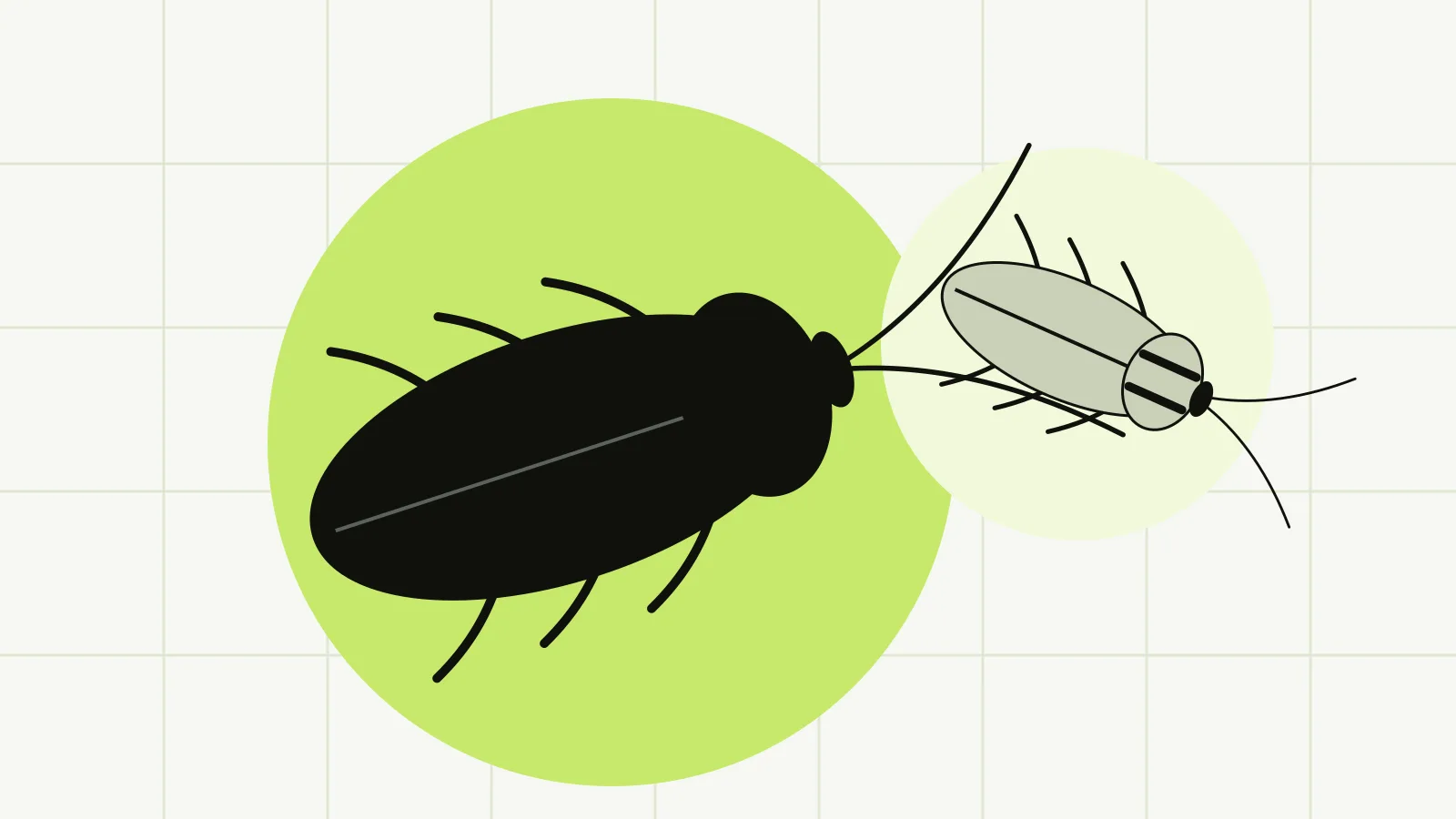
- Most indoor UK cockroaches are one of two species: the German, about 10 to 15 mm and tan with two dark stripes, or the Oriental, about 20 to 24 mm and shiny dark brown to black.
- One live cockroach in daylight is rarely alone. They hide by day, so check for droppings like black pepper, brown egg cases and shed skins near warmth and water.
- Bait does most of the work. Surface sprays and foggers reach only the insects you can see and can scatter the rest, so do not spray before you have asked for advice.
- In a block of flats, the cockroaches may be using shared ducts and pipe runs. Tell your landlord or managing agent early, because treating one flat alone may not hold.
- Our cockroach control starts from £119. Most jobs need a follow-up, so 2-visit and 3-visit packages are available, and we confirm the price in writing before booking.
On this page
- Key takeaways
- Cockroach UK identification: what have you found?
- UK cockroach species side by side
- German, Oriental, American or brown-banded: how to tell them apart
- Is it really a cockroach? Lookalikes and native species
- Cockroach droppings, egg cases and other signs
- Why do I have cockroaches?
- How fast do cockroaches breed?
- Cockroaches in London flats and shared heating ducts
- Found a cockroach? What to do first
- Cockroach baits vs sprays: which actually works?
- Baits, sprays, traps and foggers compared
- Can you get rid of cockroaches yourself?
- What professional cockroach treatment involves
- Are cockroaches dangerous? Health risks explained
- Landlords and tenants: who pays for cockroach removal?
- Who usually deals with it?
- How to stop cockroaches coming back
- What we do, and what it costs
- Cockroach treatment prices in London
- Common questions
Cockroach UK identification: what have you found?
If you have searched cockroach UK after finding one on the kitchen floor, you have almost certainly found one of two insects. Redbridge Council says only the Oriental and German species are commonly found in this country, and Lambeth Council names the same two for its borough. The American and brown-banded cockroaches do turn up, but the British Pest Control Association (BPCA) describes them as occasional finds.
Check three things. How long is it, leaving out the antennae? What colour is it? Where and when did you see it? A tan insect about the length of a fingernail, darting behind the cooker at midnight, points to a German cockroach. A dark, heavier insect moving across a damp basement floor or near a drain points to an Oriental.
Do not squash it if you can help it. Trap it under a clear glass, or put a dead one on white paper or clear tape, and photograph it next to a ruler. Sources differ a little on sizes, so we use the BPCA's figures below and show the wider council ranges in the next section. Take your photo and use the table to narrow it down.
UK cockroach species side by side
| Feature | German | Oriental | American | Brown-banded |
|---|---|---|---|---|
| Adult length | 10 to 15 mm | 20 to 24 mm | 20 to 30 mm | 10 to 15 mm |
| Colour | Light yellow-brown, two dark stripes behind the head | Shiny black, brown or mahogany | Reddish-brown, faded yellow edges behind the head | Brownish, with pale bands across the body |
| How common in UK homes | Common | Common | Occasional | Occasional |
| Usual places | Warm appliances, sinks, pipes, heating ducts | Cool, damp basements and drains, heating ducts | Dark, humid, undisturbed places such as basements | Warm spots: ceilings, attics, appliance motors |
| Egg case | Carried by the female until near hatching | Dropped in a dark crevice well before hatching | About 8 mm, dropped near food or shelter | No UK source found |
Sizes and places from the BPCA advice sheet. American egg case and colouring from Penn State Extension, a US source. Councils give slightly different sizes.
German, Oriental, American or brown-banded: how to tell them apart
The German cockroach is the small one. The BPCA gives 10 to 15 mm, while Gravesham Borough Council says 13 to 16 mm and Midlothian Council 12 to 15 mm. Look for two dark stripes running back from the head. Those stripes are the most useful clue, because Oxford City Council simply calls the species dark brown and Gravesham says it can look tan, brown or almost black. It loves warmth and moisture: the BPCA says its nickname is the steam fly, and that you should look behind ovens and fridges with warm motors.
The Oriental cockroach is the one most people picture. The BPCA gives 20 to 24 mm, Redbridge up to 25 mm, Gravesham 18 to 29 mm, and Rochdale Borough Council about 30 mm, so treat any dark insect in that range as a candidate. It is shiny and heavy-looking. Penn State Extension says females have only small wing pads and males have wings covering about three-quarters of the abdomen. It is also the hardier species. The BPCA says it thrives in cool, damp basements and drains, and may occasionally be seen around outdoor bin areas in summer.
Height in the building is a useful clue. Midlothian Council says the Oriental cannot climb smooth surfaces, while German cockroaches climb them easily, and Penn State says Orientals usually stay at or below ground level and are seldom seen on walls or upper floors. Rochdale Borough Council describes cockroaches in general as able to climb smooth vertical surfaces, so this is a pointer and not proof. Still, a cockroach inside a high wall cupboard is more likely to be a German than an Oriental.
The American cockroach is the largest. The BPCA gives around 20 to 30 mm and Penn State roughly 1.5 inches, about 38 mm, which is a wide gap, so go by colour and shape too. It is reddish-brown with fully developed wings. The BPCA says it is not always found in UK homes and businesses, and that when it is, it is usually in dark, humid and undisturbed places such as basements. If you think you have found one in a flat, get it confirmed from a clear photo before assuming anything about the source.
The brown-banded cockroach is about the same size as a German, 10 to 15 mm. The BPCA says it favours warm, humid places including ceilings, attics and the inside of appliance motors. That matters for treatment: if you see small cockroaches away from the kitchen and bathroom, tell whoever is treating them, so the bait is not limited to the usual places.
- 1. American: the largest, an occasional UK find
- 2. Oriental: dark and heavy, with short wings
- 3. German: look for two dark stripes behind the head
- 4. Brown-banded: German-sized, often away from kitchens
- 5. Native species: outdoors, and not pests
Is it really a cockroach? Lookalikes and native species
Dark beetles cause most false alarms. The BPCA says ground beetles can be about the same size as an Oriental cockroach, but they do not have the very long, whip-like antennae, and many have an iridescent shine. A cockroach has a flat oval body, antennae about as long as its body or longer, and a quick, jerky run. If your insect is rounder, has short antennae and walks slowly, it is more likely to be a beetle. Tiny patterned beetles near carpets or wardrobes are a different problem, covered in our carpet beetle guide.
Britain also has native cockroaches, which surprises people. The Wildlife Gardening Forum lists three: the tawny, dusky and lesser cockroaches. They are 5 to 11 mm long, live outdoors on rough grass and scrub, and are rarely recorded even in gardens. They are not pests. They are mainly found in southern England, with the lesser mostly near the coast. A single small insect that does not match the indoor species, with no droppings or egg cases, does not justify treatment on its own.
Our recommendation is simple. If you have a photograph and no other signs, send the photo before you pay for anything. If you have droppings, egg cases or more than one live insect, skip the identification debate and move to the next step, because the treatment plan for German and Oriental cockroaches starts the same way: a survey of where they are hiding. A pest inspection settles it if you are unsure.
Cockroach droppings, egg cases and other signs
Cockroaches avoid light. Redbridge Council warns that they rarely show themselves in daylight, so infestations can go unnoticed until they are extensive. That is why the signs they leave matter more than a sighting. Hastings Borough Council adds that if you see one, there are likely to be many more. Seeing one in daylight is a good reason to look harder that same evening.
Pick a time after dark, wait a few minutes, then go into the kitchen with a torch and turn the light on quickly. Check the places where warmth, water and a crack meet: under the sink, behind the cooker and fridge, around the boiler and washing machine, along the kickboards under the units, and behind the bath panel if it lifts away. Look for the signs below, and photograph what you find before cleaning it up.
- Droppings: small and dark. Oxford City Council compares them to black pepper, Haringey Council says under 1 mm wide, and Midlothian Council describes pellets about 2 mm long. City of Westminster calls them spindle-shaped, like mouse droppings but usually much smaller. If yours look larger, compare our guide to mice and rats.
- Brown smear marks: Midlothian Council describes brown liquid marks, much larger than fly marks, often numerous around hiding places.
- Egg cases: brown capsules that Oxford City Council compares to a small kidney bean. City of Westminster gives about 6 mm for German and about 12 mm for Oriental. The BPCA says 13 mm for Oriental.
- Shed skins: Haringey Council says cockroaches shed their skin 5 to 8 times as they grow, so pale, empty skins point to young insects developing on site.
- Smell: Midlothian Council describes a musty, rank smell. The BPCA ties a strong odour to large infestations, so a smell usually means this is not a new problem.
- Damage: the BPCA lists damage to food or packaging, and Haringey Council mentions damage to items such as leather and books.
- Young nymphs: very small, wingless versions of the adult. The BPCA says nymphs look like adults on a smaller scale. Finding them means cockroaches are breeding in the home, not just passing through.
Why do I have cockroaches?
Cockroaches do not need a dirty house. They need warmth, water, food and somewhere to hide, and almost any kitchen offers all four. Rochdale Borough Council says they can survive for several months without food but only a few days without water, which is why leaks and damp sink cupboards matter so much. Food can be as simple as grease behind a cooker or crumbs under a toaster.
There are three common ways in. The first is carried in. Penn State Extension says German cockroaches come in with boxes, grocery bags and suitcases, and the BPCA warns about second-hand fridges and freezers. If you have recently moved, had a delivery or bought a used appliance, that is a reasonable place to start. The second is through the building, along pipes, ducts and shared voids, which we cover below. The third is up from below: the BPCA says cockroaches move from sewers and drains into buildings, and Gravesham Borough Council describes Oriental cockroaches using drains and damp basements.
The BPCA also says cockroaches can pass through gaps as small as a quarter of their body size, so a neat-looking kitchen can still have plenty of routes. Hastings Borough Council says that once conditions suit them, an infestation establishes itself quickly. Use the location of what you find to work out the source. Droppings behind one appliance suggest it came in with you. Activity around a pipe boxing in several rooms suggests the building. Activity near a floor drain or basement door suggests the drains.
How fast do cockroaches breed?
Faster than most people expect, and this explains why treatment takes more than a single visit. Cockroaches go through three stages: egg, nymph and adult. Females produce capsules called oothecae, which we call egg cases here. Redbridge Council says these hold 8 to 30 eggs depending on the species, and the BPCA gives about 30 or more for a German and 16 to 18 for an Oriental. Penn State Extension puts the German figure as high as 30 to 48 and City of Westminster at up to thirty, so about 30 is a fair working number.
The two species behave differently, and that changes treatment. The BPCA says a German female carries her egg case until the nymphs are nearly ready to hatch, about 28 days on average, so the eggs travel with her into hiding. An Oriental female drops hers in a dark crevice long before it hatches, and the BPCA says incubation takes around two months. City of Westminster says six to twelve weeks. That dropped case sits hidden in a gap while treatment takes place.
Young cockroaches then take time to mature. The BPCA gives six to 12 weeks for a German and six to 12 months for an Oriental. Redbridge Council says both species are sexually mature at about four months, and Penn State's ranges are longer again, because temperature and food make a big difference. For a heated London flat, assume the fast end for Germans.
Sources also disagree on egg case output. Oxford City Council says up to eight a month, City of Westminster says four to eight capsules at monthly intervals, and Penn State says four to eight in a lifetime. Whichever is right for your home, the practical lesson is the same: a few survivors or one hidden batch of eggs can restart the problem, so plan for bait that stays active and for at least one follow-up visit.
- 1. German females carry the egg case until it is nearly ready
- 2. A German can be adult within about three months
- 3. Oriental egg cases are dropped and hidden, so they outlast a quick treatment
- 4. Control usually takes 6 to 12 weeks, says City of Westminster
Cockroaches in London flats and shared heating ducts
Much of London lives in buildings that suit cockroaches very well: purpose-built blocks, ex-council estates and Victorian houses split into flats. The BPCA says both the German and Oriental species are often found around the heating ducts and boiler rooms of large, centrally heated buildings, and Rochdale Borough Council also lists heating ducts, cellars and basements. City of Westminster says they infest all types of building, from blocks of flats to industrial premises, hiding around sinks, drains, cookers, skirting boards and service ducts.
The route matters because a treated flat can be re-entered. Pipes that serve several flats often run through a shared riser, with boxed-in gaps behind the kitchen units and bath. A pipe hole left unfilled under your sink can connect to the same space as next door's. Hastings Borough Council is direct on this: in a building with more than one dwelling, it says the whole building must be treated for treatment to be effective.
That does not always happen, so work out where you stand. If the signs started around the pipes, more than one flat is affected, or the problem returned after an earlier treatment, ask your landlord, freeholder or managing agent whether anyone else has reported it and who looks after the risers and common parts. Leaseholders should also check their lease for who repairs and pays for those parts. Councils vary: Redbridge Council, for example, charges per household, and books flats and rooms in a split property separately, so a block-wide job is not automatic.
Our advice is to knock on a door or two, or leave a polite note. Cockroaches carry a stigma, so many neighbours stay quiet until the problem is large. In the meantime, seal what you can on your side, and keep records. If you manage a block or an HMO, ask us about pest control contracts for shared areas. The service page explains how ongoing work is scoped, and the price is confirmed in writing.
- 1. Gaps around pipes under the sink link your kitchen to the riser
- 2. The shared riser or heating duct connects every floor
- 3. Boiler rooms and drains suit Oriental cockroaches
- 4. Warm fridge and cooker motors suit German cockroaches
Found a cockroach? What to do first
The hour after you find one is about gathering evidence, removing easy food and water, and avoiding anything that makes treatment harder. You do not need to empty the kitchen or leave home. City of Westminster warns that cockroaches do not disappear of their own accord, so start now and do not wait to see if it happens again.
- Photograph the insect and any droppings or egg cases, with a ruler in shot. Note the room and the time.
- Store food in sealed containers, as City of Westminster and Hastings Borough Council advise, including pet food and anything in open packets.
- Clear crumbs and grease from around the cooker, toaster and under the fridge. Wash up before bed.
- Dry the sink and wipe the draining board at night. Fix or report dripping taps and leaks.
- Empty the kitchen bin at night and keep a lid on it.
- Put dead cockroaches in a plastic bag, then in your outside bin, as Lambeth Council advises. Clean up droppings with detergent and disinfectant, using gloves.
- Do not spray yet, and do not set off a fogger. See the next section for why.
- Tenants: report it to your landlord or agent in writing today, with your photos.
- Do not move boxes or appliances from an affected room into a clean one until you have had advice.
Cockroach baits vs sprays: which actually works?
Bait is the better first choice, particularly for German cockroaches. The BPCA says most professional treatments now rely on bait, such as gel or powders, and that residual sprays are used less since baits arrived. City of Westminster, Oxford, Redbridge and Haringey councils all describe gel-based treatments. Gel goes into the cracks where cockroaches live and is eaten, so it can reach insects you never see. Redbridge says its gel is slow-acting, affects only cockroaches and keeps working for up to two months.
Sprays have a real problem. Illinois Extension reports a 2024 University of Kentucky study of shop-bought products on German cockroaches: when exposure was limited to 30 minutes, mortality was below 20 per cent for every treatment tested. Pyrethroids, the usual ingredient, are slightly repellent, so the insects tend to walk through and not stay on the treated surface. The products were American, so UK results may differ, but the behaviour is the same point. Penn State Extension goes further and says residual sprays and foggers are of little value and can scatter cockroaches, making control harder.
Sources do not fully agree. City of Westminster says shop-bought insecticides with a knockdown and residual effect are the best DIY choice, and Rochdale Borough Council lists residual sprays as one control option. Lambeth Council and the BPCA still keep spray for heavily infested areas or the edges of an infestation, so it is not useless. Our recommendation is to treat spray as a professional's supporting tool, used in the right place, and to avoid it as your first move. Sticky traps are another tool: the BPCA and Rochdale both say they are for monitoring and will not solve the problem.
Baits, sprays, traps and foggers compared
| Method | How it works | Best use | Main weakness | Our view |
|---|---|---|---|---|
| Gel bait | Eaten in or near the hiding place | German and Oriental cockroaches indoors | Must not be cleaned off, and needs time | First choice |
| Bait stations | Enclosed bait placed near activity | Light activity, or where gel is hard to place | Only works where placed | Good support for gel |
| Residual spray | Leaves a treated surface | Edges of heavy infestations | Misses hidden insects and may scatter them | Professional use, not a first step |
| Dust | Fine powder in voids | Ducts and dead spaces, says the BPCA | Needs access and careful application | Leave to a professional |
| Sticky traps | Catches passing insects | Showing where and how many | Does not control an infestation | Use to monitor |
| Foggers | Mist released into a room | Rarely suits a home | Of little value and can scatter them, says Penn State | Avoid |
Summary of advice from the BPCA, City of Westminster, Redbridge Council, Rochdale Borough Council, Illinois Extension and Penn State Extension. Always follow the product label.
Can you get rid of cockroaches yourself?
You can try for one or two recent sightings with no signs of breeding, in a house with no shared walls or pipes. Beyond that, we would not recommend it. The BPCA says control is seldom easy because of the difficulty of getting insecticide to the insect. Midlothian Council advises against treating cockroaches yourself, and Gravesham Borough Council says over-the-counter products are less effective than professional ones. Illinois Extension agrees that DIY gel baits are better than sprays, but still unlikely to match thorough professional treatment.
If you decide to try, use bait stations or gel from a reputable retailer that are clearly labelled for cockroaches. Put them in small amounts close to the signs you have found, such as under the sink, behind the fridge and beside pipe entries, and out of reach of children and pets. Do not spray near them, because you want cockroaches to feed and sprays can scatter them. Do not apply anything to food surfaces unless the label allows it.
Stop and get help if any of these apply: you are seeing them in daylight, you have found egg cases or nymphs, more than one room is affected, you live in a flat, someone in the home has asthma or is pregnant, or there is a baby in the home. The same applies if you keep fish, because Redbridge Council and City of Westminster both mention risks or precautions for them. Set a limit too: if sticky traps are still catching insects after two weeks, pay for a professional opinion instead of buying another product.
- Always read and follow the label. The BPCA and City of Westminster both stress this.
- Keep every product out of reach of children and pets, and store it in its original packaging.
- Do not mix products, or use a garden product indoors.
- Do not pour insecticide, bleach or other chemicals down drains to deal with cockroaches.
- Wash your hands after handling bait or dead insects.
What professional cockroach treatment involves
A good cockroach exterminator, or pest controller as most UK firms say, starts with a survey and not a spray. The BPCA describes a systematic approach that looks for hiding places and assesses the level of infestation before choosing a treatment. Expect questions about when you see them, which rooms are affected, whether neighbours have them, and whether anyone in the home has health concerns. Have your photos ready.
Cockroach treatment normally means more than one visit. Lambeth Council usually makes two visits two weeks apart, with gel under sink cabinets, around door hinges and in other affected places, and spray for heavily infested areas. Haringey Council makes three visits to check progress and lay new bait, treating the kitchen, bathroom and hot water tank cupboard. Wandsworth Council's charge also covers three visits. If someone offers a single visit for an established infestation, ask how it deals with eggs that have not yet hatched.
Preparation helps. Haringey Council asks residents to clean kitchen surfaces, cupboards, shelves and floors, including around the fridge, washing machine and cooker, as well as bathroom floors and skirting boards. The BPCA adds that broken tiles and other hiding places should be made good and sealed. City of Westminster says you can stay at home during gel and bait station treatment, should leave for about 20 minutes after a spray, and should cover fish tanks. If a less common ultra-low volume treatment is used, it says you must leave for about 2 to 4 hours. Follow what your own provider tells you.
Afterwards, do not panic if you see more activity. City of Westminster says some treatments contain an attractant, so a short increase around treated areas is normal, and you should not kill those insects, because they can carry the treatment further. Redbridge Council says you must not clean the gel off, usually sees a reduction within 10 to 14 days, and warns that eggs laid before treatment will keep hatching. City of Westminster says most infestations take six to twelve weeks to control. Keep the paperwork, which councils call an advice sheet or Notice to Occupier, as it records the product used and where it was placed.
Redbridge Council describes its insecticides as posing no risk to people or pets, except fish, while City of Westminster tells residents it is their responsibility to keep children and pets well away from pesticides. We would follow the more cautious advice and keep them away from every placement. Lambeth Council says it takes measures to protect children and pets, and any provider should be able to explain theirs before starting.
Are cockroaches dangerous? Health risks explained
They are a real hygiene problem, but finding one does not mean anyone will get ill. City of Westminster says cockroaches feed on almost anything, including faecal matter, and have been found to carry disease-causing bacteria on their bodies, which pass to anything they touch. Hastings Borough Council names salmonella, E. coli, staphylococcus and shigella. Oxford City Council refers to dysentery and gastro-enteritis, and Redbridge Council adds typhoid and polio to its list. None of these pages says how often this happens in UK homes, so treat those lists as a reason for good kitchen hygiene and not as a forecast.
The other concern is allergens. Allergy UK says cockroach allergens in saliva, droppings and body parts can trigger allergic rhinitis, with risk higher in urban areas with large cockroach populations. Hastings Borough Council says they are a source of allergens that can cause dermatitis, rhinitis, bronchitis and asthma. The NHS page on allergic rhinitis does not list cockroaches among its main causes, so if symptoms are troubling you, do not assume the cause. The NHS says to see a GP if your symptoms get worse, your asthma is getting worse, or symptoms affect your sleep or daily life.
Food poisoning symptoms, as the NHS lists them, include feeling or being sick, diarrhoea, tummy pain and a high temperature. We cannot tell you why anyone is unwell, so follow NHS advice. Call 111 if you are worried about a baby under 12 months old, if diarrhoea lasts more than 7 days, or if vomiting lasts more than 2 days. Call 999 or go to A&E for severe symptoms such as vomiting blood, severe difficulty breathing or sudden confusion.
Bites should not be your main worry: the BPCA says they are incredibly rare. If you have itchy marks in lines or groups and no signs of cockroaches, read our guide to bed bugs vs fleas instead. Throw away any uncovered food that has droppings on or near it, and clean the area, plates and utensils before you use them again.
Landlords and tenants: who pays for cockroach removal?
There is no single rule for cockroaches, so the answer turns on the cause and on the tenancy. In England, Citizens Advice says a tenant may be responsible if they caused the problem, such as by not disposing of rubbish properly. A landlord is likely to be responsible if the agreement requires the home to be kept in a good and habitable state, if unrepaired defects such as holes in walls caused it, or if the infestation makes the home unsafe or affects health. Citizens Advice also says landlords are usually only responsible once they know, so report it straight away.
Several laws sit behind this. Shelter explains that landlords must repair the structure and exterior under section 11 of the Landlord and Tenant Act 1985, and that a rented home must be fit for habitation throughout the tenancy. The Act's list of fitness matters does not name pests, but it includes prescribed hazards under the Housing Act 2004. The latest government tenant guide lists domestic and personal hygiene as a hazard and says homes should be kept free from pests and potential entry by pests. If a home has a serious hazard, the council can take enforcement action.
Councils have other powers too. Section 83 of the Public Health Act 1936 requires a local authority to act where premises are filthy, unwholesome or verminous, and it can serve notice on the owner or occupier. Section 79 of the Environmental Protection Act 1990 makes premises in a state prejudicial to health or a nuisance a statutory nuisance. Insects from premises are listed separately, but that entry only covers industrial, trade or business premises in England and Wales. Wandsworth Council gives a practical view: a recent infestation in a home you have lived in for some time is generally yours to arrange, but where clear structural defects caused it, it expects the landlord to pay for treatment and proofing.
For council and housing association homes, Awaab's Law is the one to watch. Citizens Advice says an emergency hazard must be made safe within 24 hours, and Shelter says these can include pests. From 30 November 2026, subject to Parliament's approval, government guidance says the rules extend to domestic hygiene hazards that present a significant risk of harm. The guidance gives gaps in walls and skirting that lead to infestation as an example of a maintenance failure, and warns landlords not to assume a tenant's habits are the cause. The rules do not yet apply to private renting: the government is consulting until 18 December 2026 on how to extend them.
Private tenants may also worry about being asked to leave. Shelter notes that since 1 May 2026, most private tenancies in England have become assured tenancies and landlords cannot serve section 21 notices on those tenants. Keep your written report, photos and replies. If you are moving out, keep the treatment record and see our end of tenancy cleaning checklist, because any bait left behind and any cleaning after treatment need planning.
Who usually deals with it?
| Situation | Who usually arranges it | What to do |
|---|---|---|
| Private tenant, gaps, leaks or damp cause it | Landlord, once told | Report in writing with photos. If no response, contact council environmental health. |
| Private tenant, recent problem, no defect found | Often the tenant | Ask your landlord anyway. Check your agreement, and keep the report. |
| Moved in and found it within days | Landlord likely, says Citizens Advice, if it makes the home unsafe or the agreement covers it | Report at once. Note the move-in date and any earlier sign. |
| Council or housing association tenant | Your landlord's housing team | Report to your housing officer, as Gravesham and Wandsworth councils advise. |
| Several flats or shared ducts affected | Landlord, freeholder or managing agent, depending on the lease | Ask for the block to be surveyed. Check who is responsible for common parts. |
| Food business | The business operator | Get professional help now. The BPCA warns that environmental health officers can issue enforcement notices. |
General information for England, not legal advice. Your tenancy agreement and lease matter, and Citizens Advice or Shelter can advise on your situation.
How to stop cockroaches coming back
Once numbers fall, prevention means removing what they need and closing what they use. The best order is water first, then food, then gaps, then clutter. Do this while bait is working, but check with your provider before you clean around placements. Redbridge Council's warning about not removing gel means you should not scrub those exact spots until you are told it is safe.
- Water: fix dripping taps, leaks under sinks and condensation problems. Gravesham Borough Council stresses that cockroaches are attracted to moisture.
- Food: store food and waste in pest-proof containers, and do not leave dirty dishes out overnight.
- Appliances: pull out the cooker and fridge when you can, and clean behind them. The BPCA notes that the top of and space beneath a fridge are warm and collect food.
- Gaps: seal small cracks around pipes, sinks and skirting with silicone or latex sealant, as City of Westminster and Oxford City Council advise. Patch larger holes.
- Pipe boxing: ask your landlord to fill holes around pipes where they go through walls. Penn State Extension calls this necessary.
- Clutter: reduce cardboard, paper bags and piles of items near warm appliances. Lambeth Council and Hastings Borough Council both advise this, and Hastings says to remove loose paint and wallpaper.
- New arrivals: check deliveries and second-hand appliances. The BPCA suggests giving used fridges and freezers a thorough check and clean.
- Monitoring: leave sticky traps behind the fridge and under the sink. Check them every week or two, and report any new catches.
What we do, and what it costs
You can send us a photo and tell us where and when you see them, which rooms are affected, and whether you live in a flat or shared building. Our cockroach control starts from £119. We inspect, plan targeted treatment and give you a safety report. Price, visits and inclusions are confirmed in writing before booking.
Because cockroaches normally need follow-up visits, we offer packages. A 2-visit package includes a follow-up and a written 1-month guarantee, and a 3-visit package includes proofing recommendations and a written 3-month guarantee. These prices, from our prices page, are shown by property size. The final cockroach exterminator price depends on the extent of activity, the property, access around appliances, preparation and the number of visits.
For comparison, Redbridge Council lists cockroach treatment at £230, and Wandsworth Council charges £214 for 3 visits, or £107 for people on its concessions. Our Ilford pest control page sets the Redbridge figures against ours, and our UK pest control cost guide explains what moves prices in general. Council charges and scope change, so check your own borough before you decide, as some councils offer reduced rates for people on certain benefits.
We are based on Clements Road in Ilford and cover London, with pest control services for homes, landlords and businesses. We carry public liability insurance. Our phone lines are open Monday to Saturday, 8am to 8pm. If you manage premises, see commercial pest control. For other insects in your home, see silverfish treatment, or contact us with a photo.
Cockroach treatment prices in London
| Option | Price | What it includes |
|---|---|---|
| Bestone cockroach control | From £119 | Inspection and targeted treatment |
| Bestone 2-visit package, 1 bed | £160 to £190 | Follow-up visit, 1-month written guarantee |
| Bestone 3-visit package, 1 bed | £210 to £230 | Three visits, proofing recommendations, 3-month written guarantee |
| Bestone 2-visit package, 2 bed | £180 to £220 | Follow-up inspection, 1-month written guarantee |
| Bestone 3-visit package, 2 bed | £240 to £270 | Three visits, proofing advice, 3-month written guarantee |
| Bestone 2-visit package, 3 bed | £190 to £240 | Follow-up treatment, 1-month written guarantee |
| Bestone 3-visit package, 3 bed | £240 to £299 | Three visits, 3-month written guarantee |
| Redbridge Council | £230 | Per household; extra charges may apply after survey |
| Wandsworth Council | £214, or £107 with concessions | 3 visits |
Our prices are starting points, confirmed in writing before booking. Council fees checked on 1 November 2026.
Common questions
What is the most common cockroach in the UK?
The German and Oriental cockroaches are the two most commonly found, according to the BPCA and several councils. Lambeth Council says these two are the species that most often affect its borough. Compare them in our species table.
Does one cockroach mean an infestation?
Often, yes. Hastings Borough Council says that if you see one there are likely to be many more, because they live in groups and hide by day. Check for droppings and egg cases, then book a pest inspection if you find any.
Do cockroaches mean my home is dirty?
No. They can arrive in boxes, bags and second-hand appliances, or come from drains and shared ducts, so a clean home can still get them. Crumbs and leaks help them settle, which is why the first steps start with food and water.
Do cockroaches bite?
The BPCA says bites are incredibly rare, with very few reported cases. The bigger concerns are contaminated food and allergens. Read more about health risks.
Can cockroaches fly in the UK?
Rarely, and it should not guide your identification. The BPCA says they are weak fliers, and sources disagree about Oriental males: Gravesham Borough Council says some can fly 2 to 3 metres, while Midlothian Council says the species cannot fly. Use size and colour instead.
How long does it take to get rid of cockroaches?
City of Westminster says most infestations take six to twelve weeks to control. Redbridge Council says you should usually see a reduction within 10 to 14 days, though eggs laid before treatment keep hatching. Our cockroach control page explains how we plan visits.
Is my landlord responsible for cockroaches?
It depends on the cause. Citizens Advice says landlords are likely to be responsible where the agreement or unrepaired defects make it so, or where the infestation affects health or safety; tenants may be responsible if they caused it. Our landlord and tenant table sets out each case.
How much does a cockroach exterminator cost in London?
Our cockroach control starts from £119, and a 2-visit package for a 1-bed property is £160 to £190. Redbridge Council lists £230 and Wandsworth Council £214, so compare what each price includes on our prices page.
Can I stay at home during cockroach treatment?
Usually, if gel is used. City of Westminster says you can stay during gel and bait station treatment, but should leave for about 20 minutes after a spray. Ask at booking, and see what professional treatment involves.
Sources
Figures differ a little between sources, so ranges are given where they do. Sources reviewed on 1 November 2026.
- BPCA: Crawling with cockroaches? PestAware advice sheetbpca.org.uk(opens in a new tab)
- City of Westminster: cockroaches pest informationwestminster.gov.uk(opens in a new tab)
- Redbridge Council: pest control, cockroachesredbridge.gov.uk(opens in a new tab)
- Redbridge Council: pest controlredbridge.gov.uk(opens in a new tab)
- Lambeth Council: cockroacheslambeth.gov.uk(opens in a new tab)
- Haringey Council: cockroaches pest controlharingey.gov.uk(opens in a new tab)
- Wandsworth Borough Council: pest controlwandsworth.gov.uk(opens in a new tab)
- Oxford City Council: cockroachesoxford.gov.uk(opens in a new tab)
- Gravesham Borough Council: cockroach advicegravesham.gov.uk(opens in a new tab)
- Hastings Borough Council: cockroacheshastings.gov.uk(opens in a new tab)
- Rochdale Borough Council: identify and control cockroachesrochdale.gov.uk(opens in a new tab)
- Midlothian Council: cockroachesmidlothian.gov.uk(opens in a new tab)
- NHS: food poisoningnhs.uk(opens in a new tab)
- NHS: allergic rhinitisnhs.uk(opens in a new tab)
- Allergy UK: hay fever and allergic rhinitisallergyuk.org(opens in a new tab)
- Citizens Advice: if there are pests or vermin in your rented homecitizensadvice.org.uk(opens in a new tab)
- Shelter Legal: pests and infestationsengland.shelter.org.uk(opens in a new tab)
- GOV.UK: tenant guide to the Housing Health and Safety Rating Systemgov.uk(opens in a new tab)
- GOV.UK: Awaab's Law phase 2 guidance for social landlordsgov.uk(opens in a new tab)
- GOV.UK: extending Awaab's Law to private rented tenanciesgov.uk(opens in a new tab)
- legislation.gov.uk: Public Health Act 1936, section 83legislation.gov.uk(opens in a new tab)
- legislation.gov.uk: Environmental Protection Act 1990, section 79legislation.gov.uk(opens in a new tab)
- legislation.gov.uk: Landlord and Tenant Act 1985, section 10legislation.gov.uk(opens in a new tab)
- Wildlife Gardening Forum: cockroacheswlgf.org(opens in a new tab)
- Illinois Extension: DIY spray and aerosol products likely to fail in German cockroach controlextension.illinois.edu(opens in a new tab)
- Penn State Extension: German cockroachesextension.psu.edu(opens in a new tab)
- Penn State Extension: Oriental cockroachesextension.psu.edu(opens in a new tab)
- Penn State Extension: American cockroachesextension.psu.edu(opens in a new tab)
Want it dealt with?
Tell us what you have seen, the rooms and your postcode. You do not need to know which pest it is. We confirm the price in writing before any work is booked.