Pest Control · 30 min read · Updated 1 November 2026
Can Cockroaches Fly or Bite? UK Species Facts Explained
Can cockroaches fly? Some can, but the two species found in most UK homes rarely or never do. German cockroaches have full wings and seldom use them, and Oriental wings are too short. Bites are rare too. The real concerns are soiled food and allergens.
By the Bestone pest control team · Contact us
Key takeaways
- The two common UK house cockroaches are poor flyers at best. Germans have full wings but rarely if ever use them, and Oriental wings are too short to be much use.
- American cockroaches can fly but seldom do. Male brown-banded cockroaches may fly when disturbed; the females cannot.
- Bites are rare. The BPCA says there are very few reported cases, and the classic 1957 review covered about 20 reports, mostly from heavy infestations such as ships.
- The better-supported risks are soiled food and allergens. If someone at home has asthma, tell whoever treats the cockroaches, and see a GP about symptoms.
- A big brown insect flying outdoors in a London summer is more likely to be a beetle. If you find droppings or egg cases indoors, get it checked: our cockroach control starts from £119.
On this page
- Key takeaways
- Can cockroaches fly? The short answer by species
- Can it fly? UK cockroaches by species and sex
- Do cockroaches have wings? Males, females and nymphs
- Cockroach flight: flying, gliding or falling?
- Do cockroaches fly more in hot weather?
- Flying cockroach in the UK: what else could it be?
- Flying insect or cockroach? Common UK lookalikes
- Do cockroaches bite? What the evidence says
- Will cockroaches bite you in bed, and what if you think one did?
- Are cockroaches dangerous? The risks in order
- Do cockroaches spread disease?
- Cockroach allergy and asthma: who should take more care
- Could cockroaches survive a nuclear war?
- Can a cockroach live without its head?
- Five more cockroach claims, checked
- Common cockroach claims and our verdict
- Saw a cockroach? What to do next
- What you saw and what to do
- What we do, and what it costs
- Cockroach control prices at a glance
- Common questions
Can cockroaches fly? The short answer by species
Can cockroaches fly? Some can, but the two you are most likely to meet in a UK home rarely or never do. The German cockroach has full wings and seldom if ever uses them. The Oriental cockroach has wings too short to be much use. American cockroaches can fly but seldom do, and male brown-banded cockroaches may flutter when disturbed, while their females cannot fly at all.
So do cockroaches fly around a London flat? Almost never in a way you would notice. The British Pest Control Association (BPCA) says most cockroaches have wings but many do not fly, and that those that do tend to be weak, unsteady flyers that would sooner run. A cockroach in your kitchen will nearly always bolt for a gap.
That gives a simple rule. Do not use flight to decide what you have found. If it runs fast along the floor, flat and oval with long antennae, take it seriously whether or not it has wings. If it is flying around outdoors in summer, it is probably something else, and we cover the likely candidates further down.
This guide answers the flying, biting and danger questions. For identifying species, finding droppings and egg cases, and getting rid of them, go to our main guide to cockroaches in the UK.
Can it fly? UK cockroaches by species and sex
| Species | Where in the UK | Male | Female | Our answer |
|---|---|---|---|---|
| German | Common indoors | Full wings | Full wings | Treat as a non-flyer. Sources disagree. |
| Oriental | Common indoors | Wings cover about three-quarters of the abdomen | Small, functionless wing pads | Almost certainly not. One council says males may fly 2 to 3 m. |
| American | Occasional, mainly basements | Wings slightly past the abdomen | Wings about as long as the abdomen | Yes, but seldom does |
| Brown-banded | Occasional, warm spots | Wings cover the abdomen | Short wings | Males may fly if disturbed. Females cannot. |
| Tawny | Native, outdoors | Fully winged | Fully winged | Yes, both sexes |
| Lesser | Native, mainly coastal | Winged | Winged | Adults can fly |
| Dusky | Native, outdoors | Fully winged | Vestigial wings | Females only crawl |
From the BPCA, Penn State Extension, UC IPM, Ebeling's Urban Entomology, Gravesham Borough Council, the Wildlife Gardening Forum and the Orthoptera Recording Scheme. Penn State and UC IPM are US sources, but the species are the same.
Do cockroaches have wings? Males, females and nymphs
Most adult cockroaches do. The Insects of Britain and Ireland reference by Watson and Dallwitz describes four wings: a leathery front pair that lies over the back, and a larger hind pair folded underneath. Oxford City Council also says two pairs. The front pair works more like a cover, and the folded hind pair is the part that would do the flying. That is why a cockroach at rest can look as if it has no working wings at all.
German cockroaches show that wings and flight are separate questions. Penn State Extension says the adults have fully developed wings but do not fly. Coventry City Council says the same: winged, but cannot fly. Midlothian Council, however, lists flying among what German cockroaches can do. Walter Ebeling's Urban Entomology, published by the University of California, Riverside, sums up domestic species as never or rarely flying, which we think is the fairest line.
Oriental cockroaches differ most between the sexes. Penn State says females have only small, functionless wing pads and broader, heavier bodies, while male wings cover about three-quarters of the abdomen. It describes males as apparently unable to fly, and UC IPM at the University of California says the species does not fly. The BPCA agrees that the wings are too short to be much use. Gravesham Borough Council is the outlier, saying some males can manage a short flight of 2 to 3 metres. Even if that is right, a hop of that length is not what people mean by flying.
American cockroaches have the most complete wings. Penn State says male wings reach slightly past the tip of the abdomen, and female wings are about as long as the abdomen. Brown-banded males have wings covering the abdomen, while females have short wings, says Ebeling, which matches UC IPM's statement that females cannot fly.
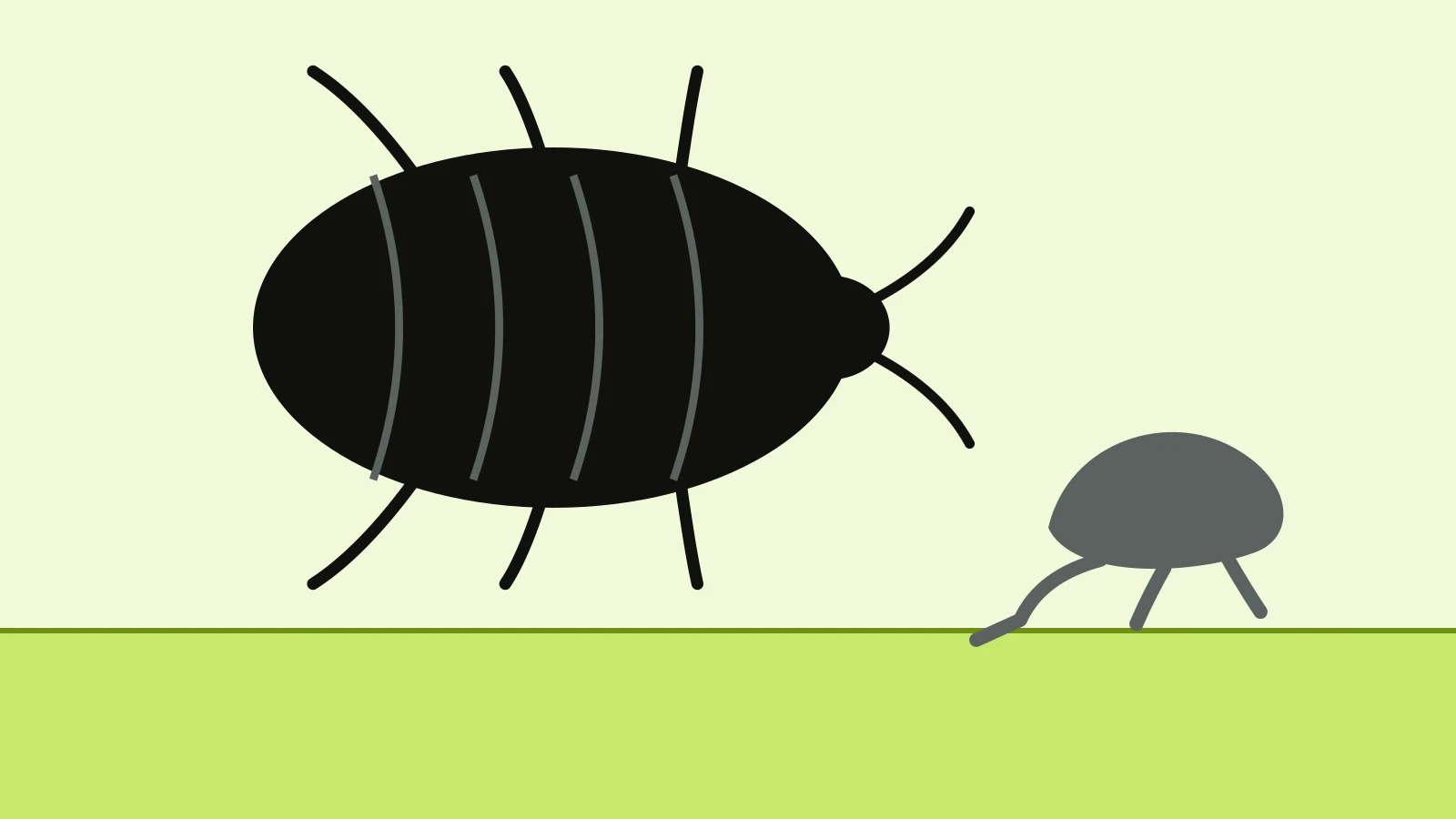
Young cockroaches, called nymphs, have no wings at all, as Penn State notes for both German and American cockroaches. If you find small wingless insects with the same flat shape as an adult, do not assume they are a different pest. Nymphs usually mean cockroaches are breeding on site, so check our German cockroach guide and book help sooner, not later.
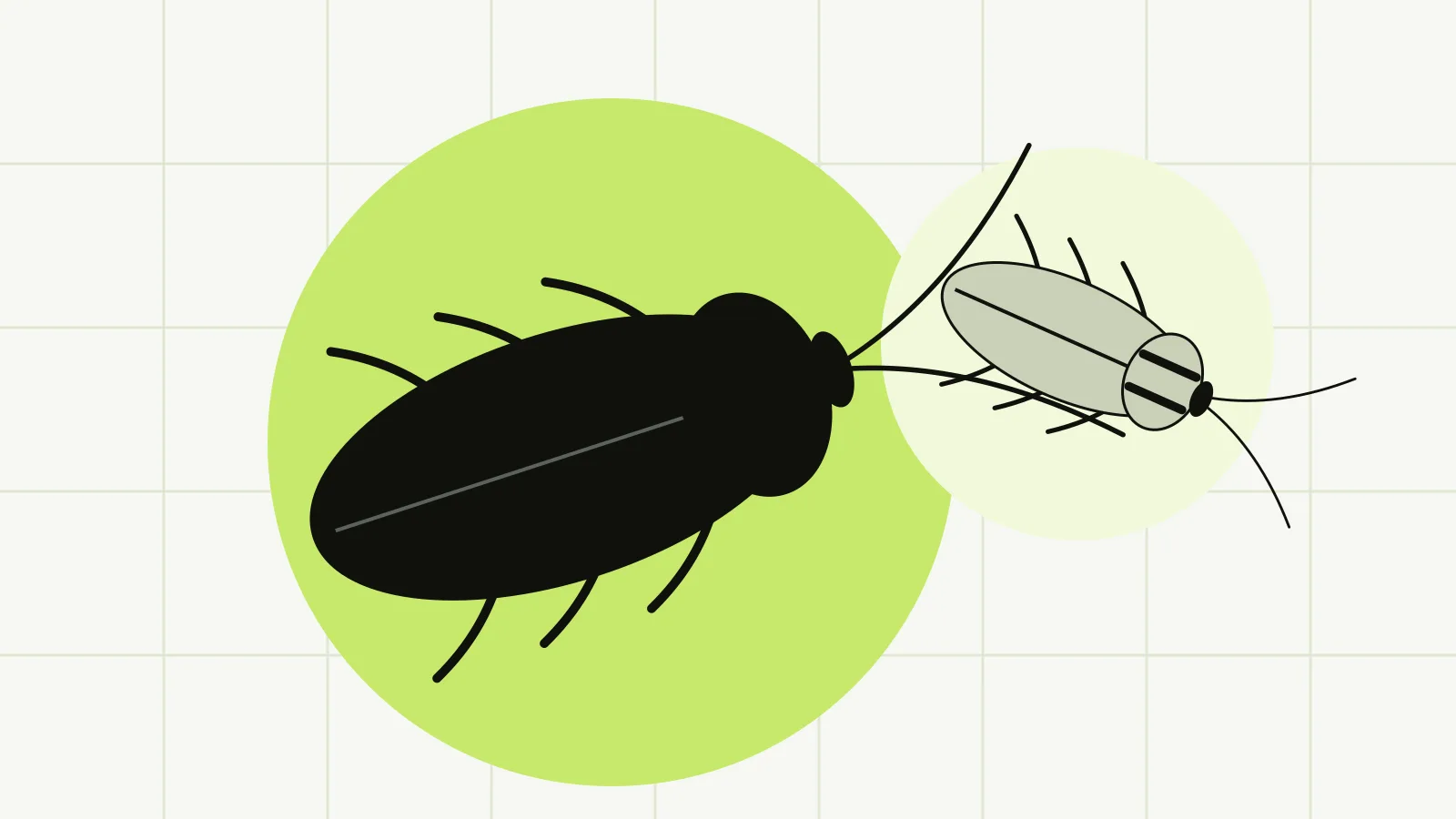
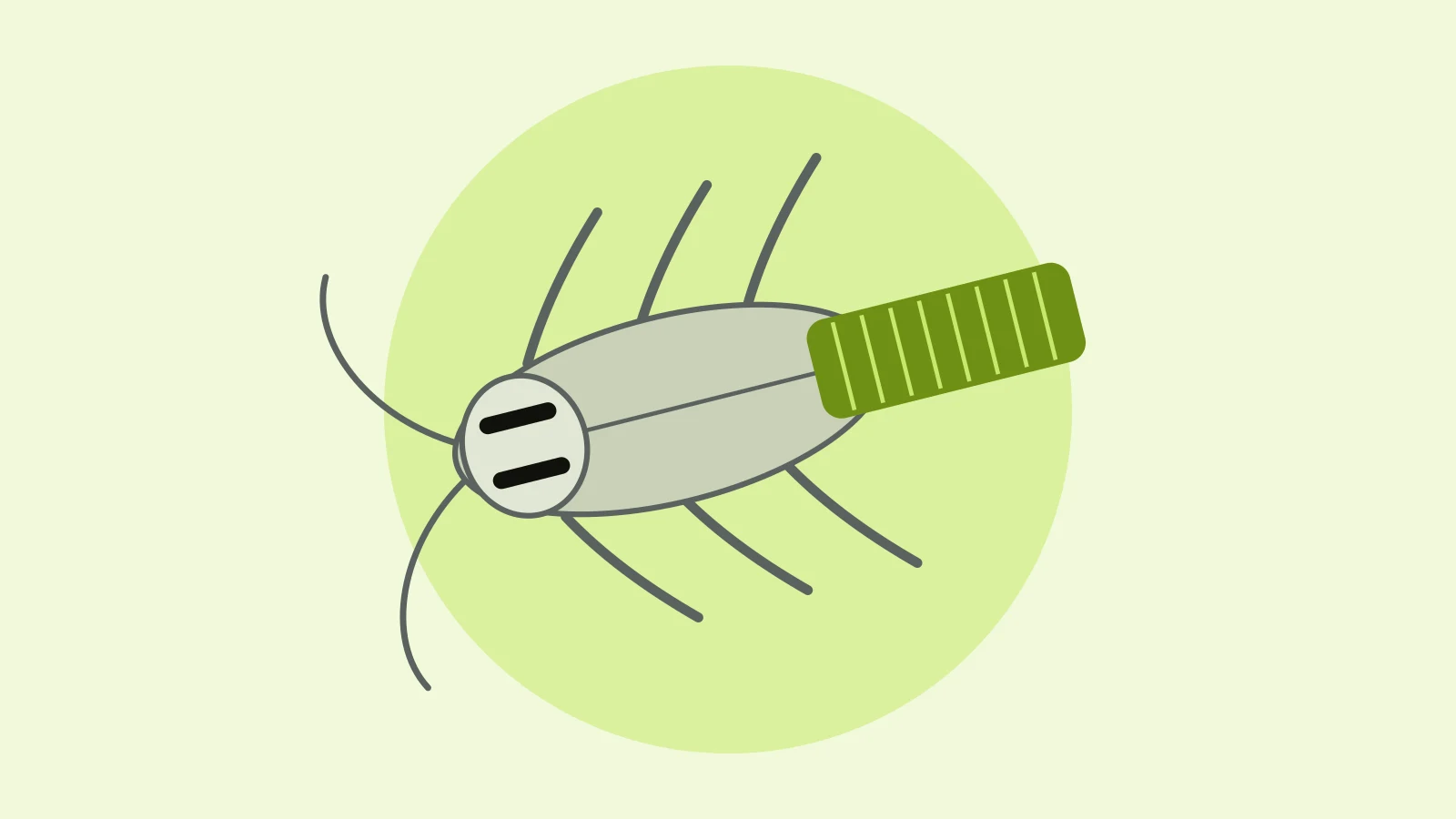
- 1. German: full wings on both sexes, rarely if ever used
- 2. Oriental: short on males, only pads on females
- 3. American: full wings on both sexes, seldom used
- 4. Brown-banded: males can fly, females have short wings
- 5. Dusky: a native outdoor species; females cannot fly
Cockroach flight: flying, gliding or falling?
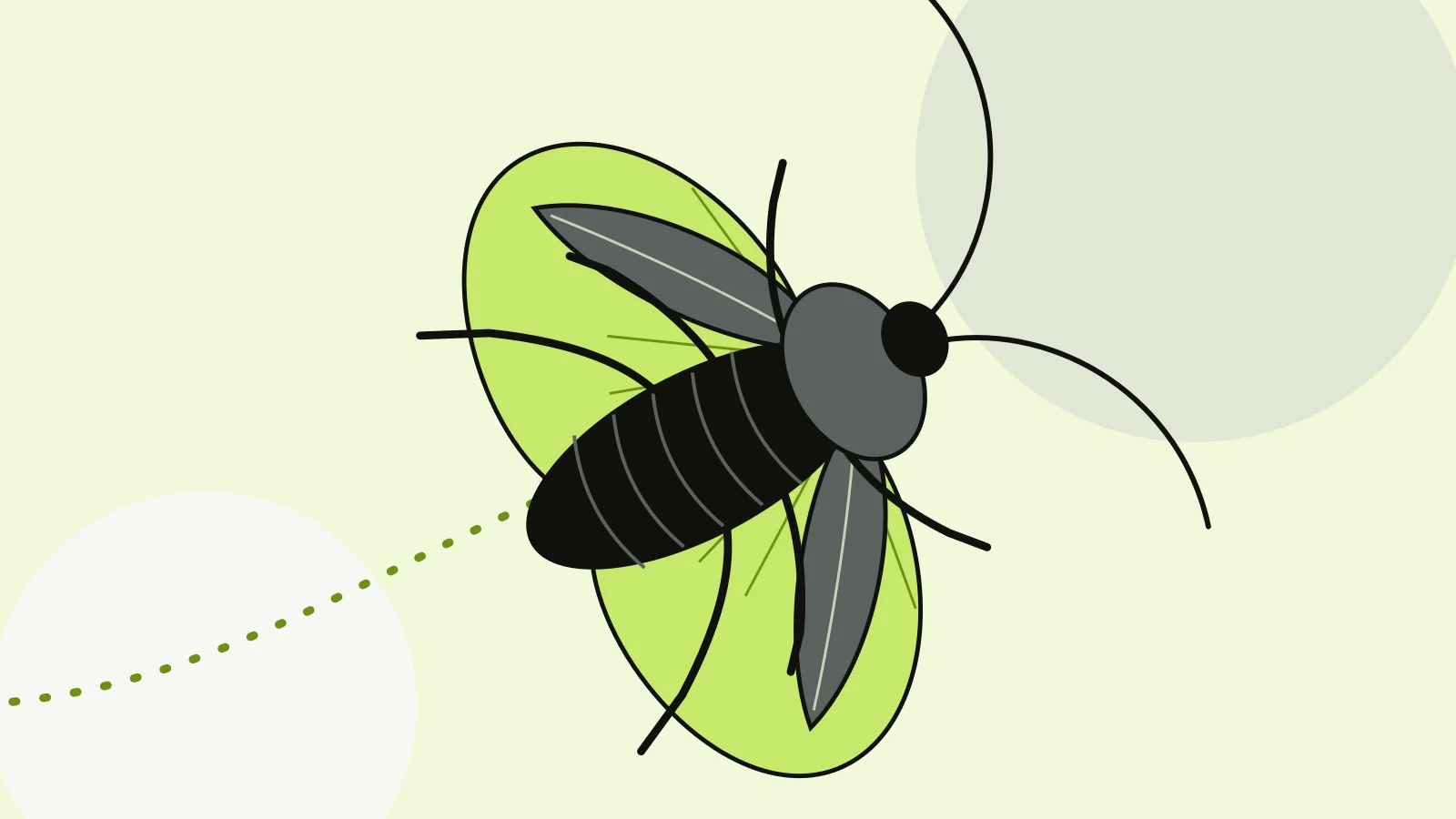
Cockroach flight sits on a spectrum, and most of what people describe as flying is nearer the bottom end. Powered flight means taking off and staying up. Gliding means holding wings out to slow a drop or stretch a jump. Falling with some control is what the BPCA seems to mean when it says some cockroaches fall with style.
The American cockroach shows how reluctant a capable insect can be. The Urban and Structural Entomology Program at Texas A&M University says adults have well-developed wings, seldom fly and are capable of gliding flight. Penn State says they can fly but rarely do in the northern United States. Ebeling recorded that he could not get them to fly by shaking them, although some flew upwards when thrown into the air on a sunny day.
So if a large cockroach does take to the air, expect a short, clumsy trip, perhaps down from a shelf or wall, and not a sustained flight. There is a good reason for this. Running is what cockroaches do well, and the BPCA gives a speed of 1.5 metres per second. Over the short distance to a crack, the legs win.
We found no good evidence that cockroaches aim for people. One that lands on you has most likely been disturbed or dropped from above, and you are simply where it ended up. Our advice is to step back, let it land, then trap it under a clear glass so that you can photograph it. Swatting it in mid-air only leaves you with something harder to identify and a mess to clean up near food.
Do cockroaches fly more in hot weather?
Yes, as far as the evidence goes, and it is the main reason internet videos of flying cockroaches do not tell you much about Britain. The BPCA says the ability of many cockroaches to fly depends on climate, and that higher temperatures and humidity encourage it. UC IPM gives the clearest figure we found: male brown-banded cockroaches sometimes fly when disturbed, especially above 85°F, which is about 29°C.
Now compare that with London. The Met Office's 1991 to 2020 long-term average maximum for July at Heathrow is 23.9°C, and August is 23.4°C. So an average London summer afternoon falls short of that brown-banded figure, and evenings are cooler still. Hot spells do pass it, of course, and the figure is for one species, from a Californian source. It is a pointer and not a law.
It also helps to look at the American videos. UC IPM says smokybrown cockroaches can fly, especially on warm, humid evenings. That species is not among those the BPCA lists for the UK, so clips of cockroaches flying around a porch light in warmer parts of the United States are not a guide to Ilford or Lewisham.
Indoors is a different matter, because heated buildings make their own climate. UC IPM says German cockroaches prefer 70 to 75°F (about 21 to 24°C), brown-banded around 80°F (about 27°C) and American usually above 82°F (about 28°C). The BPCA adds that both German and Oriental cockroaches can often be found around heating ducts and boiler rooms in large, centrally heated buildings. If something does fly in a warm boiler room or a hot commercial kitchen, take it seriously, and tell your managing agent or the business owner.
Our recommendation: expect more movement in warm weather, but do not expect British cockroaches to start flying through your open window. A hot week is more likely to bring out beetles.
Flying cockroach in the UK: what else could it be?
Most reports of a flying cockroach in London summer weather have a better explanation, and a good one lives in the capital. Stag beetles are the UK's largest beetle. The Natural History Museum says males measure 35 to 75 mm including jaws and fly at twilight on hot, humid evenings, usually from mid-May to late July, often at about face height. It calls London a stronghold, with far more in the south and west of the city. A heavy, whirring, dark insect at dusk in Wimbledon or Richmond is far more likely to be this than a cockroach, and it is harmless to your home.
The other common suspect is the cockchafer, or May bug. The Wildlife Trusts describe a large brown beetle about 3.5 cm long with rusty-brown wing cases, seen from May to July. It is mostly active after dark and gathers around streetlights and lit windows, which is why it so often ends up thudding against the glass or blundering indoors.
Britain does have flying cockroaches of its own, but you would be lucky to see one. The Orthoptera Recording Scheme says both sexes of the tawny cockroach are fully winged and can fly, at 8 to 9.5 mm long, with adults from about late June into October. The Wildlife Gardening Forum says native cockroaches are 5 to 11 mm, live on rough grass and scrub and are not often seen in gardens. It adds that the lesser cockroach is mainly coastal, and that the dusky and tawny are more widespread in southern England. These small outdoor insects are not house pests, so one on a garden shrub needs no treatment.
Check four things before you worry: how long it is, whether the wing cases are hard and shiny, how long the antennae are, and where you saw it. Beetles have hard wing cases that meet in a straight line down the back. A cockroach has a flat, oval body and very long, whip-like antennae, which the BPCA treats as the key feature. If you have a stag beetle, leave it alone. If you have a cockroach indoors, go to the section on what to do next.
Flying insect or cockroach? Common UK lookalikes
| Insect | Size | When and where | Key clue | What to do |
|---|---|---|---|---|
| Stag beetle (male) | 35 to 75 mm with jaws | Mid-May to late July, dusk, south and west London | Large antler-like jaws | Leave it alone |
| Cockchafer (May bug) | About 35 mm | May to July, after dark, at lit windows | Rusty-brown wing cases, broad body | Put it outside |
| Tawny cockroach | 8 to 9.5 mm | Late June to October, woodland, heath and meadow | Small, pale golden-brown, outdoors | Leave it alone |
| Brown-banded cockroach (male) | 10 to 15 mm | Indoors, warm spots such as ceilings and appliance motors | Pale bands, long antennae | Photograph it, check for signs |
| American cockroach | 20 to 30 mm or more | Indoors, dark humid places such as basements | Reddish-brown, long antennae, full wings | Photograph it, get advice |
From the Natural History Museum, the Wildlife Trusts, the Orthoptera Recording Scheme, the BPCA and Penn State Extension. Penn State gives a longer American cockroach than the BPCA does.
Do cockroaches bite? What the evidence says
Yes, cockroaches can bite, but it is rare enough that you should not plan around it. The BPCA says it is incredibly rare for a cockroach to bite a person, with very few reported cases. Their mouthparts are made for chewing, and the BPCA notes that they are omnivores, so a bite is possible. They do not sting. It is simply not their normal behaviour.
The best-known evidence is old. Ebeling's Urban Entomology says Roth and Willis discussed 20 reports of cockroaches biting people in their 1957 Smithsonian review, and calls the cases rare and not serious. He says he included them mainly because people so often ask. So the classic answer to "do cockroaches bite?" rests on about 20 scattered reports, and not on any count of how often it happens in homes.
The cases follow a pattern. Ebeling describes ships where cockroaches were so numerous that they gnawed crew members' skin and nails, and one account of sailors wearing gloves to sleep. He says they are most likely to gnaw fingernails, the eyelashes of sleeping children and callused parts of hands and feet, and that they can make small wounds on softer skin. American and Australian cockroaches are the species most often named, and those are not the two you are most likely to meet in a London kitchen.
UK health and council advice reflects how rare this is. The NHS page on insect bites and stings lists bees, wasps, hornets, mosquitoes, ticks, horseflies, midges, mites and fleas, and does not mention cockroaches. The Hastings, Oxford, Redbridge and Lambeth council pages we read describe contamination and treatment, and none of them mentions bites.
We should be honest about the limits here. These reports are old, and a rare event on a crowded ship decades ago tells us little about a modern flat. Still, the direction is clear. The accounts involve huge numbers of cockroaches, so a home where this could happen would already have a very obvious problem. Our recommendation is to treat a suspected bite as a reason to look for the real cause of the mark, which is usually not a cockroach.
Will cockroaches bite you in bed, and what if you think one did?
Will cockroaches bite you while you sleep? In an ordinary UK home, it is very unlikely. Cockroaches stay close to warmth, water and food, and the BPCA says they hide in hard-to-reach harbourages near those things, so a bedroom is not their first choice. The gnawing reports come from very heavy infestations, and a few cockroaches in a kitchen have plenty of grease and crumbs to eat.
If you are waking up with itchy marks, look for something else first. The NHS says bedbug bites are usually raised and itchy, often in a line or group, on skin exposed while sleeping such as the face, neck and arms. Flea bites usually sit in groups below the knee. Our guide to bed bugs vs fleas shows how to check. Mites, midges and mosquitoes can also leave marks, and a skin reaction may have nothing to do with insects.
If you did see a cockroach on the skin, treat the mark like any insect bite. The NHS says to wash the area with soap and water, apply a cold pack or a cloth soaked in cold water for at least 20 minutes, raise the area if it is swollen, and avoid scratching. Paracetamol or ibuprofen can help with pain. A pharmacist can advise on antihistamines and hydrocortisone cream.
- See a pharmacist if the skin feels hot, looks red, is painful or swollen, or has pus or fluid. A pharmacist can also treat an infected bite.
- Use 111 or ask for an urgent GP appointment if symptoms get worse or do not improve, or if you have a high temperature and swollen glands.
- See a GP if a child under 1 has been bitten. For a child under 5, the NHS says to call 111 for advice.
- Call 999 if lips, mouth, throat or tongue suddenly swell, if breathing is very fast or difficult, if the throat feels tight, or if someone becomes very confused, drowsy or faints.
Are cockroaches dangerous? The risks in order
Are cockroaches dangerous? Not in the way a wasp sting or a rat bite can be. They are not aggressive, and a single insect is unlikely to do you any direct harm. The real issues are indirect: what they leave on food and surfaces, and what they leave in the air and dust. Those two matter more than bites by a wide margin.
Ranking the risks helps, because it tells you what to do first. We would put soiled food at the top, because it is the most widely agreed and the most easily fixed. City of Westminster says cockroaches feed on almost anything, from faecal matter to food meant for people, and have been found with disease-causing bacteria on their bodies. Allergens come next, particularly in homes with someone who has asthma. Spreading specific diseases comes third, because the evidence is real but less direct than many websites suggest. Bites come last.
The size of the problem matters as well. A cockroach that came in once in a delivery is a very different risk from a kitchen with droppings along every kickboard. So do not panic about one insect, but do not ignore it either. City of Westminster advises against waiting, and Hastings Borough Council says it is almost certain there are more if you see one. Our advice is to check tonight and act on what you find, using the steps at the end of this guide.
- 1. Bites: very few cases, and rarely serious
- 2. Disease: germs are carried, but direct proof is limited
- 3. Allergy: the best evidence comes from US city homes
- 4. Food: the most widely agreed and most fixable risk
Do cockroaches spread disease?
This is where sources differ most, so we will give both sides. Council pages tend to be firm. Hastings Borough Council says cockroaches can transmit salmonella, E. coli, staphylococcus and shigella. Redbridge Council says they can infect food with food poisoning, dysentery, typhoid and polio, and Gravesham Borough Council says they can potentially transmit dysentery, gastroenteritis, typhoid and salmonella. The BPCA calls them vectors of disease. Penn State Extension goes as far as calling German cockroaches the main transmitters of gastroenteritis.
The research is more cautious. A 2008 World Health Organization review of urban pests, as quoted in a New York Times column, found that "definitive evidence that cockroaches are vectors for human disease is still lacking". The column treats them as a secondary factor in spreading disease. A 2020 review in Applied Microbiology and Biotechnology by Guzman and Vilcinskas reaches a similar view for hospitals: there is no direct proof that cockroaches spread hospital infections, although they can carry bacteria, and some of those are resistant to antibiotics.
The two positions are closer than they first look. A mosquito carrying malaria is a true vector: the germ needs the insect. A cockroach is better seen as a dirty pair of feet. It walks through drains or waste, then over your chopping board. Laboratory work supports that part: Ebeling reports studies in which salmonella survived for a long time on contaminated food and glass. What is hard to prove is how often that chain ends in a sick person in an ordinary home.
Our recommendation is to act as though the contamination is real and leave the statistics aside. If cockroaches have been in a cupboard, throw away uncovered food with droppings on or near it, wash plates and utensils before use, and clean the surfaces. Keep food in sealed containers. If anyone feels unwell, follow NHS advice for food poisoning, which lists feeling or being sick, diarrhoea, tummy pain and a high temperature. Call 111 if you are worried about a baby under 12 months, if diarrhoea lasts more than 7 days or if vomiting lasts more than 2 days. Do not assume a cockroach was the cause, because the NHS lists many others.
Cockroach allergy and asthma: who should take more care
For most households, this is the most serious cockroach health issue. Allergy UK says cockroach allergens in saliva, faeces and body parts can trigger allergic rhinitis, particularly in urban areas with large cockroach populations, and lists cockroach droppings among the indoor causes of year-round symptoms. Hastings Borough Council links them to dermatitis, rhinitis, bronchitis and asthma. The US Environmental Protection Agency says droppings and body parts can trigger asthma, and that cockroach allergens likely play a significant role in asthma in many urban areas.
The strongest studies come from American cities. A landmark 1997 study in the New England Journal of Medicine, reported by ScienceDaily, followed 476 inner-city children with asthma. Those who were both allergic to cockroaches and heavily exposed were admitted to hospital 3.3 times as often as children with only one of those risks. A 2012 review by Sohn and Kim puts sensitisation at roughly 40 to 60 per cent of urban and inner-city asthma patients, and 60 to 80 per cent of inner-city children with asthma, against 21 per cent in one suburban group.
These figures need care. They describe heavily exposed US city neighbourhoods, they show an association and not a proven cause, and we did not find an equivalent UK figure. The NHS does not name cockroaches on its asthma or allergic rhinitis pages, which list things like pollen, dust, mould, house dust mites and animals. Removing cockroaches is also not a guaranteed cure for symptoms. A 2017 review by Pomés and colleagues reports mixed results: some home trials cut allergen levels without much change in asthma outcomes, while a New Orleans trial of insecticidal bait over 12 months did improve children's asthma outcomes.
So what should you do? Do not diagnose yourself. The NHS says allergic rhinitis symptoms include sneezing, an itchy nose or roof of the mouth, a runny or blocked nose, itchy, red, watery eyes and a cough, and that you should see a GP if symptoms get worse, if your asthma is getting worse, if they affect your sleep or daily life, or if you are not sure of the cause. Mention the cockroaches at the appointment.
If someone at home has asthma, is pregnant, or is very young, tell the person treating your home before any work starts, and avoid DIY sprays and foggers. The EPA advises pest management methods that pose less risk than insecticides used in general. In our view, bait placed in cracks fits that advice better than aerosol in the air. Allergens are found in droppings and shed skin, so proper cleaning matters after the insects have gone. The NHS says to call 999 during an asthma attack if symptoms get worse, do not improve after the maximum reliever dose, or you have no inhaler, and not to drive yourself to A&E.
Could cockroaches survive a nuclear war?
No. The BPCA calls the idea a myth, and it dates the story to reports from Hiroshima and Nagasaki in 1945. The University of Florida says it may have started with accounts of cockroaches walking out of the rubble unharmed. Whatever its origin, it stuck because it contains a small truth: cockroaches do tolerate far more radiation than people.
The usual test is the one from the TV show MythBusters. The BPCA and the University of Florida report that cockroaches survived 10,000 rad, about ten times the dose lethal to humans, but that none survived 100,000 rad, while flour beetles did. BBC Science Focus gives a similar picture: cockroaches can survive roughly 6 to 15 times the human lethal dose, which is no better than most insects, and the parasitic wasp Habrobracon can take more than 180 times. Figures differ between sources because the dose, the time and the species all vary. We could not read the original 1959 laboratory paper by Wharton and Wharton, so we have left out its numbers.
The University of Florida gives a reason for the tolerance: cells are most vulnerable when dividing, and insects divide cells mainly before moulting. Then comes the part that settles it. A cockroach near a blast would not survive the heat of the fireball or the pressure of the shockwave, it says. Radiation is only one of the things a bomb does.
Why bother with this in a pest guide? Because the same myth can lead people to think cockroaches are unkillable, and they are not. They die from the right bait in the right place. The main obstacle is reaching them: the BPCA says control is seldom easy because of the difficulty of getting the insecticide to the insect. That is a planning problem, and our cockroach removal guide explains how to approach it.
- 1. People: about 1,000 rads is a lethal dose
- 2. Cockroaches survived 10,000 rads, but none survived 100,000
- 3. Flour beetles survived 100,000, so cockroaches are not the toughest
- 4. Close to a blast, heat and pressure do the killing
Can a cockroach live without its head?
Yes, for a while, and this one is less of a myth than the bomb story. The BPCA says they can live for at least a week without their heads. Scientific American goes further: it reports entomologist Christopher Tipping saying that some decapitated American cockroaches lasted several weeks in a jar.
The explanation lies in how an insect's body works. Scientific American, quoting physiologist Joseph Kunkel of the University of Massachusetts Amherst, says a cockroach's neck can clot shut, so it does not bleed to death. It has an open circulatory system with far lower pressure than ours. It breathes through small holes called spiracles along the body, and its brain does not control breathing. Clusters of nerve tissue in each body segment can manage simple reflexes, so a headless body can stand, react to touch and move. As a cold-blooded insect, it can also last for weeks on one meal.
The figures do not sit neatly together, which is worth saying. The BPCA also says cockroaches will not live for more than a few days without water, yet a headless one cannot drink. Conditions and species clearly matter, so read all of these durations as rough. Our practical takeaway is modest: a cockroach that looks dead or badly injured may still move. Pick up bodies with gloves or tissue, put them in a sealed bag in your outside bin, and wash your hands. Stamping on them adds nothing, and it leaves a mess you have to clean up anyway.
Five more cockroach claims, checked
Cockroaches attract more folklore than almost any other pest, and some of it affects what people do. Here are five claims that come up often, with our verdict on each. The one that matters most is the idea that only dirty homes get them, because shame stops people reporting a problem early. If you live in a block, that silence is what lets an infestation spread through shared pipe runs and ducts.
One extra point on the name: the BPCA says the German cockroach's common nickname is the steam fly, but the name reflects its liking for warm, humid places, and has no bearing on whether it flies. Do not read anything into it. The sensible recommendation across all of these is to use what you can check tonight, such as droppings, egg cases and shed skins, and not what you have heard.
Common cockroach claims and our verdict
| Claim | Verdict | What the sources say |
|---|---|---|
| Only dirty homes get cockroaches | False | City of Westminster says they infest all types of building. The BPCA warns about second-hand fridges and freezers. |
| They can go months without food | True | The BPCA says several months, but only a few days without water. |
| They run at 200 miles an hour | Misleading | The BPCA gives 1.5 metres per second, which it says is like a human doing around 200 mph at scale. The real speed is about a walking pace. |
| They squeeze through tiny gaps | True | The BPCA says gaps can be as small as a quarter of their body size. |
| All cockroaches are pests | False | The BPCA says about 30 of around 4,600 species are linked with human homes. Britain's native species are outdoor insects. |
The speed conversion is our own: 1.5 metres per second is 5.4 km per hour.
Saw a cockroach? What to do next
Whether it flew, ran or just sat there, the next step is the same: find out what it was and whether there are more. Do not spray it, do not set off a fogger, and do not start moving appliances around. Our full cockroach guide has the detailed first-hour steps and explains why sprays can backfire, so here is the short version.
If you live in a block of flats, tell your landlord, managing agent or freeholder as well. Hastings Borough Council says that where cockroaches infest a building with more than one dwelling, the whole building must be treated to be effective. Tenants should report it in writing straight away, because Citizens Advice says landlords are usually only responsible once they know about the problem. It adds that a landlord is likely to be responsible if the agreement requires it, if failed repairs caused the problem, or if the infestation makes the home unsafe. If you run a food business, do not wait, and see our commercial pest control page or our guide to commercial pest control duties.
- Trap it under a clear glass, or use a dead one, and photograph it beside a ruler.
- That evening, check under the sink and behind the cooker and fridge with a torch.
- Look for droppings like black pepper, brown egg cases and shed skins.
- Put food in sealed containers and dry the sink overnight.
- Tell whoever treats it if anyone at home has asthma, is pregnant, or is a baby or young child.
- Not sure it is a cockroach? Compare our guides to silverfish and small brown bugs.
What you saw and what to do
| What you saw | What it probably means | What to do |
|---|---|---|
| Large brown insect at a lit window, May to July | Cockchafer or stag beetle | Nothing, or put it outside |
| Small pale insect in the garden, summer | Possibly a native cockroach or another outdoor insect | Leave it. No treatment needed. |
| One cockroach indoors, no other signs | Could have come in with a delivery, but others may be hiding | Photograph it, check at night, set a sticky trap to monitor |
| Cockroach plus droppings or egg cases | An established group | Get professional advice and report it if you rent |
| Small wingless cockroaches | Nymphs, so they are breeding on site | Book a survey and avoid sprays |
| Itchy bites, no cockroach signs | Probably not cockroaches | Check for bed bugs and fleas |
| A cockroach in a food business | A food safety concern | Act now and get professional help |
A guide only. A clear photo is the quickest way to confirm the insect.
What we do, and what it costs
You do not need to work out which species you have before you contact us. Send a photo, tell us where and when you see them, and let us know if you live in a flat or shared building and if anyone at home has asthma. Our cockroach control starts from £119 and covers an inspection and targeted treatment, with the price, visits and inclusions confirmed in writing before booking. If you are not sure what you have found, start with a pest inspection, which starts from £60 and is confirmed in writing before you book.
Cockroaches often need more than one visit, so packages are available. For a 1-bed property, a 2-visit package is £160 to £190 with a written 1-month guarantee, and a 3-visit package is £210 to £230 with a written 3-month guarantee. Packages include a safety report, follow-up and proofing advice. For comparison, Redbridge Council lists £230 for cockroaches, covering 3 visits 7 to 14 days apart, and our Ilford pest control page sets its fees beside ours. Compare what each one includes, and see our prices page and our pest control cost guide for the bigger picture. The final price depends on the extent of activity, the property, access around appliances, preparation and the number of visits.
We are based on Clements Road in Ilford, cover London and carry public liability insurance. Our phone lines are open Monday to Saturday, 8am to 8pm. Landlords and managing agents can look at pest control contracts for shared areas, and all our other work is listed under pest control services. If you only want advice about a photo, contact us.
Cockroach control prices at a glance
| Option | Price | What it includes |
|---|---|---|
| Cockroach control | From £119 | Inspection and targeted treatment |
| 2-visit package, 1 bed | £160 to £190 | Follow-up visit, written 1-month guarantee |
| 3-visit package, 1 bed | £210 to £230 | Three visits, proofing recommendations, written 3-month guarantee |
| Redbridge Council, for comparison | £230 | 3 visits, 7 to 14 days apart |
Our prices are starting points, confirmed in writing before booking. Larger property prices are on our prices page.
Common questions
Can cockroaches fly in the UK?
A few can, but the common house species rarely or never do. Germans seldom if ever fly and Orientals have wings too short to be much use, while American and male brown-banded cockroaches can. The species table shows each one.
Do cockroaches fly at you?
We found no good evidence that they target people. The BPCA describes them as weak, unsteady flyers that prefer to run, so one that lands near you has most likely lost control or been disturbed. Read more on cockroach flight.
What is the big flying bug in my London garden?
On a warm summer evening it is more likely to be a stag beetle or a cockchafer than a cockroach. Both are large, brown, native beetles that fly outdoors. Our lookalike table helps you tell them apart.
Do cockroaches bite people in their sleep?
It is very unlikely in a normal UK home. Reports of gnawed nails, eyelashes and skin come mainly from severe infestations, and Ebeling's textbook calls the cases rare and not serious. If you wake with itchy marks, check for bed bugs or fleas first.
What does a cockroach bite look like?
We cannot give you a reliable picture, because the NHS does not describe one and bites are too rare for a recognised pattern. The NHS says insect bites generally cause pain and a small swollen lump, and that a mild reaction can be itchy and raised. See what to do about a bite.
Are cockroaches dangerous to humans?
They are a hygiene and allergy problem, not a direct physical danger. They can soil food and surfaces, and their allergens can affect some people, but one sighting does not mean anyone will get ill. Cockroach control deals with the source.
Can cockroaches make asthma worse?
They can for some people who are allergic to them. Allergy UK and the US Environmental Protection Agency both describe cockroach allergens as a trigger, and the NHS says to see a GP if asthma is getting worse. Our allergy section sets out the evidence.
Would cockroaches really survive a nuclear war?
No. They tolerate far more radiation than people, but the BPCA calls the idea a myth, and the University of Florida says the heat and shockwave of a blast would kill them. The myth check shows the doses.
Should I call pest control for one cockroach?
If it was indoors, look for droppings, egg cases and more insects tonight. Hastings Borough Council says it is almost certain there are more if you see one, so a clear photo and a pest inspection are sensible if you find any sign.
Sources
Figures differ a little between sources, so ranges are given where they do. Sources reviewed on 1 November 2026.
- BPCA: Crawling with cockroaches? PestAware advice sheetbpca.org.uk(opens in a new tab)
- NHS: insect bites and stingsnhs.uk(opens in a new tab)
- NHS: bedbugsnhs.uk(opens in a new tab)
- NHS: asthmanhs.uk(opens in a new tab)
- NHS: allergic rhinitisnhs.uk(opens in a new tab)
- NHS: food poisoningnhs.uk(opens in a new tab)
- Allergy UK: hay fever and allergic rhinitisallergyuk.org(opens in a new tab)
- City of Westminster: cockroaches pest informationwestminster.gov.uk(opens in a new tab)
- Redbridge Council: pest control, cockroachesredbridge.gov.uk(opens in a new tab)
- Lambeth Council: cockroacheslambeth.gov.uk(opens in a new tab)
- Hastings Borough Council: cockroacheshastings.gov.uk(opens in a new tab)
- Oxford City Council: cockroachesoxford.gov.uk(opens in a new tab)
- Gravesham Borough Council: cockroach advicegravesham.gov.uk(opens in a new tab)
- Coventry City Council: German cockroachescoventry.gov.uk(opens in a new tab)
- Midlothian Council: pest controlmidlothian.gov.uk(opens in a new tab)
- Citizens Advice: if there are pests or vermin in your rented homecitizensadvice.org.uk(opens in a new tab)
- Met Office: Heathrow long-term averagesmetoffice.gov.uk(opens in a new tab)
- Natural History Museum: stag beetle factsnhm.ac.uk(opens in a new tab)
- The Wildlife Trusts: common cockchaferwildlifetrusts.org(opens in a new tab)
- Orthoptera Recording Scheme: tawny cockroachorthoptera.org.uk(opens in a new tab)
- Orthoptera Recording Scheme: dusky cockroachorthoptera.org.uk(opens in a new tab)
- Wildlife Gardening Forum: cockroacheswlgf.org(opens in a new tab)
- Watson and Dallwitz: Insects of Britain and Ireland, Blattodeadelta-intkey.com(opens in a new tab)
- Penn State Extension: German cockroachesextension.psu.edu(opens in a new tab)
- Penn State Extension: Oriental cockroachesextension.psu.edu(opens in a new tab)
- Penn State Extension: American cockroachesextension.psu.edu(opens in a new tab)
- University of California IPM: cockroachesipm.ucanr.edu(opens in a new tab)
- Texas A&M University: American cockroachurbanentomology.tamu.edu(opens in a new tab)
- UC Riverside: Ebeling, Urban Entomology, chapter 6entomology.ucr.edu(opens in a new tab)
- University of Florida: can cockroaches survive a nuclear bomb?onlineentomology.ifas.ufl.edu(opens in a new tab)
- BBC Science Focus: could cockroaches survive a nuclear holocaust?sciencefocus.com(opens in a new tab)
- Scientific American: can a cockroach live without its head?scientificamerican.com(opens in a new tab)
- New York Times, republished by WRAL: cockroaches and diseasewral.com(opens in a new tab)
- Guzman and Vilcinskas, 2020: bacteria associated with cockroachespmc.ncbi.nlm.nih.gov(opens in a new tab)
- Sohn and Kim, 2012: the cockroach and allergic diseasespmc.ncbi.nlm.nih.gov(opens in a new tab)
- Pomés and colleagues, 2017: new insights into cockroach allergenspmc.ncbi.nlm.nih.gov(opens in a new tab)
- ScienceDaily: 1997 report on the inner-city asthma studysciencedaily.com(opens in a new tab)
- US EPA: asthma triggersepa.gov(opens in a new tab)
Want it dealt with?
Tell us what you have seen, the rooms and your postcode. You do not need to know which pest it is. We confirm the price in writing before any work is booked.